Toes are small but carry a big load – every step, every push-off, every moment of balance depends on them. That constant demand makes them surprisingly prone to sudden, painful cramping, especially when you curl or point them. If you’ve ever felt your toes seize up mid-stretch, you’re not alone, and you’re in the right place to understand exactly why it happens and what to do about it.
What Causes Toe Cramps?
The American Academy of Orthopedic Surgeons defines a muscle cramp as an involuntary, sudden contraction of a muscle that fails to relax. Toe cramps can last anywhere from a few seconds to several minutes and range from mildly annoying to genuinely debilitating. If you’ve ever wondered why your feet cramp when you curl your toes, the answer usually comes down to one of several overlapping causes – and identifying the right one is the first step toward lasting relief.
Tight or Weak Muscles
When the muscles of the foot or calf are tight or underconditioned, they’re far more prone to spasm. A cramp may stem from leg muscles that extend into the toes, or from the foot’s own intrinsic muscles that insert directly onto the toes – two distinct origins that can feel identical but may need different treatment. A sedentary lifestyle compounds the problem: reduced activity leads to muscle weakness and poor flexibility, making cramping more frequent. Even a single session of unaccustomed activity can trigger muscle fatigue and spasm in someone who sits most of the day.
Muscle Strain, Injury, and Overuse
An injury like an ankle sprain can send spasms radiating through the entire foot, including the toes. Research has linked overexertion to frequent toe cramps, and overuse is widely recognized as one of the most common triggers of muscle spasm – particularly when pointing toes repeatedly during exercise or athletic activity.
Ill-Fitting Footwear
High heels, overly tight shoes, and pointy-toed styles force the toes into unnatural positions, compressing the toe flexor muscles and restricting circulation. Studies confirm that this pressure can trigger severe cramping. Ill-fitting shoes also reduce the foot’s natural support and can cause muscle injuries over time. Proper footwear with adequate arch support and a wide toe box is one of the simplest preventive measures available.
Dehydration and Electrolyte Imbalance
Muscles need a precise balance of fluids and electrolytes – potassium, calcium, magnesium, and sodium – to contract and release normally. Sweating during exercise depletes all four, and some medications (particularly diuretics) accelerate that loss. When electrolyte levels drop, abnormal muscle firing becomes more likely, producing cramps and spasms – including the sharp, involuntary tightening you feel when you curl your toes. Sodium deserves special attention here: it plays a central role in regulating fluid balance inside and around muscle cells, and it’s typically the electrolyte lost in the greatest volume through sweat. Low sodium levels can trigger widespread cramping that plain water alone won’t fix – and in some cases, drinking large amounts of water without replacing sodium can actually dilute electrolyte levels further, making cramps worse. Plain water rehydrates, but after intense exercise, a sports drink or electrolyte supplement can restore sodium and other minerals more effectively than water alone. Look for options that list sodium, potassium, and magnesium on the label rather than products that are mostly sugar – the mineral content is what your muscles actually need. If cramping is a recurring problem after workouts, salting your meals slightly more on heavy training days is a simple, practical strategy many athletes overlook.
Nerve Damage and Nerve Irritation
Peripheral neuropathy disrupts the signals traveling between the brain and the toe flexor muscles. When those signals misfire – a phenomenon called abnormal muscle firing – the toes can cramp or curl involuntarily, especially when the foot is pointed or the toes are curled, positions that place the already-irritated nerve under additional stretch. This is why so many patients notice the cramping sensation most intensely mid-curl: the mechanical stretch of a compromised nerve triggers a fresh wave of disordered signals, causing the flexor muscles to contract uncontrollably at exactly the moment you least expect it. Uncontrolled diabetes is the most common cause of peripheral neuropathy, but diabetic neuropathy is far from the only culprit – Parkinson’s disease and multiple sclerosis can also damage peripheral nerves and produce toe cramping alongside tingling and numbness. In these cases, nerve irritation is both the root cause and the ongoing trigger, meaning that simply curling or pointing the toes is enough to set off a cramp – a pattern that distinguishes nerve-driven cramping from the electrolyte- or dehydration-related variety, which tends to strike more randomly and without a consistent positional trigger.
Poor Blood Flow
Conditions like diabetes and peripheral artery disease reduce circulation to the feet. Decreased blood flow means less oxygen to the tissue, and oxygen-starved muscles cramp. If your toe cramps come with cold feet, skin color changes, or leg pain when walking, poor circulation deserves prompt evaluation.
Other Health Conditions That Cause Cramping
Several systemic conditions can trigger toe and foot cramps, including thyroid disorder, pregnancy (especially the third trimester), chronic kidney disease, vitamin D deficiency, and dystonia. Aging also plays a role: as the nervous and musculoskeletal systems gradually lose efficiency, muscle contractions in the feet and toes become more common – generally harmless, but worth monitoring. Some researchers believe that inadequate stretching and accumulated muscle fatigue disrupt the body’s normal muscle-contraction signaling, making cramps more likely regardless of age.
Why Do Toes Cramp and Curl at Night?
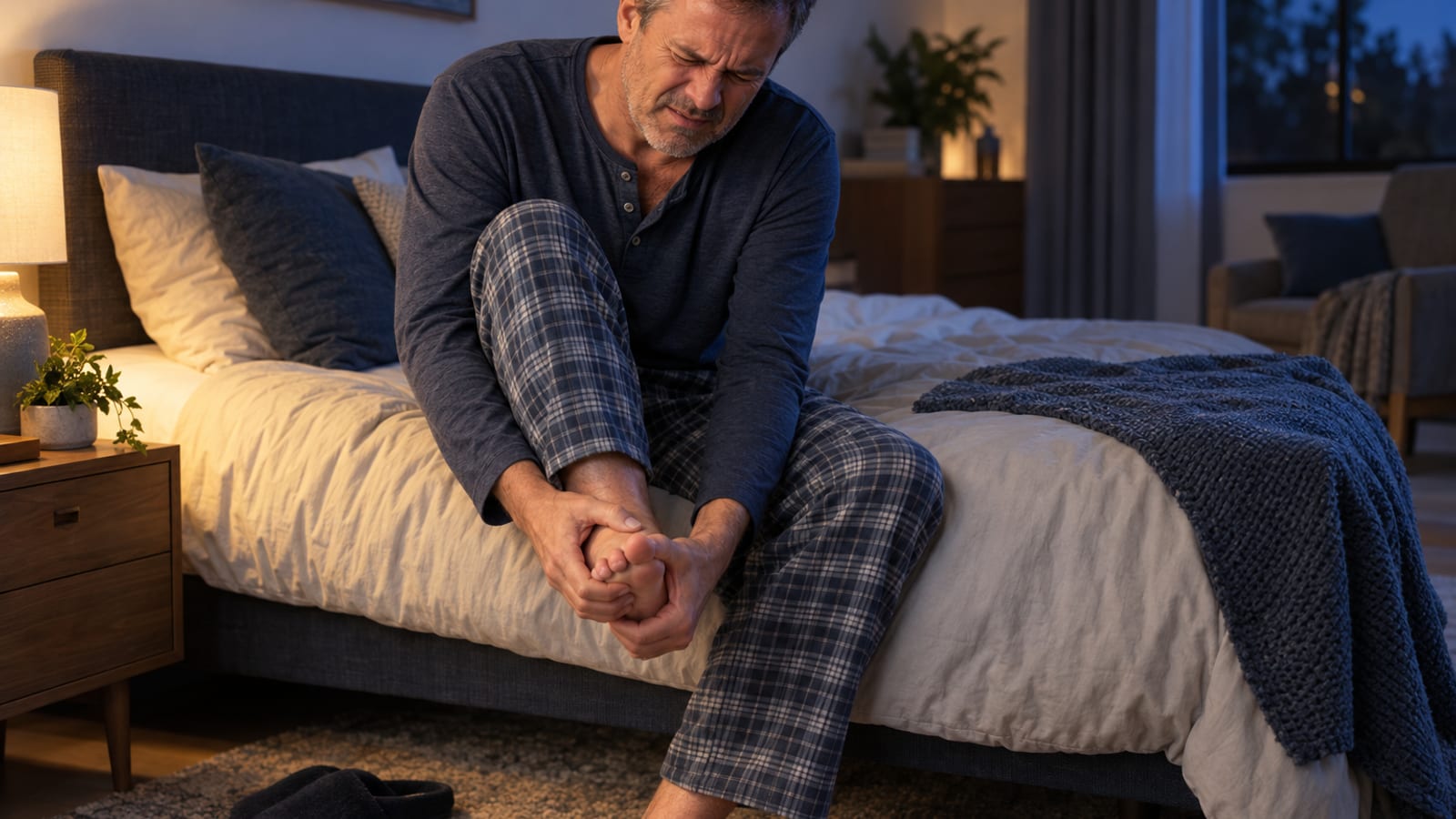
If you’ve ever been jolted awake by a sudden, painful toe cramp, you’re definitely not alone – and there’s a real reason it happens more often at night. Several factors converge while you sleep, making cramping more likely.
First, your circulation naturally slows when you’re lying still for hours. Reduced blood flow means your feet’ muscles get less oxygen and fewer electrolytes, making them more prone to involuntary contractions. If you were on your feet all day, muscle fatigue compounds the problem – tired muscles are already primed to misfire.
Dehydration is another big culprit. Most people don’t drink enough water in the evening, and overnight your body continues losing fluid through breathing and perspiration. Low magnesium and potassium levels – both common causes of foot pain and cramping – tend to dip even lower during sleep.
Your sleeping position matters too. Lying with your feet pointed downward (plantar flexion) shortens the calf and foot muscles, putting them in exactly the position most likely to trigger a cramp. Even the weight of heavy blankets pressing down on your toes can trigger one.
When a nighttime cramp strikes, try these steps immediately:
Flex your foot upward, pulling your toes toward your shin
Stand up and gently shift your weight onto the affected foot
Massage the cramping muscle with firm, circular pressure
Apply a warm towel or heating pad to relax the muscle
If nighttime cramping is happening regularly, it’s worth paying attention – frequent episodes can signal an underlying issue that deserves a closer look from a specialist.
What Is Dystonia of the Feet?
Dystonia is a movement disorder in which the brain sends faulty dopamine-mediated signals that cause the foot and toe muscles to contract involuntarily, producing repetitive or twisting movements. Cramps from dystonia can range from mild to severe and can interfere with walking and daily tasks.
Dystonia is a recognized early symptom of young-onset Parkinson’s disease and can appear at any stage of the condition. Focal dystonia is also seen in multiple sclerosis. Dystonia cannot be cured, but symptoms can be managed effectively with medication and targeted therapy.
Why Do Toes Cramp and Curl at Night?
Nocturnal toe cramping is one of the most disruptive – and most common – complaints foot specialists hear. Several factors converge during sleep to make cramps more likely. Reduced activity slows circulation, so the feet receive less oxygenated blood. Fluid that accumulated in the lower legs during the day can shift and press on nerves, increasing nerve irritation. The foot also naturally rests in a slightly plantarflexed (pointed) position during sleep, which shortens the calf and toe flexor muscles and makes them more vulnerable to spasm.
If a nighttime cramp strikes, immediately flex your foot upward, pulling your toes toward your shin to counter the contraction. Follow with a gentle calf stretch against the wall before bed, stay well hydrated throughout the day, and consider a magnesium-rich evening snack. Persistent nocturnal cramping – especially in the big toe – warrants a professional evaluation to rule out circulation issues or nerve irritation.
How Can I Get Rid of Toe Cramps and Curling?
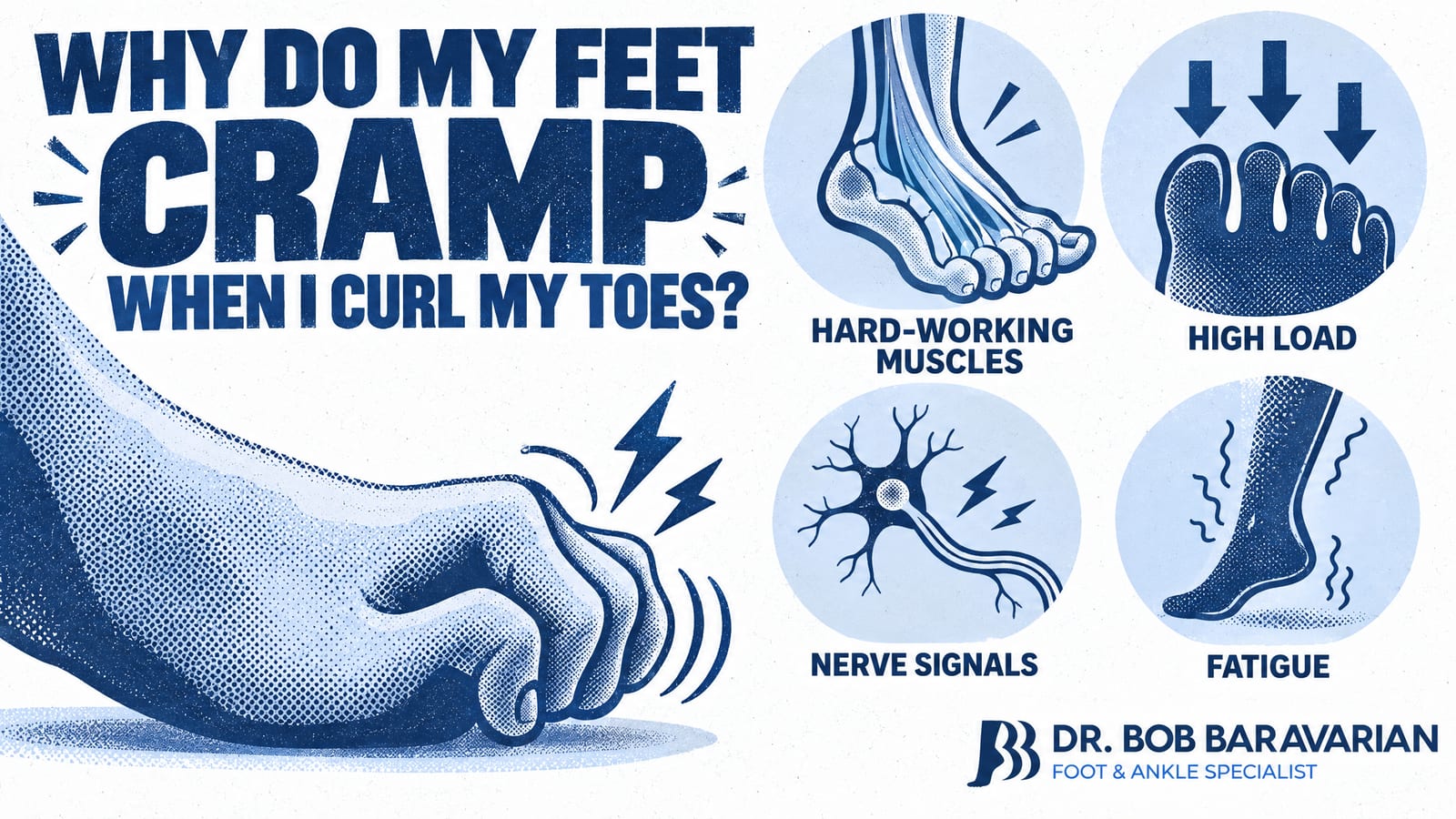
A study published in the Family Practice journal recommends that people with toe and leg cramping try home treatments before escalating to medical intervention. The most effective approaches, in order of immediacy:
Stretch immediately. Stretching exercises – including a standing calf stretch – are the fastest short-term relief. Pull your toes back toward your shin to release the cramp, then hold for 30 seconds. If your big toe is the main culprit, gently grasp it and pull it upward while pressing your thumb firmly along the ball of your foot – this targets the flexor hallucis longus, the muscle most responsible for big-toe cramping and curling.
Massage the area. Firm massage increases circulation and oxygenation to the cramping muscle, accelerating relaxation. Big toe cramps respond especially well to direct thumb pressure along the sole.
Apply heat. A heating pad or warm water bottle relaxes tight muscles and improves blood flow. For nighttime cramps that wake you up, keep a heating pad on your nightstand so you can apply it immediately without fully getting out of bed.
Rehydrate with electrolytes. Drink water and, after intense activity, replenish sodium, potassium, calcium, and magnesium with a sports drink or electrolyte supplement. Low magnesium in particular is strongly linked to nighttime toe cramping, so a magnesium supplement taken before bed may reduce how often cramps wake you up – but check with your doctor first.
Wear properly fitting shoes. Shoes with adequate support and a roomy toe box reduce improper pressure on the toe flexor muscles. Narrow or pointed toe boxes force your toes into a curled position for hours at a time, training the muscles to stay contracted – which is a common reason people notice cramping and curling that gets worse throughout the day.
Exercise regularly. Consistent movement keeps muscles, joints, tendons, and nerves functioning correctly and reduces muscle fatigue over time.
Review your medications. Diuretics and certain other drugs deplete electrolytes. Ask your doctor or pharmacist whether a dosage adjustment could reduce cramping.
Most people find that combining two or three of these steps – especially stretching, hydration, and footwear changes – brings meaningful relief within a few days. If your cramping and toe curling persist despite consistent home care, that’s a signal worth taking seriously. Structural issues like hammertoe deformity or nerve irritation won’t resolve on their own, and the sooner you’re evaluated, the more treatment options you have.
When Should I See a Doctor About Toe Cramps?
Most toe cramps are harmless and clear up with stretching, hydration, and a little rest. But there are times when cramping is your body’s way of waving a red flag – and those moments deserve a closer look from a specialist.
It’s worth scheduling an appointment if you notice any of the following:
Cramps that keep coming back. If you’re regularly asking yourself, “Why do my feet cramp when I curl my toes?” and home remedies aren’t helping, something deeper may be going on.
Toe curling that doesn’t release on its own. Persistent curling or clenching – especially when it lingers after the cramp passes – can point to nerve involvement, dystonia, or a structural foot problem.
Cramping that interferes with walking or daily activity. Pain that changes how you move isn’t something to push through. It can lead to compensatory injuries elsewhere in the foot or ankle.
Numbness or tingling alongside the cramps. These sensations often signal nerve compression or neuropathy, both of which need proper diagnosis.
Cramps that wake you up repeatedly at night. Occasional nighttime cramps happen, but frequent disruptions may indicate circulatory issues, electrolyte deficiencies, or neurological conditions worth investigating.
Visible changes in toe or foot shape. If you’re noticing a new deformity developing alongside your cramps, don’t wait.
When home remedies aren’t enough, Dr. Bob Baravarian – the surgeon other foot specialists trust for their toughest cases – offers advanced, minimally invasive, and regenerative solutions tailored to your exact condition, so you can get back on your feet with less pain and faster healing.
Why Choose Dr. Bob Baravarian for Your Foot and Ankle Care?
When home remedies aren’t enough – when the stretching, the magnesium supplements, and the new shoes haven’t stopped your feet from cramping every time you curl your toes – Dr. Bob Baravarian is the specialist other foot doctors trust for their toughest cases. Whether your cramping stems from nerve irritation, electrolyte imbalance, dystonia, a structural deformity like hammertoe, or something more complex like early-onset Parkinson’s or MS, Dr. Bob takes the time to understand your full picture before recommending a path forward. He doesn’t hand you a generic protocol – he builds a tailored treatment plan around your specific condition, your lifestyle, and your goals, treating every patient as if he were caring for his own family.
Patients like Georgia P. know exactly what that personalized care feels like. After struggling with persistent foot pain that other providers couldn’t resolve, Georgia found lasting relief through Dr. Bob’s regenerative approach – including PRP therapy, which uses your own blood platelets to accelerate healing from the inside out. “I finally feel like someone actually listened,” she shared. That kind of compassionate, results-driven care sets Dr. Bob apart.
If your toe cramping is linked to a structural issue – a hammertoe that’s worsening, a plantar plate tear, or a bunion pushing your toes out of alignment – Dr. Bob also pioneers metal-free, minimally invasive surgical techniques using bio-integrated hardware that becomes bone over time, with no metal to ever remove and a faster, less painful recovery than traditional approaches.
Dr. Bob Baravarian is a nationally and internationally recognized foot and ankle specialist conveniently located in Los Angeles, near Cedars-Sinai Medical Center, serving patients throughout Southern California. For a free consultation, call (855) 557-5400 or make an appointment online now.