What is cuboid syndrome?
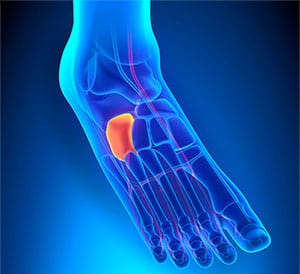
Cuboid syndrome has several names, including cuboid subluxation, dropped cuboid, or locked cuboid. The cuboid is a small, dense bone on the outer side of the foot. It connects the outer metatarsals to the heel bone and is one of the seven tarsal bones in the midtarsal joint.
Cuboid syndrome occurs when the bone becomes partially dislocated from the calcaneocuboid joint—the joint between the calcaneus (heel) bone and the cuboid bone.
This can happen gradually due to overuse and repetitive strain, or it can dislocate suddenly during a foot or ankle injury.
Several ligaments connect the cuboid bone to the heel bone. The cuboid bone is essential for many of our day-to-day activities, such as:
- Walking
- Helping your foot to flex
- Navigating uneven surfaces
It’s important to remember that cuboid syndrome differs from a fractured cuboid bone.
What are the causes of cuboid syndrome?
There are three main ways a patient can develop cuboid syndrome:
Injury
The same twisting motion that can cause a sprained ankle is also a common reason for cuboid bone dislocation. Inversion ankle sprains—foot injuries where the ankle rolls outward and the foot rolls inward—are often responsible for cuboid syndrome.
A common symptom of an inversion sprain and dislocation of the cuboid is a sharp, sudden pain in the outer midfoot.
Less commonly, an eversion sprain—an injury caused by the ankle being pushed outward—can also lead to cuboid syndrome.
Overuse
Ligaments and tendons hold your joints and bones together. The peroneus longus tendon forms a sling around the cuboid, so overuse or a sudden strain can tug the cuboid out of place.
Muscle tension can pull on the cuboid, leading to dislocation over time. You might notice gradually worsening lateral foot pain (pain on the outside of the foot) as the injury develops, or the pain may fluctuate.
Biomechanics
Your feet are precisely designed mechanical systems that support your body weight and keep you moving. This fragile balance of bones, joints, and soft tissues can be disrupted by issues in the shape and structure of your feet.
For cuboid injuries, over 80% occur in patients with flat feet. Flat feet can lead to overpronation—an uneven walking pattern where your feet roll inward when you walk or run—which is a risk factor for cuboid syndrome because it causes extra stress on the feet and ankles.
What are the symptoms of cuboid syndrome?
Cuboid syndrome is often mistaken for other types of foot pain, such as stress fractures or peroneal tendonitis. Due to misdiagnosis or the desire to ignore the pain, hoping it will go away on its own, cuboid syndrome is frequently overlooked. However, the following symptoms can indicate cuboid issues:
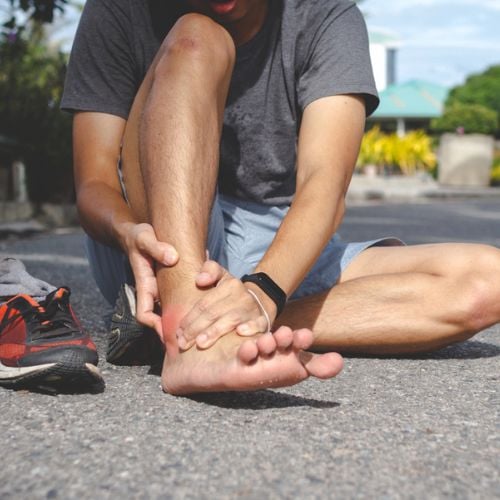
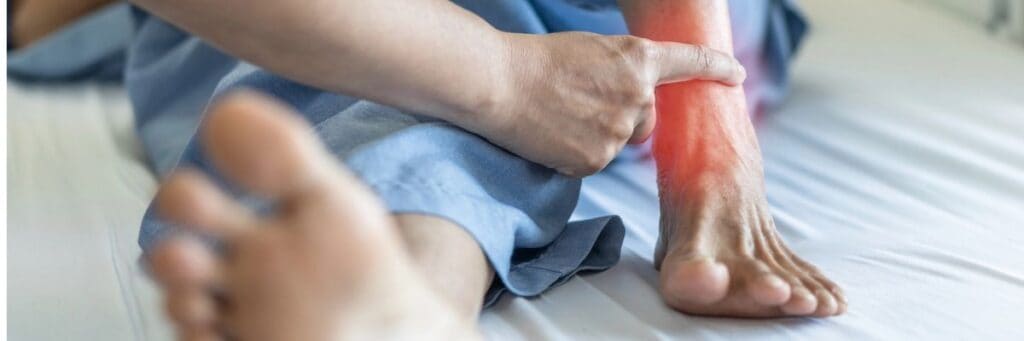
- Redness and swelling in the outer mid-foot
- The foot is tender to the touch
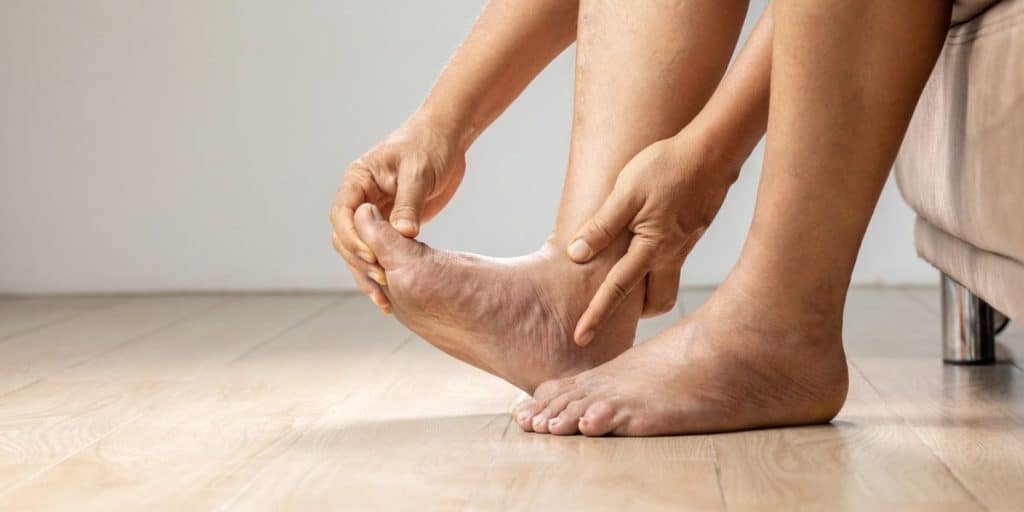
- Pain on the outside of the foot, which can travel to the lateral ankle or toes
- Pain that worsens with weight-bearing
- Pain that is worse first thing in the morning
- Pain when jumping, hopping, changing directions quickly, or walking on inclines
- Limping and difficulty walking
- Weakness when stepping off the ground
While the condition is straightforward to treat, it is often misdiagnosed or overlooked by those experiencing it.
How does Dr. Baravarian diagnose cuboid syndrome?
Cuboid syndrome is difficult to diagnose because the joint dislocation doesn’t always appear on basic imaging like X-rays. However, foot and ankle specialists, such as Dr. Bob Baravarian, have extensive experience with many foot conditions.
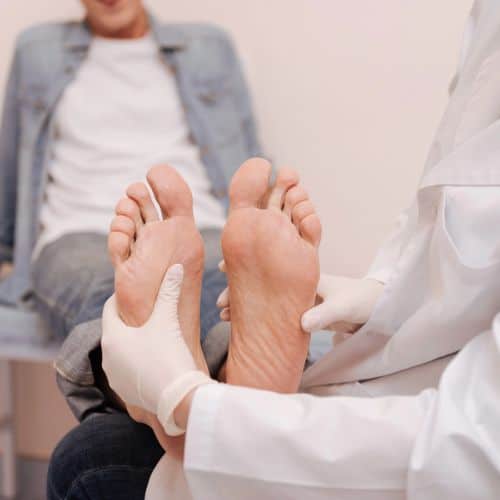
Usually, advanced imaging like Dr. Bob’s in-office MRI or CT scan is used to rule out other causes of pain. They may press on the tender area while moving your foot in different directions to identify what types of motion trigger pain.
Almost 7% of ankle sprains involve a cuboid injury, which is often missed and not treated. If you still have pain two to three months after an ankle sprain, contact Dr. Bob’s podiatry clinic for an evaluation.
Will cuboid syndrome go away on its own?
While mild cases of cuboid syndrome might resolve on their own through rest and self-care, it often doesn’t heal without intervention.
It’s important for individuals experiencing symptoms of cuboid syndrome to see a foot and ankle specialist for an accurate diagnosis and proper treatment plan, as untreated cuboid syndrome can cause chronic pain or long-term foot issues.
What are Dr. Bob’s cuboid syndrome treatment options?
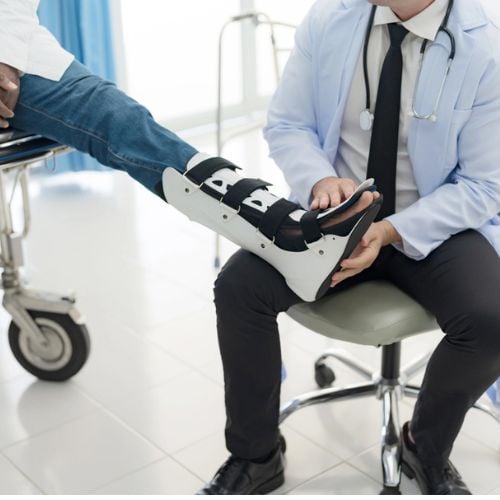
Unfortunately, you usually can’t treat cuboid syndrome at home. Most of the time, we use a technique called “manipulation” to move the joint back in place with a quick, forceful hand move. Never try to do this yourself! After successful manipulation, you will probably feel immediate relief.
Sometimes, manipulation is not recommended, such as for patients with fractures, bone disease, gout, arthritis, nerve problems, or vascular issues. In severe cases, orthopedic surgery followed by visits to a physical therapist may be necessary.
After successfully treating cuboid syndrome, you can also relieve lingering symptoms and prevent further injury to the foot by:
- Icing. Wrap a small bag of ice in a thin washcloth and place it on your mid-foot for 10-15 minutes, three times daily. Icing can help reduce pain and swelling.
- Rest. Keep weight off your foot for a few days after the adjustment. You may use crutches to walk while your foot heals. Dr. Bob will inform you when it’s safe to resume physical activity.
- Taping. Wrap the inside of your foot with athletic tape, covering the sole and the top of the foot to support the bones while the joint heals. Taping can also make walking more comfortable during recovery. · Shoe inserts. Supportive orthotics can help support your mid-foot joints and prevent further injury. Supportive inserts are available pre-made at most drug stores; Dr. Bob also offers custom orthotics to support your unique feet.
- Stretching. Stretching and strengthening exercises can help restore your balance and your foot’s range of motion. Stretching can also prevent stiffness and weakness. Start practicing your exercises as soon as possible, and continue them to achieve a full recovery.
- Physical therapy can help you strengthen the muscles and ligaments in your feet and ankles, protecting them from future injuries.
Why is Dr. Bob Los Angeles’s best choice for treating cuboid syndrome?
Dr. Bob has decades of experience treating athletes at all levels, from the weekend warrior to professional athletes and everything in between. Using the latest technologies available, many of which he helped develop, he can accurately diagnose and treat cuboid syndrome and the painful symptoms that come with cuboid injuries.
Dr. Bob is a nationally recognized expert in treating and correcting overuse injuries like cuboid syndrome. He leads in treatment and research and is dedicated to providing the latest surgical and non-surgical foot and ankle options. He frequently teaches his techniques to foot surgeons around the world.
By offering a comprehensive range of workup, conservative, surgical, and recovery options, he is truly providing top-tier care without the need to visit multiple locations.
Dr. Bob Baravarian is conveniently located in Los Angeles, near Cedars-Sinai Medical Center, providing expert foot and ankle care for patients throughout Southern California.