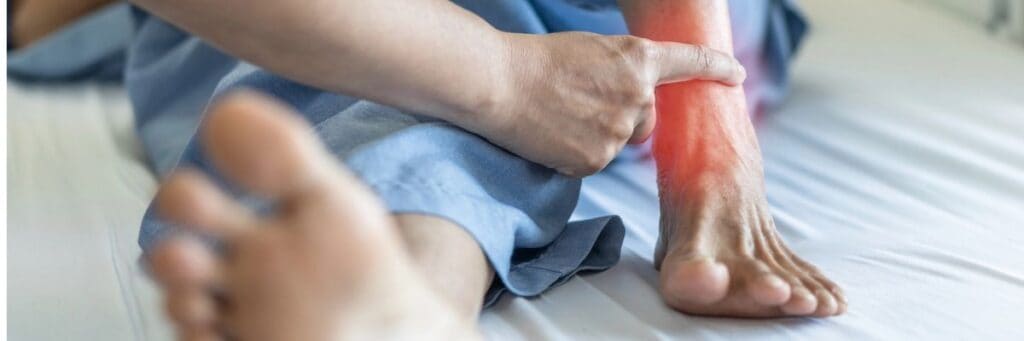
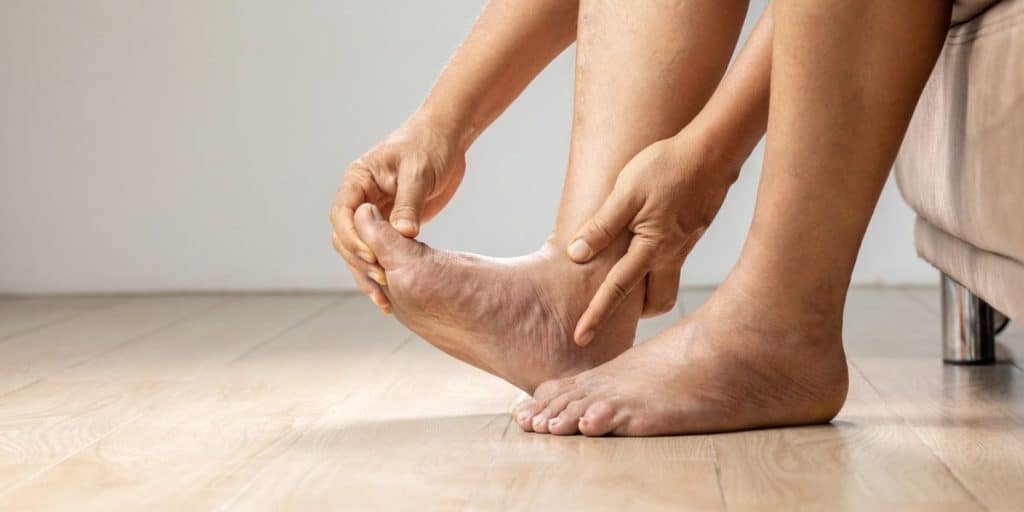
The arches of your feet are a beautiful thing. They support the entire weight of the body when you walk or run, giving you the balance and flexibility to change direction on a dime, jump when you need to – and dance to your heart’s content!
To get anatomical, the arch itself is formed by the tarsal and metatarsal bones and is connected by ligaments and tendons – which give you a springy, strong trampoline for your body. Okay, maybe you already knew all that.
We want to share with you a few other interesting facts about your foot arches, things you may not have considered that could help you on your journey to maintain the health of your feet, or cure current foot pain that’s compromising the quality of your life.
There’s No Good or Bad Arch Type
Like most things in life, the world of foot arches is not black and white. People talk about flat feet like they are the root of all evil. They’re not. High arches seem to be coveted for their aesthetic beauty, yet they can lead to just as many foot issues like flat feet, which can cause very tight calf muscles, and tight calf muscles are a main contributor to plantar fasciitis.
What matters is that you identify what type of arches you have so that you can act accordingly.
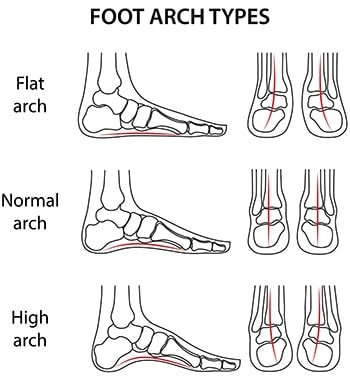
There are three different kinds of foot arches
Low Arches – “Flat Feet”
This condition, also known as ‘pes planus’ means that your arch almost reaches the ground when you stand. You could be more susceptible to plantar fasciitis and there’s the potential for knee issues due to improper alignment. However, with the proper socks and supportive shoes, you can engage in vigorous high-impact sports just like everyone else.Flat feet can be hereditary, but can also develop due to injury, obesity, arthritis, a tight Achilles tendon, or stress on the arch of the foot, among many other causes.
Medium Arches
This describes most of the population who have a pronounced inverted C-shape facing the ground when they stand, but not so high that they can roll a pea underneath it. This is the middle zone where any common foot problems may occur – heel pain, ball of the foot pain, and more. Typically, medium-arch folks are not told about the value of foot health and arch support because they don’t complain as much.
High Arches – “Cavus Foot”
With high arches, sometimes called ‘Cavus Foot’ your arch sits high off the ground and you can roll a pea underneath your foot as you stand. The challenge here is that your weight is distributed among fewer points of contact. So where the flat foot or medium arch will take some weight on the middle sections of the foot, high arch feet put all the pressure on the balls and heels of the feet. This can lead to foot pain in these areas including plantar fasciitis and heel spurs. It can also increase calluses on the heel and toes. But is this bad? No! You simply need to address your needs and find solutions accordingly.
What are the symptoms of plantar fasciitis?
Not properly supporting your arches can cause plantar fasciitis – inflammation of the plantar fascia ligament. The plantar fascia is a band of tissue running from your heel bone to your toes. It supports the arch of your foot and works as a shock absorber.
Plantar fasciitis is often felt as heel pain, usually first thing in the morning. The main may dissipate after moving for a bit but return after long periods of standing or when you first stand after sitting.
You Can Identify Your Arch Type Through Scanning Technology
There’s a new state-of-the-art diagnostic technology available at our clinics that scans your feet with a cone-beam CT scanner. You place your feet into the scanner and, with very low radiation compared to other CT scans, you can get a clear 3D picture of precisely how your feet bear weight and how the bones relate to the soft tissue around them. This fuller picture is a huge improvement over regular X-rays, which cannot convey subtleties about your arch type.
This revolutionary CT scan technology has been a tremendous breakthrough for foot specialists because it can evaluate precise bone position as well as bone quality. The CT scan machine makes it much easier to detect abnormalities such as arthritis or OM (osteomyelitis)—a bone or bone marrow infection that causes inflammation. Severe cases of OM can lead to limb loss, so early detection is paramount.
Besides detecting disease, the information gleaned from a 3D foot scan can give your podiatrist almost everything they need to know about how to treat your feet in terms of insoles, behavior changes, posture adjustments, and sock and shoe recommendations. The “pedCAT” imaging helps podiatrists and surgeons understand what’s going on with your feet in every way – a huge new development in the field.
Pain in the arch of the foot? It could also be causing knee or back pain
Have you heard of pronation? It’s how your foot rolls when it’s in motion. Overpronation is when the medial foot bones rotate inward, causing a flattening effect on your arches. If you’re overpronating, the weight of your body presses your feet inward, and you push off from your big toes while walking or running. Since this is more pressure than your toes can handle, they send the burden up the leg to your knees and even your back. Overpronation often causes shin splints, too.
Underpronation and Supination
And what about underpronation or supination? This is the opposite effect, where the ankle doesn’t roll inward far enough to create an even distribution of weight. The outer edges of the feet take the burden, which puts you at a greater risk for falls while jogging or running. Why? Because the body is destabilized. Abnormal pressure on the ankles and toes can also extend up your legs, causing lower back pain and knee strain.
Why do my foot arches cramp?
It’s happened to most of us. You’re minding your own business, maybe even just sleeping, when suddenly your foot spasms or cramps. It’s common, fixable, and often preventable!
Cramps in the arch of the foot can have many common causes:
- Dehydration. Your muscles and tissue need water to function properly. If you aren’t drinking enough water, your body lacks the resources to function correctly, making you more prone to cramping.
- Overexertion. Your muscles are more prone to cramping when you’ve been exercising harder or more often than usual. Overexertion is also responsible for other foot and arch problems. Overuse can result in inflammation of the plantar fascia (the band of tissue that supports your arches) and even flat feet.
- Bad shoes. If your shoes are too tight, they’re limiting circulation to the muscles of your foot. Without adequate blood flow, the muscles of the foot can cramp. High heels put more of your weight on the front of your foot and constrict your toes. Again, insufficient blood flow leads to cramping.
- Medication Side-Effects. Some medications, including diuretics and statins, can cause muscle cramps. If you’ve started having cramps in the arch of your foot or other muscles after starting a new medication, talk to your doctor.
- Not Stretching Enough. If you want your muscles and ligaments to stay strong and supple, you have to stretch. Take some time each day to do some stretching exercises focusing on the ankles, heels, and bottom of the foot. This can help keep the plantar fascia and Achilles tendon loose and prevent cramping.
Plantar Fibroma – Foot Arch Knot
Another potential cause of arch pain is a nodule called “plantar fibroma” that forms in the plantar fascia. It can develop in either or both feet and is benign. But, it can grow in size and more than one may develop.
It’s unclear what causes this knot in the foot arch, but it is treatable. If you notice a firm lump in the arch of the foot that is painful when you push on it, it might be plantar fibroma. Your podiatrist can diagnose it by pressing on the affected area. An MRI or biopsy may be performed to aid in diagnosis.
Conservative treatments can relieve the pain, but will not remove the knot. Physical therapy and orthotics are two common treatment options to assist with the pain. A corticosteroid, such as cortisone, may be injected into the knot in your foot arch to shrink it and relieve the pain. However, the knot may return to its original size.
What Can You Do About Ankle & Arch Conditions?
Ankle and arch pain is normally addressed with conservative treatments. Podiatrists recommend that you find comfortable shoes that have thick soles and good arch support. Underpronators should also consider wearing high-top sneakers to protect their ankles from rolling over.
And now there’s another option on the market to improve foot health – ArchTek® fashion support socks! A sock that grips around your mid-foot with therapeutic results is a practical, everyday addition to your foot health plan. Why not use all the tools in your arsenal and feel great when you walk?
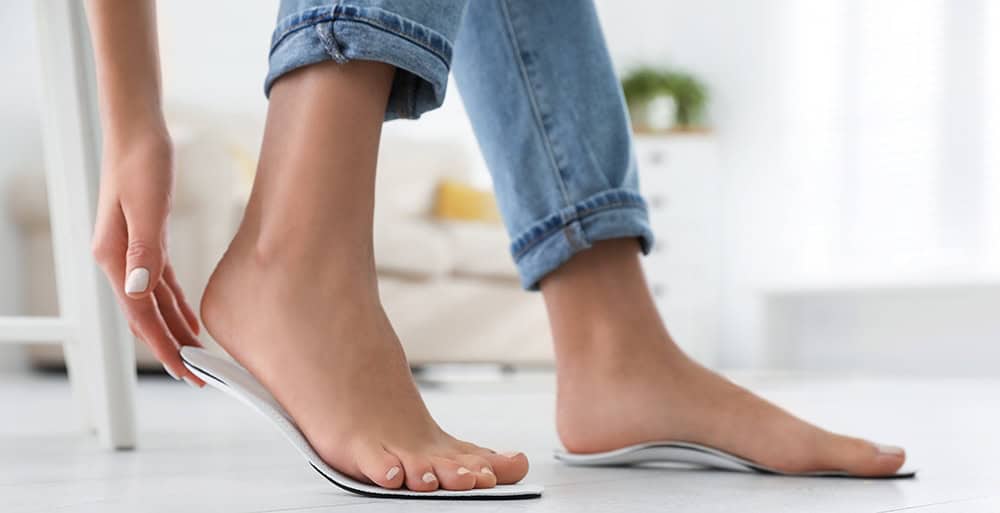
Your podiatrist (also called a DPM) might also recommend orthotics or inserts to improve your shoes’ arch support. Your doctor can fit you for custom orthotics to address the specific needs of your arches, or you can pick up over-the-counter inserts for basic cushioning and support. Another simple, conservative treatment your podiatrist might recommend is night splints. Night splints keep your foot at a 90-degree angle while you sleep, stretching the plantar fascia and Achilles tendon and providing foot pain relief.
If you experience chronic pain, more active treatment options are available. Over-the-counter anti-inflammatory medication can help relieve pain caused by an inflamed plantar fascia. More intense treatment includes directly injecting the plantar fascia with cortisone (an anti-inflammatory medicine) or platelet-rich plasma (prp). Platelet-rich plasma therapy takes plasma from your own blood and injects it into the plantar fascia, potentially speeding up the healing process.
Why choose Dr. Bob Baravarian for your Foot and Ankle Care?
If you’re experiencing foot or ankle problems, Dr. Bob is here to help. As a nationally recognized foot and ankle specialist, he provides advanced care with some of the highest success rates in the nation and is a leader in the research and treatment of all foot and ankle conditions.
For more information or to schedule a consultation, please call (855) 557-5400 or make an appointment now.
Dr. Bob Baravarian is conveniently located in Los Angeles, near Cedars-Sinai Medical Center, providing expert foot and ankle care for patients throughout Southern California.