You rolled your ankle months ago. The swelling went down, but that nagging ache on the outside of your ankle never quite left. Now your doctor is mentioning something called sinus tarsi syndrome.
You’re not alone. This is one of the most commonly missed diagnoses in ankle care, and the window for easy treatment often closes while patients are told to “just rest it” by their healthcare provider or sent home with a generic brace.
This article walks you through what sinus tarsi syndrome actually is, why it slips past so many providers, and what your real options look like, from simple at-home care to regenerative treatments to surgery.
What is sinus tarsi syndrome?
The sinus tarsi is a small tunnel on the outer side of your ankle, tucked between your heel bone (the calcaneus) and the bone that connects your leg to your foot (the talus).
It’s packed with nerves, ligaments, blood vessels, and fatty tissue, and it plays a big role in how your ankle stays stable and senses where your foot is in space.
Sinus tarsi syndrome occurs when the soft tissue inside this tunnel becomes inflamed, often leading to synovial synovitis, or is damaged or unstable. The result is persistent sinus tarsi pain on the outside of your ankle and hindfoot, a sense that the ankle might give out, and difficulty walking that worsens with standing or on uneven ground.
Research published by the National Institutes of Health shows it accounts for a meaningful share of chronic outer-ankle pain, but it stays underdiagnosed because the symptoms overlap with several other conditions.
Think of the sinus tarsi as a small control center for your ankle. When it’s healthy, you don’t notice it. When it’s inflamed, every step reminds you it’s there.
Why is sinus tarsi syndrome often missed?

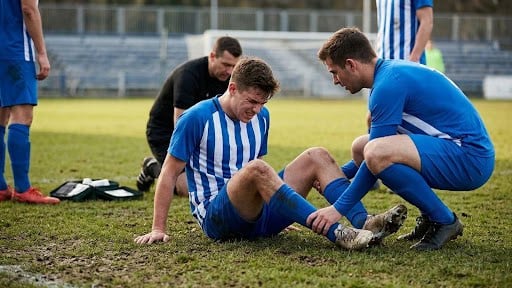
The most common trigger is an ankle injury, specifically a sprain that wasn’t fully rehabbed. When you sprain your ankle, the ligaments around the sinus tarsi stretch or tear. The bruising and swelling steal the spotlight, and once those fade, patients (and sometimes their doctors) assume the ankle has healed. It often hasn’t.
What’s left behind is low-grade inflammation inside the canal and subtle instability in the subtalar joint underneath. The pain isn’t dramatic. The ankle looks normal on X-ray. So patients get told nothing’s wrong, or they’re handed anti-inflammatory medications (NSAIDS) that mask the symptom without touching the cause.
Take Kathleen, a Los Angeles patient who came to us after months of outer-ankle pain following what she called a minor twist. Two other providers had blamed leftover sprain soreness. When we looked closer with a hands-on exam and an MRI, the sinus tarsi clearly showed inflammation and a significant ligament injury. The diagnosis had been there the whole time. It just needed someone looking for it.
Time matters here. The longer the inflammation sits inside the sinus tarsi, the more the surrounding tissue breaks down. Catching it early leads to much better outcomes.
What are the symptoms of sinus tarsi syndrome?
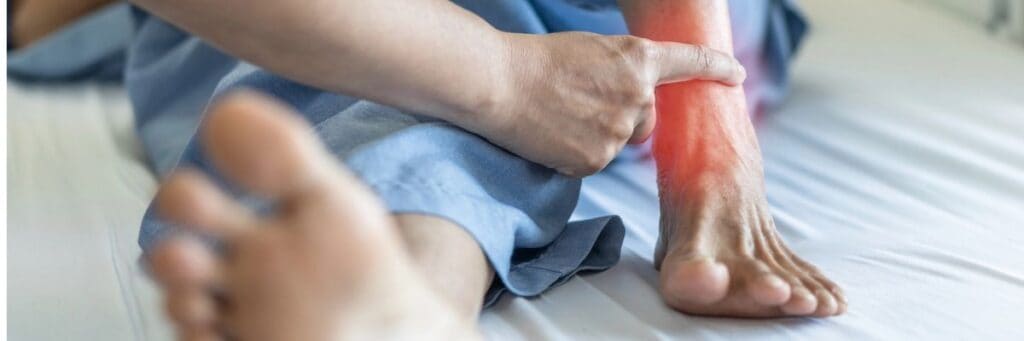
The classic symptom is pain right over the sinus tarsi, a spot just in front of and below the bony bump on the outside of your ankle. Pressing there usually reproduces the pain immediately. People also describe a vague feeling that the ankle might give way, especially on uneven ground or walking downhill.
The pain typically worsens with activity and eases with rest, only to return as soon as you’re on your feet again. Some people notice morning stiffness that loosens up over the course of the day. Swelling tends to be mild and comes and goes.
What makes this tricky to diagnose is that it shares symptoms with peroneal tendon problems, ankle impingement, and arthritis. The giveaway is the exact location of the tenderness: directly over the sinus tarsi, not along the tendons behind the ankle bone, and not deep inside the joint.
What causes sinus tarsi syndrome?
Ankle sprains are the leading cause and account for most cases, though other risk factors exist.
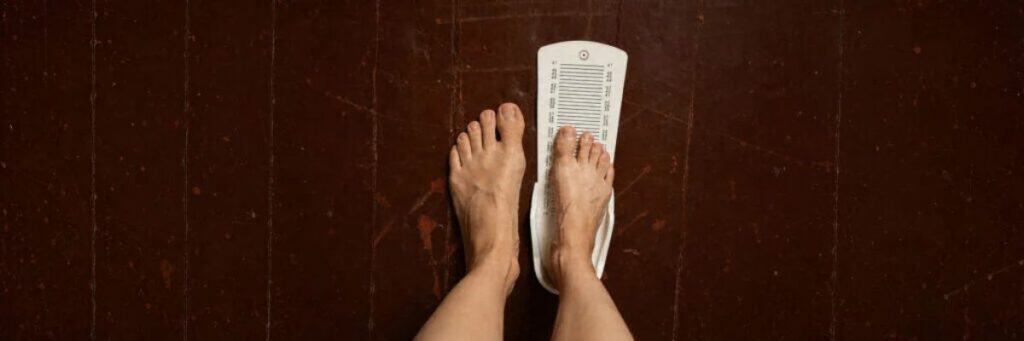
Flat feet are the second-most common cause, and the one most websites overlook. When your arch collapses, your foot rolls inward with every step, a process known as over-pronation. That puts repeated pressure on the sinus tarsi, grinding the bones together and inflaming the tissue between them. Patients with flat feet often find their symptoms keep returning after treatment because the underlying alignment problem hasn’t been corrected.
Joint instability, repetitive high-impact activity, and inflammatory arthritis can also play a role. In our experience at DOCS Foot and Ankle, patients with recurring sinus tarsi syndrome almost always have flat feet that haven’t been addressed, a history of poorly rehabbed sprains, or both.
How is sinus tarsi syndrome diagnosed?
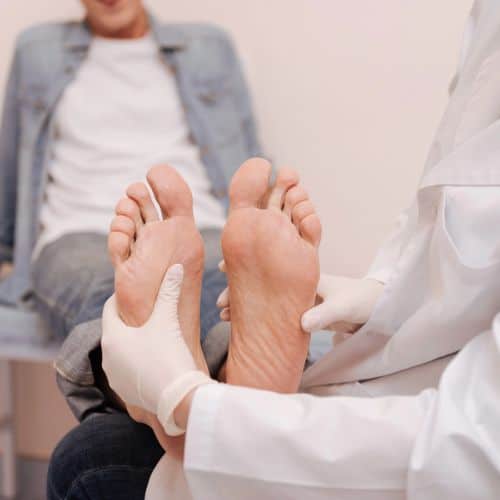
Diagnosis starts with a careful physical examination by a podiatrist and a review of your medical history. A specialist will press directly on the sinus tarsi, check the joint’s range of motion, test ankle stability, and watch how you walk to assess your foot biomechanics. The way you move often reveals the inward roll of flat feet or the protective gait of someone working around chronic pain.
MRI is the gold standard for confirmation. It can show inflammation, thickened tissue, ligament tears, cysts, and changes inside the canal that don’t show up on X-ray or a standard CT scan. As the European Journal of Radiology notes, MRI findings, including loss of normal fat signal and ligament damage, closely align with patients’ symptoms.
A diagnostic injection of local anesthetic into the canal pulls double duty: if your pain goes away, that confirms the diagnosis, and you also get temporary pain relief.
Conservative and regenerative treatment for sinus tarsi syndrome
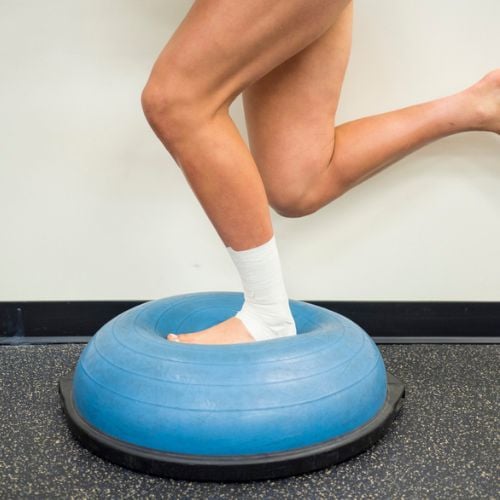
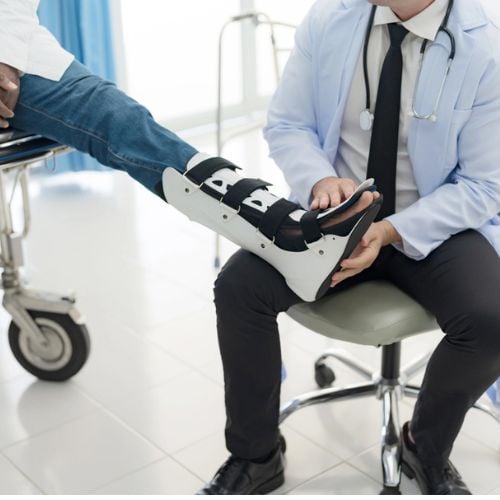
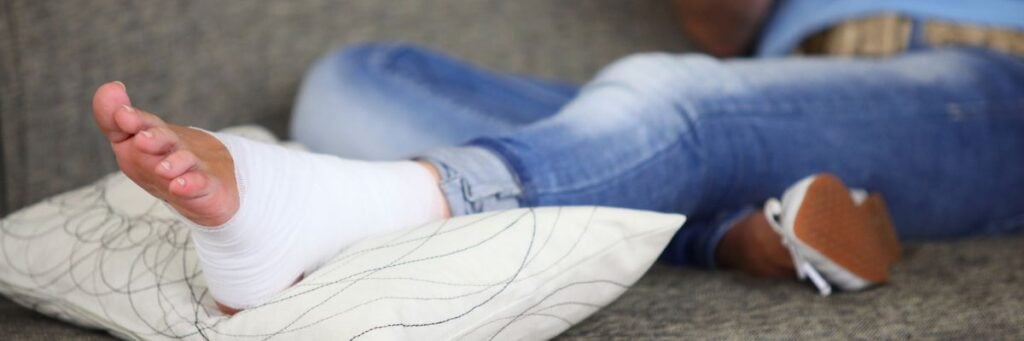
Many cases respond well to conservative treatment and non-surgical care, especially when caught early and when the root cause is addressed. The first steps are usually rest, over-the-counter support, activity changes, and physical therapy focused on rebuilding stability and your ankle’s proprioceptive sense of position. Wearing a brace or walking boot during higher-risk activities can take pressure off the canal while it heals.
Custom orthotics matter a lot if you have flat feet. A well-made orthotic redistributes the load on your foot and reduces the grinding pressure on the sinus tarsi. It won’t reshape your arch, but it can ease symptoms meaningfully and slow tissue damage.
Corticosteroid injections can quiet inflammation and buy weeks to months of relief, which can break the pain cycle so physical therapy can do its work. But repeated cortisone injections weaken the surrounding tissue, so they aren’t a long-term solution.
This is where regenerative therapies offer something different. Instead of just suppressing inflammation, they aim to help your body heal the tissue. At DOCS Foot and Ankle, we offer:
- Platelet Rich Plasma (PRP): a concentrated dose of your own blood platelets injected into the canal to support healing. Our patient, Georgia P., had two PRP procedures and described the experience as “wonderful,” with minimal pain throughout.
- Stem Cell Therapy: uses regenerative cells to support the repair of damaged ligaments and joint lining.
- Amniotic Fluid Allograft: a biologic injection rich in growth factors that supports tissue regeneration without surgery.
- Softwave Therapy: a non-invasive acoustic-wave treatment that stimulates healing and calms chronic inflammation.
These options are especially useful for patients who haven’t responded to cortisone, want to avoid surgery, or aren’t surgical candidates yet.
How long does recovery take?
With conservative care, most patients experience meaningful improvement within 6 to 12 weeks if they remain consistent with therapy and activity changes. Patients with flat feet or significant ligament damage may need longer, and some won’t fully recover without addressing the structural cause. Regenerative treatments like PRP usually take four to eight weeks to show their full effect, since tissue repair takes time.
When is sinus tarsi syndrome surgery needed?
Surgery becomes appropriate when three to six months of conservative and regenerative treatment haven’t given you meaningful relief, or when imaging shows damage, like a complete ligament tear or heavy scarring, that won’t heal on its own.
The standard procedure is arthroscopic debridement: a minimally invasive surgery where a tiny camera and instruments are used to clean out inflamed tissue, scar tissue, and damaged ligament from the canal. If joint instability is the main driver, ligament reconstruction can be done at the same time.
For patients whose flat feet are driving the problem, surgery may be needed to correct the foot’s structure too. That’s where Dr. Bob Baravarian’s approach is different. Rather than using traditional metal hardware, which can cause reactions and sometimes needs a second surgery to remove, we use metal-free techniques with Ossiofiber bio-integrated hardware. The material gradually becomes part of your bone. No metal to remove, no hardware reaction, and patients consistently report faster healing and less post-op pain.
One of our patients, SJ, summed it up: “I had zero pain after my surgery. Everything is healing so well.” Another patient, Rachael H., avoided surgery for years before coming to us. After her procedure with Dr. Bob, she said she felt “100 percent confident” in her care and is now planning her second surgery, expecting to return to a fully active life, pain-free.
Recovery time depends on the procedure. Arthroscopic debridement usually means weight-bearing within a few weeks and full activity in two to three months. Larger reconstructive surgeries take longer but produce more lasting results.
Why patients across Los Angeles choose Dr. Bob Baravarian
Sinus tarsi syndrome doesn’t respond well to generic care and often requires specialized orthopedic expertise. It needs a specialist who understands the joint, recognizes the structural contributors, and has the full podiatric toolkit, from regenerative injections to advanced reconstruction.
Dr. Bob Baravarian has performed over 25,000 surgeries and has been named the top foot and ankle surgeon in both Los Angeles and California. He was the first surgeon in the U.S. to systematically apply metal-free surgical techniques for foot and ankle conditions, and physicians across the country refer their hardest cases to him for revision and reconstructive work.
As patient Chris H. put it: “This is a first-class experience with a world-leading research surgeon. If ‘good enough’ isn’t good enough for you, this is where you want to go.”
If you’ve been dealing with chronic outer-ankle pain and haven’t found answers, the next step is a real evaluation and treatment plan that looks at your anatomy, your history, your lifestyle, and your goals. Explore the foot and ankle conditions treated by
Dr. Bob Baravarian and request a consultation with our team. You deserve a diagnosis that actually explains your pain and a plan built around getting you back to the life you want.
Why trust your feet to Dr. Bob?
Dr. Bob Baravarian has extensive experience treating all types of foot problems, from metatarsalgia to fractures and ulcers. He also has expertise in advanced diagnostics, including bone scans, custom braces, and minimally invasive foot and ankle surgery.
For a consultation, please call (855) 557-5400 or make an appointment online now.
Dr. Bob Baravarian is conveniently located in Los Angeles, near Cedars-Sinai Medical Center, providing expert foot and ankle care for patients throughout Southern California.
Sinus tarsi syndrome FAQs
What is the best treatment for sinus tarsi syndrome?
It depends on how severe it is, how long you’ve had it, and whether something structural like flat feet is driving it. Early or mild cases often respond well to physical therapy, custom orthotics, and activity modifications. When that’s not enough, regenerative therapies like PRP or amniotic fluid allograft can prompt healing without surgery. For persistent symptoms, significant ligament damage, or flat feet driving the problem, surgery (arthroscopic debridement, sometimes paired with flat-foot reconstruction using metal-free hardware) gives the most lasting result.
Can sinus tarsi syndrome heal on its own without surgery?
Mild cases caught early, especially right after a sprain, can resolve with rest, physical therapy, and orthotics. But cases with serious ligament damage, chronic inflammation, or untreated flat feet rarely fully resolve on their own. Leaving it alone lets the tissue inside the canal keep breaking down, which makes future treatment harder. Early specialist evaluation gives you the best shot at avoiding surgery altogether.