How many times have you heard the statement: “There’s nothing you can do for a broken toe”? It’s a faulty assertion that deserves some professional clarification.
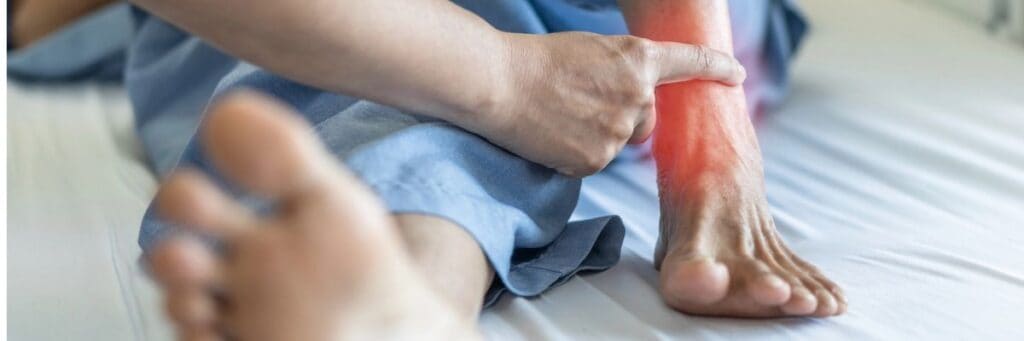
A common injury that affects many of us at some time or another is a broken toe. They seem to happen most often around the home, walking barefoot, with a stubbing injury (#badwords) against a corner of furniture, door, or wall (who put that wall there???).
One of the most common things we hear from patients regarding broken toes is something to the effect: “well, we all know there’s nothing you can do for a broken toe…” This frequently used, but faulty, statement has been ingrained in people’s minds and often puts them on the wrong path to recovery. Most problems can be averted with proper appreciation of exactly what’s wrong, and by subsequently outlining the appropriate course for treating a broken toe. It’s actually quite rare that nothing can or should be done.
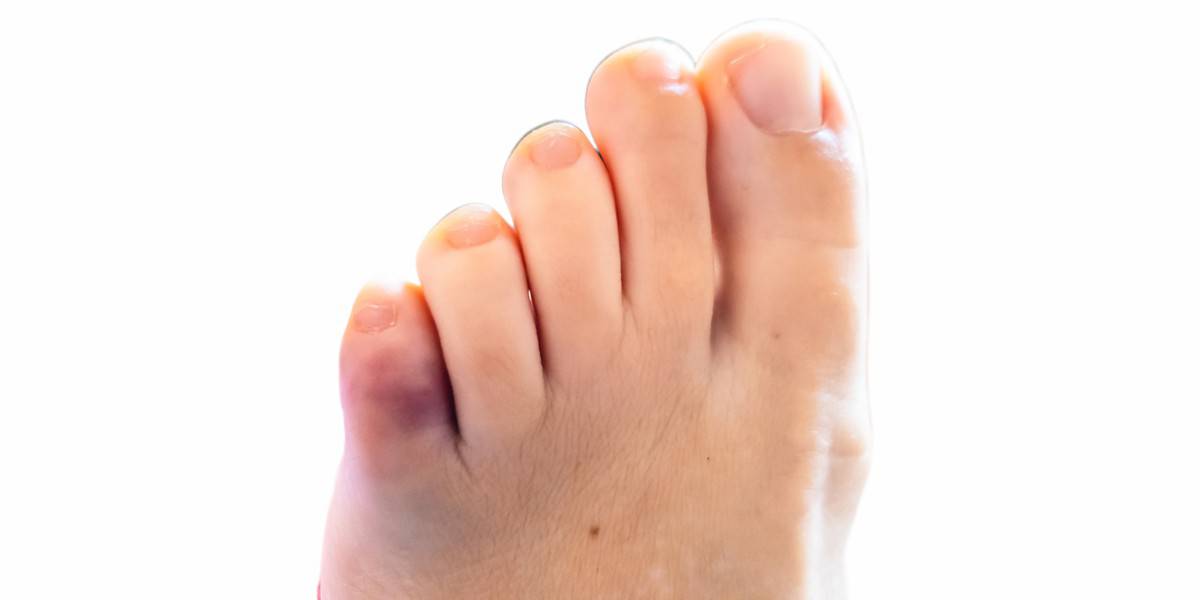
Different types of broken or fractured toes
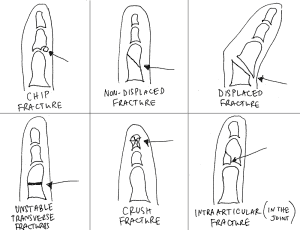
Toe fractures, or broken toes, come in all shapes and sizes. The wide spectrum of possibilities include the following: a non-displaced hairline crack, a chip fracture, a displaced and angulated fracture with a crooked toe, a break into a joint of the toe, an open fracture that can penetrate through the skin, a transverse unstable fracture, etc.
The combinations are all frequently seen, and treatment is different for many of these.
Here is a simple diagram (pardon the amateur artwork) of some of these different fracture patterns:
Treating a broken toe
The fracture pattern determines the right treatment: buddy splinting to an adjacent toe (and the angle of the fracture tells which toe to splint it to), stiff-soled shoe vs boot, if a regular shoe is okay, if the toe needs to be reduced (numbed up and manipulated straight and then splinted), etc. The majority of toe fractures do not need surgery.
Even buddy splinting needs to be professionally instructed. For example, with a common oblique fracture of a 3rd toe that is in alignment, if you splint it to the 2nd toe it may heal just fine. However, based on the angle of the fracture, if you splint it to the 4th toe, it will likely gap the fracture and cause it to heal crooked. So, seeing the fracture pattern on the x-ray helps guide the appropriate treatment.
If you have a significant stubbing injury, we recommend that you get the toe examined and x-rayed. Digital x-rays can be performed in our office, allowing for careful evaluation of the bones of the feet. This quick x-ray can be very helpful in determining the appropriate course of treatment.
To schedule a consultation, please call (855) 557-5400 or make an appointment now.
Dr. Bob Baravarian is conveniently located in Los Angeles, near Cedars-Sinai Medical Center, providing expert foot and ankle care for patients throughout Southern California.