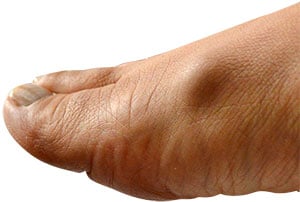
What is a synovial cyst?
A cyst is a pouch or fluid-filled sac underneath the skin. Synovial cysts usually develop on the top of the foot. A synovial cyst forms when jelly-like fluid leaks from a nearby joint. Although they’re medically called soft tissue tumors, synovial cysts are not cancerous and can be easily treated.
Synovial fluid lubricates the facet joints and helps them move smoothly. A channel between the cyst and joint capsule, tendon sheaths, bursae, and ligaments allows fluid to flow freely among these structures.
The size of the sac or cyst can fluctuate with activity and may temporarily disappear before returning. The mass is usually soft, but it can become firmer over time.
What are the symptoms of a synovial cyst?
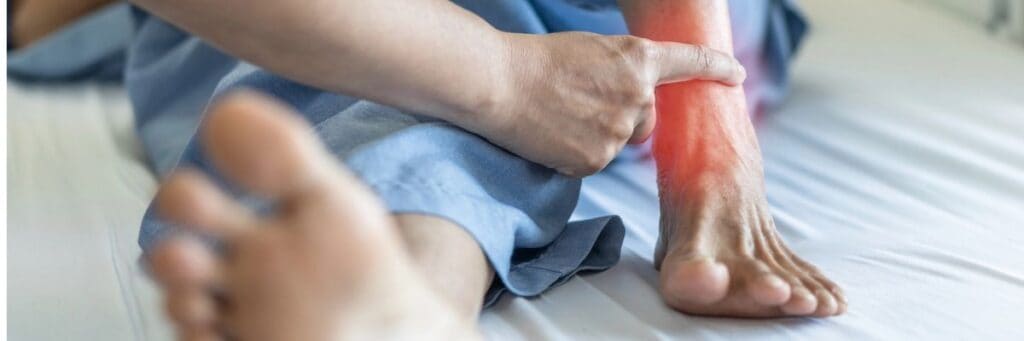
Cysts are often painless but can also cause a burning sensation and skin irritation, making walking and wearing shoes uncomfortable.
A synovial cyst should not be confused with a ganglion cyst, although both are fluid-filled. non-cancerous masses that can occur on the top of your foot.
What are synovial cyst risk factors?
The exact cause of these soft-tissue masses remains unclear, but we do know some risk factors that can raise your chances of developing a synovial cyst.
These harmless lumps typically form near joints and tendons, and while anyone can develop them, certain factors can raise your risk, such as:
- Joint degeneration: Synovial cysts are often linked to degenerative joint conditions like osteoarthritis. This link is probably due to the degenerative changes in the joints, which may lead to cyst formation.
- Joint or tendon trauma: Injuries or trauma to the joint or surrounding tissues can cause irritation and inflammation that lead to cysts.
- Overuse: Repeating motion or stressing a joint or tendon can lead to cyst formation. This is commonly observed in athletes or people who perform repetitive activities.
- Age: Synovial cysts are more common in older adults, and the risk increases due to wear and tear over time. It is rare for someone under 50 to develop a synovial cyst.
- Joint inflammation: Conditions that cause inflammation in the joints, such as rheumatoid arthritis, can increase the risk of synovial cysts.
- Joint dysfunction: Abnormalities in joint function or mechanics can lead to the development of cysts. This may result from underlying common conditions or structural abnormalities.
- Genetics: A genetic predisposition might contribute to developing synovial cysts.
What is synovial cyst foot treatment?
If the mass isn’t causing pain and is fairly small, Dr. Baravarian will probably opt for a watch-and-wait approach, scheduling follow-up visits to monitor the cyst. If there’s pain, limited mobility, or trouble wearing shoes, immediate treatment might be needed.
Dr. Bob is firm on avoiding home remedies such as smashing the cyst, which is not effective and can cause more problems.
Are there non-surgical treatment options for a synovial cyst?
Dr. Baravarian prefers conservative, non-surgical treatments whenever possible. Non-surgical treatment includes pain management and protecting the joint during healing.
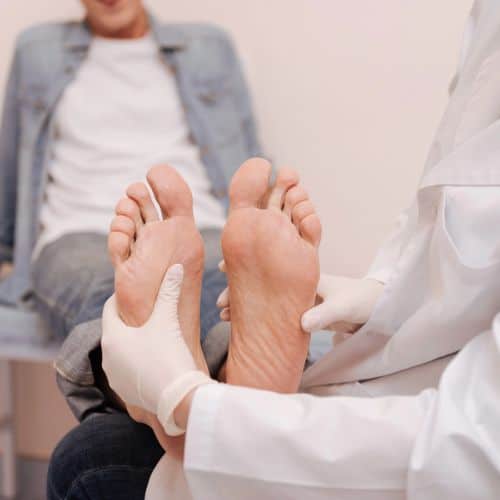
Before choosing your treatment plan, Dr. Bob will examine the affected joint and take X-rays to rule out more serious issues.
His patients generally find relief from pain by icing the area around the cyst and taking over-the-counter anti-inflammatory pain medications. Resting the joint and avoiding strenuous activity can ease discomfort and allow the cyst to resolve on its own.
In some cases, non-invasive treatments fail, and a more aggressive treatment plan becomes needed.
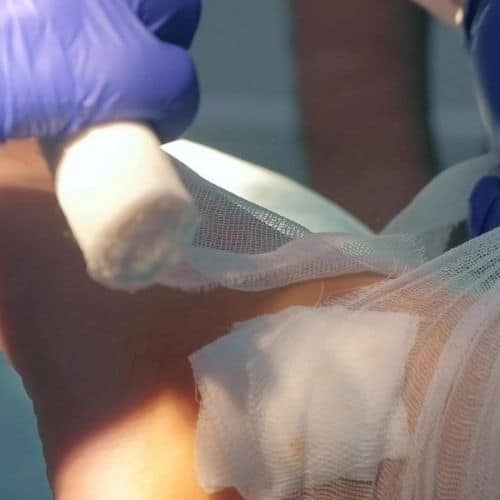
The least aggressive treatment is called aspiration. Dr. Bob uses a local anesthetic to numb the area and then drains the fluid with a needle.
Sometimes, Dr. Bob will use a steroid injection or hyaluronidase (a dissolving enzyme) to lower the chances of cyst recurrence. While aspiration is an effective treatment option, synovial cysts tend to come back frequently.
Surgical treatment options for a synovial cyst
Depending on the size and location of the cyst, excision surgery might be a suitable treatment option. This procedure is performed at the on-site surgical center. Rest and reduced activity may be needed after the procedure. Typically, the patient wears a splint for 7-10 days.
The excision procedure has a substantially higher success rate than aspiration, although complications like joint stiffness, scar formation, and infection are possible.
Dr. Bob Baravarian is the best choice for synovial cyst treatment in Los Angeles
Dr. Bob treats all types of foot cysts. The most common are ganglion, synovial, and plantar fibroma.
You don’t have to accept foot pain. Today, there is a lot of innovation in podiatric medicine, and Dr. Bob, a board-certified orthopedic surgeon, is leading the way. With decades of experience and the highest success rates in the country, Dr. Bob has successfully treated over 200,000 patients. Foot and ankle pain isn’t normal, and ignoring it can cause your condition to get worse and harder to treat.
Dr. Bob is well known as one of the country’s most technologically advanced foot and ankle practices (including sports medicine). While other healthcare teams say they know about “the latest and greatest,” he has been researching, running clinical trials, and performing these techniques for decades.
Dr. Bob Baravarian is conveniently located in Los Angeles, near Cedars-Sinai Medical Center, providing expert foot and ankle care for patients throughout Southern California.
Synovial cyst FAQs
Can synovial cysts occur in other parts of your body besides the foot?

Synovial cysts can also develop on the spinal cord, most commonly in the lumbar region (lower back), and can cause back pain. If the cysts grow large enough, they may lead to spinal stenosis or narrowing of the spinal canal.
How serious is a synovial cyst?
A synovial cyst in the foot is usually not serious but can cause discomfort or pain, especially when walking or wearing certain shoes.
What is the difference between a ganglion cyst and a synovial cyst?
A ganglion cyst is a noncancerous lump that usually forms near joints or tendons and is filled with a jelly-like fluid, while a synovial cyst is specifically a fluid-filled sac that originates from the lining of a joint or tendon. Ganglion cysts are more connected to the connective tissue surrounding a joint, whereas synovial cysts are directly related to degeneration of the joint or tendon sheath.
Can a synovial cyst go away on its own?
Yes, a synovial cyst can resolve on its own. The body may reabsorb the fluid in the cyst over time, causing it to shrink or disappear completely. However, the time frame for this varies, and not all synovial cysts will resolve spontaneously.
Is a synovial cyst cancer?
A synovial cyst is not cancer, but synovial sarcomas are. These are cancerous tumors that develop in muscles, fat, joints, nerves, or blood vessels. While they are rare, they can be very serious and require prompt treatment.
Sources
-
Extraforaminal Lumbar Synovial Cyst Causing Sudden Foot Drop
https://doi.org/10.2176/nmc.48.578 -
Pseudotumoural soft tissue lesions of the foot and ankle: a pictorial review
https://www.ncbi.nlm.nih.gov/pubmed/22347966 -
Giant Synovial Cyst of Thigh: A Rare Entity
https://www.ncbi.nlm.nih.gov/pmc/articles/PMC3670511