What’s a plantar fibroma cyst?
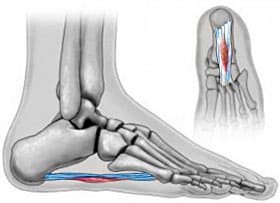
A plantar fibroma is a lump of connective tissue in the arch of your foot, buried deep within the plantar fascia—the band of tissue that runs from the heel to the front of your foot along the bottom. Also called Ledderhose disease, a plantar fibroma nodule is made of the same type of tissue found in ligaments.
A plantar fibroma is slow-growing and can develop on the sole of one or both feet. Fortunately, these tumors are non-cancerous.
However, the mass usually will not disappear without treatment. It’s critically important that you get a proper evaluation of any cysts you discover to rule out more serious medical conditions, such as cancer.
The condition is most commonly diagnosed in the middle-aged and elderly population. Risk factors include diabetes, chronic liver disease, and epilepsy.
What are the symptoms of a plantar fibroma cyst?
Early-stage plantar fibroma may have no symptoms. As it progresses, you might find it difficult to wear shoes that press on the affected area, experience tenderness when walking or standing for extended periods, or have a limited range of motion.
You might also notice a firm lump about the size of a pea or marble along the arch of your foot. The nodule may enlarge over time, or you could develop more of them.
What causes plantar fibroma?
While the exact cause of plantar fibroma is unknown, there are some factors we know can contribute, such as:
- Genetics: If you have a family history of Ledderhose disease or Dupuytren’s contracture, you may be at higher risk of developing plantar fibroma. It’s also more common among people of Northern European descent.
- Trauma or injury: Repetitive stress can lead to the development of fibromas. This could include activities that involve excessive running or jumping.
- Abnormal foot mechanics: People with flat feet or high arches may be more prone to developing plantar fibromas due to the increased stress on the plantar fascia.
- Inflammation: Chronic inflammation within the plantar fascia may play a role in the development of fibromas. Conditions such as plantar fasciitis may increase the likelihood of fibroma formation.
How to diagnose plantar fibroma
The diagnosis of plantar fibroma typically involves a combination of a clinical examination, review of medical history, and, in some cases, imaging studies. Dr. Baravarian starts with a review of your medical history and symptoms, followed by a physical examination.
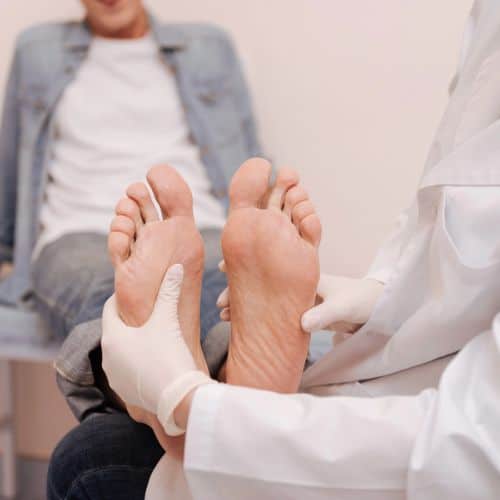
Palpation of the sole of the foot allows Dr. Bob to feel for lumps or nodules that indicate plantar fibroma. A range of motion test also provides critical information for uncovering the cause of your foot pain.
Dr. Bob also has access to imaging technologies, such as X-rays, magnetic resonance imaging (MRI), and CT scans, that let him see the bones and soft tissues of the foot. This helps him rule out other foot and ankle issues as the cause of your pain.
To rule out malignant sarcomas (cancer), Dr. Bob can also take a sample from the fibroma for a biopsy.
What are the plantar fibroma treatment options?
The treatment of plantar fibromas (or plantar fibromatosis) depends on the severity of symptoms and how much they affect daily life. In many cases, nonsurgical options focus on relieving pain and discomfort.
Dr. Bob always prefers conservative treatments when possible. If we’ve confirmed that your foot lumps are caused by a plantar fibroma and ruled out malignancies, he might adopt a wait-and-see approach.
Instead of immediate intervention, we’ll use orthotic insoles or shoe inserts to relieve pressure on the fibroma and help reduce your pain. Physical therapy has also been shown to improve flexibility and strength in the foot, helping protect your plantar fascia from future issues or fibromas.
For more serious cases, Dr. Bob might use steroid injections to decrease inflammation and pain. However, corticosteroids can cause other side effects and are not a long-term fix.
If conservative treatments aren’t giving enough relief, he has other medical procedures he can consider, such as:
- Extracorporeal Shock Wave Therapy (ESWT): ESWT uses shock waves to promote healing in the affected area. It is a non-invasive treatment that may be considered when conservative methods do not work.
- Radiation therapy decreases the size of the lesion and relieves symptoms. However, this method is less frequently used and may carry potential risks and side effects.
- Hyaluronidase injections: Hyaluronidase is an enzyme that breaks down hyaluronic acid, a key building block of dense connective tissue. When injected into or around a plantar fibroma, it softens and reduces the fibrous nodule by degrading the extracellular matrix that provides its structure. Think of it as essentially loosening the knot of tissue that’s causing your discomfort.
Surgery for plantar fibromas
In severe cases, Dr. Bob may perform plantar fibroma excision (surgical removal). Removing the soft-tissue masses from the plantar fascia can weaken the tendon, so orthotics and physical therapy are important for supporting and strengthening the tendon after surgery.
You’ll typically need to avoid weight-bearing for three weeks while the incision heals.
Although the recurrence rate after surgery is lower, plantar fibroma still has a high chance of coming back. Your surgeon will set up a regular follow-up schedule to monitor your feet.
Dr. Bob is the best choice for plantar fibroma treatment in Los Angeles
You don’t have to suffer from foot pain. Many innovations in podiatric medicine are available today, and Dr. Baravarian, a board-certified podiatric surgeon, is at the forefront. With decades of experience, his success rates are among the highest in the country. Foot and ankle pain is not normal. Ignoring it can lead to worsening conditions that are harder to treat.
Dr. Bob is well known as one of the nation’s most technologically advanced foot and ankle surgeons. While other practices say they know about “the latest and greatest,” he has been researching, running clinical trials, and performing these techniques for decades.
Dr. Bob Baravarian is conveniently located in Los Angeles, near Cedars-Sinai Medical Center, providing expert foot and ankle care for patients throughout Southern California.
Plantar fibroma FAQs
How serious is plantar fibroma?

Plantar fibromas can vary in severity. Small nodules might cause little discomfort, whereas larger or multiple nodules can result in more significant pain and interfere with daily activities. The condition’s severity usually depends on the size of the fibroma, the level of discomfort it produces, and how it responds to treatment. It’s important to seek medical advice for proper diagnosis and management, especially if it affects walking or standing.
Is it okay to massage a plantar fibroma?
Massaging a plantar fibroma should be approached carefully. A gentle massage might help ease tension in nearby tissues, but applying direct or aggressive pressure on the fibroma could potentially irritate it or make it grow. It’s crucial to consult a healthcare professional before beginning any massage therapy to confirm it’s safe and appropriate for your condition. Alternative treatments like physical therapy, orthotics, or steroid injections may also be suggested.
Is walking bad for plantar fibroma?
Walking isn’t necessarily harmful for plantar fibroma, but it can sometimes worsen symptoms, especially if the fibroma is large or painful. It’s crucial to wear supportive shoes and consider using orthotic insoles to lessen pressure on the foot.
What will happen if you don't get rid of a plantar fibroma?
If a plantar fibroma is not treated, it may stay the same, grow slowly, or sometimes grow more quickly. While it’s not life-threatening, an untreated fibroma can cause discomfort or pain, especially when walking or standing. Over time, this may affect mobility and quality of life. However, not all fibromas need active treatment, particularly if they are not causing significant symptoms.
Is plantar fibroma hereditary?
The hereditary nature of plantar fibroma is not well understood, but there might be a genetic component in some cases. Although most cases of plantar fibroma happen randomly, there have been instances where it appears in multiple family members, indicating a potential genetic susceptibility. However, environmental factors and personal health conditions also significantly influence its development.