Sean Kirst, a columnist at Central Current in Syracuse, recently wrote about a friendship that started with a want ad. In 1971, a man named Peter Talty placed a notice in the Buffalo Evening News seeking someone with opposite-foot sizes to his own, so the two of them could trade shoes and split the cost. A Buffalo news anchor read the ad aloud on the air. A man named Jim McCormick heard about it, called, and the two bought shoes together for the next 40 years.
It’s a lovely story, and you should read Sean Kirst’s column at Central Current. We’re not going to retell it here, but you should read it yourself!
What we can tell you is the part our doctors see in the exam room. Two men had to advertise in a newspaper to solve this, and 55 years later, patients still walk into our office assuming they’re the only one. They’re not. If your feet are different sizes, here’s what’s going on and what you can actually do about it.

Why don’t your feet match?
Nearly everyone has feet that differ a little. Studies of foot asymmetry consistently find that most people measure slightly larger on one side, often by a third of a size or less. That’s normal, and it’s why our doctors always measure both feet.
A difference of a full size or more is a different conversation. That usually points to something specific, and it’s worth knowing what it is. For example:
Clubfoot
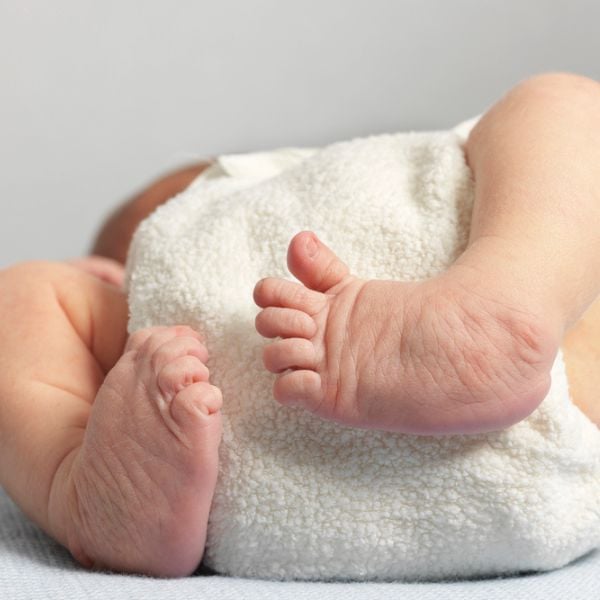
Clubfoot, known medically as talipes equinovarus, is one of the more common causes. The foot turns inward and downward, and it’s present at birth. The Centers for Disease Control and Prevention estimates it affects roughly one in 1,000 babies born in the U.S.
Treatment today is very good. The Ponseti method uses a series of casts, usually started in infancy, and most children go on to walk and run normally. But even with excellent correction, the treated foot often ends up shorter and narrower than the other one for life, creating a challenge for those with narrow feet on only one side. That’s not a treatment failure. It’s the nature of the condition.
Limb length discrepancy and hemihypertrophy
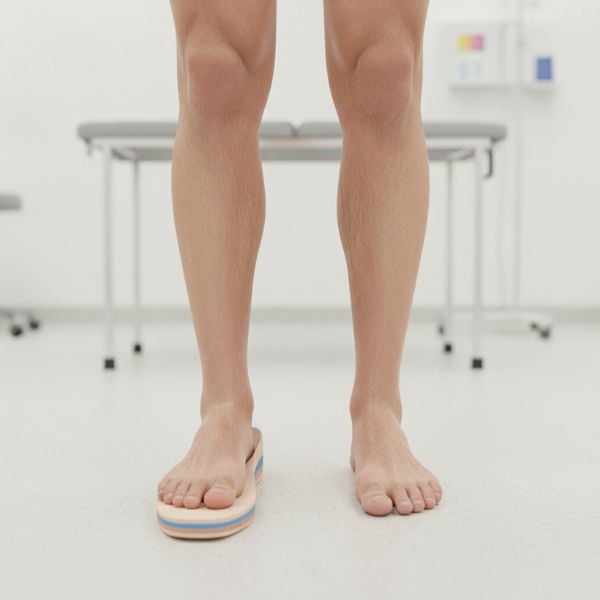
Sometimes one whole side of the body grows differently. This can be subtle, showing up as a longer foot and a slightly longer leg, or it can be part of a broader condition your doctor would have identified in childhood.
Because the foot is at the end of the chain, a length difference higher up the leg often shows itself first in how your shoes wear out.
Injury, surgery, and time
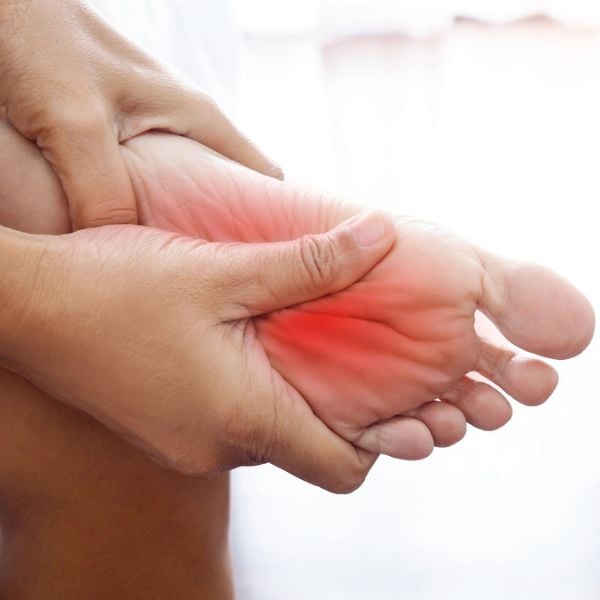
A fracture, a serious sprain, or foot surgery can permanently change a foot’s shape and volume. So can nerve conditions that affect the muscles on one side, sometimes requiring the use of an AFO (ankle-foot orthosis).
Feet also change through adulthood; pregnancy, weight change, and simple aging can lead to flat feet by flattening an arch and adding length, sometimes unevenly, often requiring better arch support.
Bunions, hammertoes, and swelling
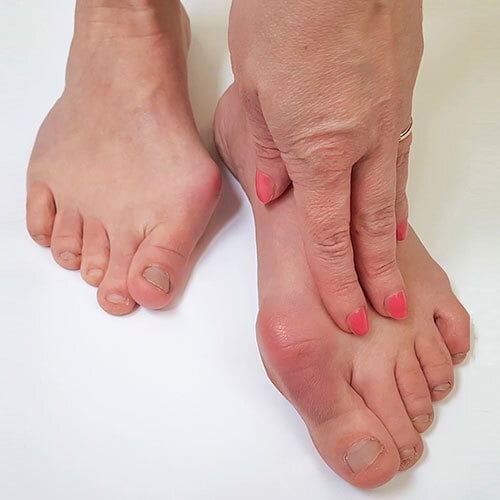
A significant bunion pulls the big toe joint outward, making the forefoot wider. If you have one on a single side, that foot may need a different width or even a different size than its partner.
Swelling from lymphedema, venous insufficiency, or arthritis can also make one foot reliably larger by late afternoon. Previous injuries, fractures, tendon damage, or surgical procedures may permanently change the shape or volume of one foot. Structural differences such as a fallen arch, flatfoot deformity, or variations in bone alignment can likewise cause one foot to fit differently, even when overall foot length appears similar.
When a size difference is worth an appointment
You should see a foot specialist if:
- One foot has changed size noticeably in adulthood, especially over months rather than years.
- You have pain, numbness, or weakness on the larger or smaller side.
- One shoe wears out much faster or in an unusual pattern.
- You’ve developed calluses, blisters, or ulcers on one foot from rubbing.
- Your hip, knee, or lower back aches on one side, which can happen when a length difference changes your gait.
- You have diabetes or neuropathy. A poorly fitting shoe on a foot you can’t fully feel is how small problems become serious ones.
That last point deserves emphasis. If you have diabetes, a shoe that’s a size too big is not a harmless inconvenience. Friction from a loose shoe causes blisters, and blisters on a neuropathic foot can turn into ulcers before you ever feel them.
How to actually buy shoes for two different feet
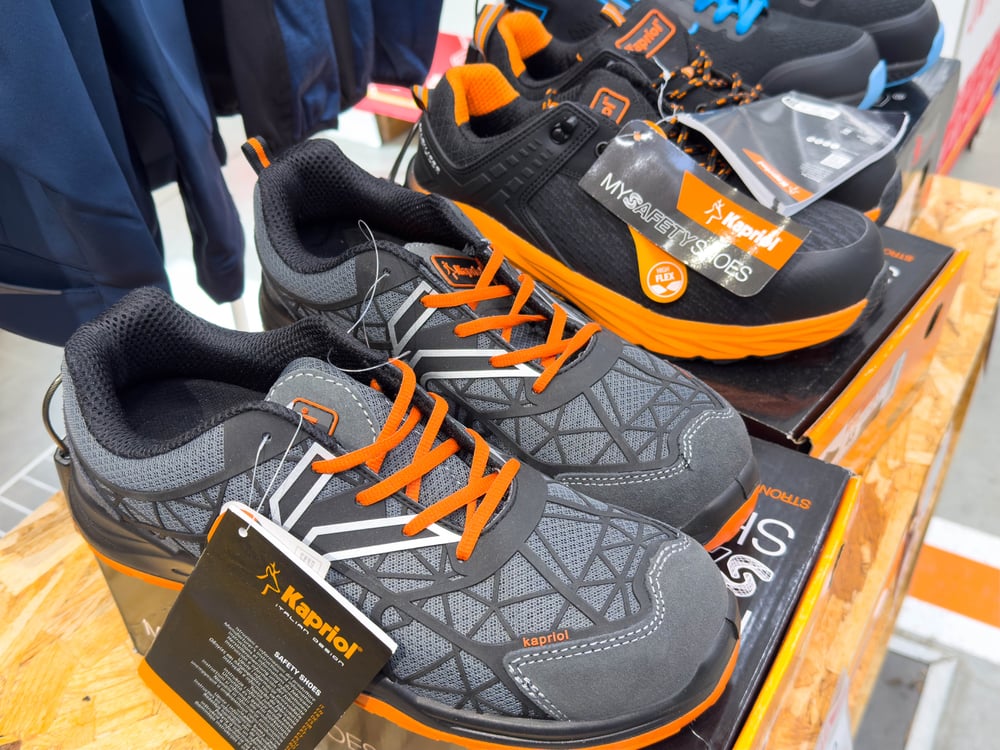
Peter Talty and Jim McCormick had to find each other through a newspaper. You have better options.
Buy for the larger foot, then fill the gap. This is the standard advice, and it’s still the right starting point for a difference of about a half size to a full size. Our doctors can fit the smaller side with a custom orthotic, specialized insoles, a heel grip, a tongue pad, or a thicker sock. Filling volume is much easier than removing it.
Use lacing to your advantage. The two shoes in a pair don’t have to be laced the same way. A snugger lace pattern or an adjustable strap, like those found on a Birkenstock sandal, on the smaller foot buys you a real fit without changing the shoe.
Buy split sizes. Several retailers will sell you two different sizes, specifically catering to those who need split-size shoes or mismatched-size shoes. Nordstrom has long allowed customers to buy a split-size pair, and its policy on single shoes and mismatched sizes is among the more accommodating in retail. It’s worth calling a store directly rather than trying to do it online.
Try the National Odd Shoe Exchange. For a difference of two sizes or more, where split-size buying gets expensive, the National Odd Shoe Exchange is a nonprofit that matches people with mismatched feet, which is essentially Talty’s want ad turned into a permanent, national organization. It also distributes single shoes to amputees.
Consider custom. For a difference of three or four sizes, or a foot shape that no stock shoe accommodates, custom shoes, orthopedic shoes, and specialized inserts stop being a luxury and start being the practical answer. Our doctors can tell you whether you’re at that point, and whether your insurance is likely to cover it. Many plans cover therapeutic shoes for patients with diabetes.