The plantar fascia is a strong web of ligament that runs along the bottom of your foot, from your heel bone (calcaneus) to the bones of your toes. It functions as a resilient shock absorber and supports the arch of your foot.
What’s Plantar Fasciitis?
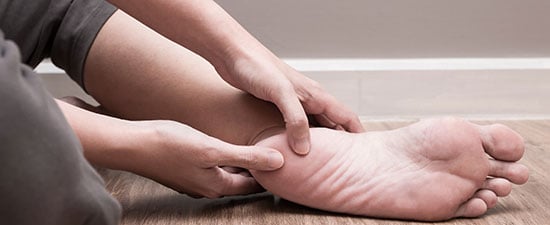
Plantar fasciitis is the name of the condition that occurs when repetitive overuse of the area causes small “micro-tears” and inflammation of the plantar fascia. Plantar fasciitis can be caused by sports, activity, obesity, flat feet, and an abnormal bone structure, to name a few.
The resulting excruciating pain affects the bottom of the foot, the back of the heel, the ball of the foot, and, most commonly, the arch of the foot.
The most telling sign is that sharp, stabbing heel pain you feel with your very first steps in the morning – the kind that makes you wince the moment your foot hits the floor. That pain often eases after a few minutes of walking, only to return after long periods of standing or when you rise from a chair. Other common symptoms include a burning sensation along the arch, stiffness after rest, and tenderness when you press on the bottom of the heel. Left untreated, the discomfort can become constant and start affecting how you walk, stand, and live your daily life.
Certain factors make you more vulnerable to developing plantar fasciitis. The most common risk factors include:
Flat feet or high arches – both alter the way load is distributed across the plantar fascia
Tight Achilles tendon or calf muscles – reduced flexibility places extra strain on the fascia with every step
Overuse and repetitive impact – runners, dancers, and people who spend long hours on hard floors are especially susceptible
Weight gain – additional body weight increases the mechanical load on the heel and arch
Sudden increases in activity – ramping up exercise too quickly without adequate conditioning
Poor footwear – shoes with inadequate arch support or worn-out soles offer little protection
Understanding what’s driving your pain is the first step toward a tailored treatment plan – and it’s exactly where Dr. Bob Baravarian begins with every patient he sees.
How Is Plantar Fasciitis Diagnosed?

Once you recognize the telltale signs – that sharp, stabbing heel pain first thing in the morning or that burning ache along the arch after a long day on your feet – the next natural question is: how does a specialist actually confirm it’s plantar fasciitis and not something else?
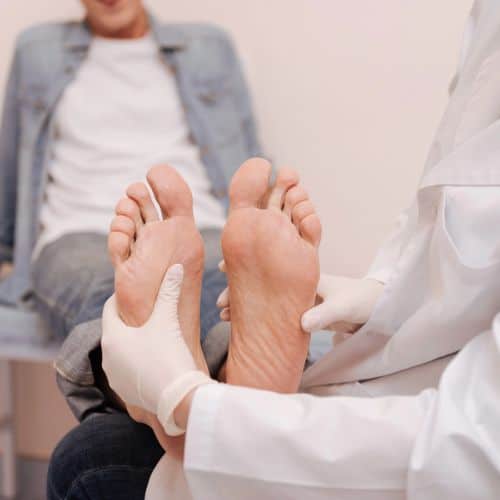
The good news is that diagnosis is usually straightforward. Dr. Bob starts with a thorough physical exam, pressing gently along the plantar fascia to pinpoint exactly where the tenderness is. He’ll also assess your foot’s range of motion, arch structure, and Achilles tendon flexibility, since tightness there is a common contributing factor. He takes the time to listen to your full history – when the pain started, what makes it worse, your activity level, and your footwear habits – because personalized care starts with truly understanding your situation.
In most cases, a clinical exam is all that’s needed to reach a confident diagnosis. However, if there’s any uncertainty – or if your symptoms suggest a stress fracture, nerve entrapment, or another condition – Dr. Bob may order imaging. An X-ray can rule out bone spurs or fractures, while an ultrasound or MRI gives a detailed look at the soft tissue, revealing the degree of plantar fascia thickening or tearing. This state-of-the-art diagnostic approach ensures your tailored treatment plan targets the real root of your pain from day one.
Common Symptoms and Risk Factors of Plantar Fasciitis
Now that you know what plantar fasciitis actually is, let’s talk about how to recognize it – because the sooner you identify it, the sooner you can start feeling better. The good news is that the symptoms are pretty distinctive once you know what to look for.
The most telltale sign is that sharp, stabbing heel pain first thing in the morning. You roll out of bed, take your first few steps, and it feels like someone is driving a nail into the bottom of your foot. That pain often eases up after you’ve been moving for a few minutes, but it can come roaring back after long periods of sitting or standing. You might also notice a burning or aching sensation along the arch of your foot, or stiffness that makes walking feel awkward after rest.
So who’s most likely to develop plantar fasciitis? Several risk factors can put extra stress on that plantar fascia tissue, including:
Flat feet or high arches – both alter the way weight is distributed across your foot
Tight Achilles tendons or calf muscles – limited flexibility increases strain on the fascia
Overuse or sudden activity increases – runners, hikers, and people who stand for long shifts are especially vulnerable
Weight gain – extra body weight places significantly more load on the heel
Worn-out or unsupportive footwear – shoes without proper arch support are a common culprit
Age – people between 40 and 60 are at higher risk, as the fascia loses some elasticity over time
If any of these sound familiar, you’re definitely not alone. Plantar fasciitis is one of the most common foot problems Dr. Bob sees, and with a tailored treatment plan, most patients find real, lasting relief.
1. Conservative care is the first option when treating chronic plantar fasciitis
Rest, ice and heat, in-office physical therapy, home stretching, orthotics, and appropriate footwear resolve over 70% of our plantar fasciitis cases. When conservative treatment isn’t enough to heal plantar fasciitis, we use an array of state-of-the-art treatments. The good news? Most patients never need to go further than these foundational steps – and Dr. Bob’s team will walk you through each one personally, tailoring the plan to your lifestyle and the severity of your condition.
Stretching and physical therapy
Targeted stretching is one of the most effective tools in the conservative care toolkit. The plantar fascia stretch – pulling your toes back toward your shin and holding for 30 seconds, repeated three times each morning before you take your first step – directly relieves tension at the heel insertion point. Calf stretches against a wall and towel stretches, performed twice daily, help loosen a tight Achilles tendon, one of the most common contributors to plantar fasciitis pain. In-office physical therapy adds soft tissue mobilization, ultrasound therapy, and guided strengthening exercises that address the root mechanical causes, not just the symptoms. Most patients begin noticing meaningful improvement within four to six weeks of consistent stretching.
Night splints
That sharp, stabbing pain with your very first steps in the morning happens because the plantar fascia tightens overnight while your foot is relaxed in a pointed position. A night splint holds your foot at a gentle 90-degree angle while you sleep, keeping the fascia in a mild stretch so it doesn’t contract and micro-tear again when you stand up. Many patients find that adding a night splint alone produces noticeable relief within two to four weeks.
Anti-inflammatory medications
Short-term use of NSAIDs such as ibuprofen or naproxen can reduce acute inflammation and make it easier to stay active during your recovery. Dr. Bob’s team will advise you on appropriate dosing and duration – typically two to four weeks – because long-term NSAID use carries its own risks and doesn’t address the underlying mechanical problem.
Orthotics and footwear
Supportive footwear and custom or over-the-counter orthotics redistribute pressure away from the inflamed fascia and correct the biomechanical issues – such as flat feet or overpronation – that caused the problem in the first place. Look for shoes with firm arch support, adequate heel cushioning, and a slight heel raise. Avoid walking barefoot on hard floors, especially first thing in the morning. Custom orthotics prescribed by Dr. Bob are molded specifically to your foot structure and tend to outperform generic insoles for patients with significant arch or gait abnormalities.
Ice, rest, and activity modification
Rolling a frozen water bottle under your foot for 10 to 15 minutes after activity reduces localized inflammation and provides immediate pain relief. Reducing high-impact activities like running or jumping – even temporarily – gives the fascia the recovery window it needs. This doesn’t mean complete rest; low-impact movement like swimming or cycling keeps you active without aggravating the heel.
Mechanical and electronic technologies are not always the source of modern medical miracles. The best results come from the body’s innate healing system. When conservative care has been given a genuine trial – typically eight to twelve weeks – and pain persists, Dr. Bob evaluates each case individually and moves to the advanced, regenerative treatments below. Here are some revolutionary options available at DOCS Foot and Ankle that do just that.
2. Platelet Rich Plasma Therapy
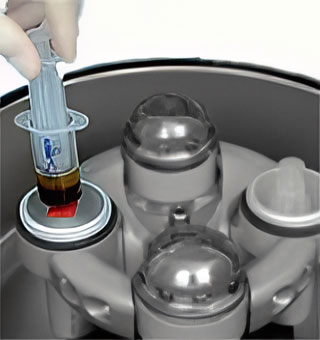
When our bodies are injured, the body’s healing system rushes blood cells to the affected area to begin recovery. But when healing isn’t completed within the limited time the body dedicates to a non-life-threatening injury, the system stops tending to that injury.
Then these healing resources are devoted to other, more immediately needful, areas. The result? A chronic condition of unrelenting pain from the abandoned injury.
Platelet-rich plasma (PRP) therapy helps the body kick-start healing at the site of the chronic condition. PRP uses an infusion of healing cells collected from the patient’s own blood supply.
These cells are then isolated in a centrifuge. They are then infused into the injury site, where they immediately restart healing of plantar fasciitis. This protocol effectively calms the inflamed plantar fascia, reducing plantar fasciitis pain.
Most patients require one to three PRP sessions, spaced four to six weeks apart, depending on the severity of the condition and how the tissue responds. Because the treatment uses your own blood – nothing foreign, nothing synthetic – there is virtually no risk of rejection or allergic reaction. Many patients notice a meaningful reduction in heel pain within four to six weeks of their first session, with continued improvement over the following two to three months as the regenerative process takes hold.
Patient outcomes at DOCS Foot and Ankle speak for themselves. Georgia P., who underwent two PRP procedures with Dr. Bob’s team, described the experience as having minimal pain and was impressed by how straightforward the recovery felt – a reassuring reminder that regenerative care does not have to mean a difficult road back. Dr. Bob evaluates every patient individually, tailoring each treatment plan to your specific injury, activity level, and goals, as if he were caring for a member of his own family.
PRP is an excellent option for patients who have not found lasting relief through conservative care but want to avoid surgery. It fits naturally into a personalized, minimally invasive treatment pathway – and for many, it is the turning point that finally puts chronic plantar fasciitis pain behind them for good.
3. Stem Cell Therapy
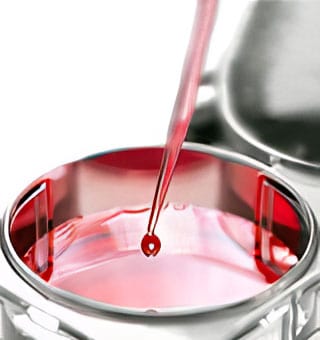
Another way that modern medicine uses our own internal resources to heal ourselves is stem cell therapy. In this procedure, Dr. Bob collects stem cells from our patient’s blood. We winnow out the redundant cells, leaving a powerful collection of regenerative stem cells.
Then our doctor injects these warrior cells into the sole of the foot, where they thrive, multiply, and enlist resident cells in the renewed fight against fascia inflammation.
At Dr. Bob, our stem cell infusions also include hyaluronic acid, which lubricates the plantar fascia, further easing pain and increasing resilience. Like PRP, stem cell therapy can help heal plantar fasciitis. It’s well tolerated and involves minimal discomfort.
4. Amniotic Stem Cell Therapy
Amniotic stem cell therapy is one of the latest advances in stem cell therapy. It employs cells found in the amniotic fluid that surrounds fetuses in the womb. (The supplies of amniotic fluid used at Dr. Bob are obtained during cesarean section births).
This liquid has an extremely high concentration of stem cells. It also contains an extracellular matrix (ECM), which is not present in either PRP or autologous stem cell therapy. ECM facilitates cell migration to the site of inflammation. It also more effectively alerts local cells to re-engage in the battle against inflammation.
5. Topaz Coblation Microdebridement
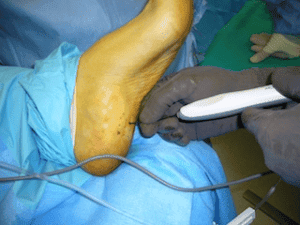
Topaz microdebridement is a minimally invasive surgical process performed in our operating room under sedation and a local nerve block. It takes only about 20 minutes.
This procedure creates a grid pattern of tiny holes over the plantar fascia area. Then the Topaz probe emits a small burst of radio wave energy through the holes. This breaks up scar tissue and reestablishes healthy blood flow into the affected area. The process transforms a chronic condition into a temporarily acute inflammation, which sends a new influx of healing cells directly into the ligament.
Dr. Bob has researched and helped develop Topaz technology for over 10 years. Also, we’ve been involved in several research projects using the Topaz probe for other foot and ankle problems.
6. The TenJet System
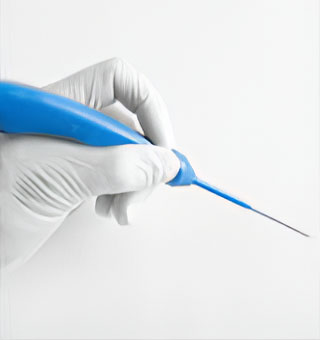
TenJet is another minimally invasive surgical procedure that often alleviates plantar fasciitis pain. Using ultrasound guidance, the TenJet system focuses a high-pressure stream of saline solution directly into the damaged fascia tissue.
The system’s hydrodynamics separate, debride, and flush out defective tissue while leaving the healthy ligament intact.
The doctors at Dr. Bob often add amniotic stem cells or platelet-rich plasma injections during the procedure. This can improve healing and speed recovery. TenJet is an outpatient process, performed under a local anesthetic.
The best part is that it takes only about 15 minutes, and the small incision requires no stitches.
7. Dysport Injections
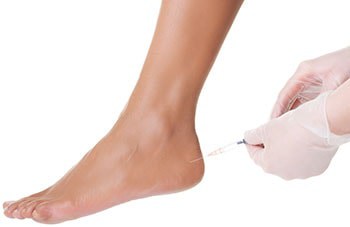
Dysport is similar to Botox, the nerve block agent that makes Hollywood stars’ faces as smooth as marble statues. Dysport is superior to Botox because it acts a day or two sooner and covers a wider area.
When Dysport is injected into an inflamed plantar fascia, it relaxes the ligament. Reducing tension relieves swelling and pain. Dysport relief typically lasts for 3 to 6 months, sometimes even for years.
So how does it actually work? Dysport is a botulinum toxin type A that temporarily blocks nerve signals that tell the plantar fascia muscles to contract. Less contraction means less pulling on the heel bone, which is exactly what an inflamed, overloaded fascia needs to calm down and begin healing. Think of it as hitting a reset button on the chronic tension cycle that keeps plantar fasciitis pain going.
Dr. Bob typically considers Dysport for patients who have already tried conservative care – stretching, orthotics, anti-inflammatories – without lasting relief, and who want to avoid the tissue-thinning risks that can come with repeated corticosteroid injections. Unlike cortisone, which suppresses inflammation but can weaken the fascia over time with repeated use, Dysport addresses the muscular tension component directly and carries no risk of fat pad atrophy or fascia rupture. That makes it a particularly smart option for patients who need more than one round of treatment.
Most patients need just one to two injections, administered with precise guidance to ensure proper placement along the fascia. Downtime is minimal, and many patients notice meaningful improvement within 48 to 72 hours as the relaxation effect takes hold. Combined with a tailored treatment plan that may include regenerative therapies like PRP or Softwave, Dysport can be a powerful part of a personalized care strategy – one Dr. Bob designs individually for every patient, as if caring for family.
8. Shockwave Therapy

Shockwave therapy is another effective treatment when chronic plantar fasciitis has persisted despite conservative treatment. It uses electromagnetic shockwaves to cause micro-traumas within a chronically inflamed plantar fascia.
These micro-traumas break down the injured tissue and calcifications that are characteristic of plantar fasciitis. This disruptive process signals your body to dramatically increase the blood supply to the affected ligaments. The increased blood supply provides the healing cells and nutrients that reduce the inflammation and pain of chronic plantar fasciitis.
Low-intensity shockwave therapy is an in-office 15-minute procedure. Usually, three applications are required. Because it causes very little pain, anesthesia is unnecessary. In some cases, high-intensity shockwave therapy may be indicated.
Because the more intense application of shockwaves can cause more pain, anesthesia may be necessary. However, high-intensity shockwave therapy generally requires only one treatment.
When to See a Doctor for Plantar Fasciitis
Most people try to tough out heel pain on their own for a while – and that’s completely understandable. A little morning stiffness that loosens up after a few steps doesn’t always warrant calling a specialist. But there are clear signs that it’s time to stop waiting and get a professional set of eyes on what’s going on.
You should schedule an evaluation if any of the following apply to you:
Your heel pain has lasted more than a few weeks despite rest, ice, and over-the-counter anti-inflammatories
The pain is getting worse, not better, even after reducing your activity level
You’re limping or changing the way you walk to avoid putting weight on your heel
The pain is waking you up at night or making it difficult to get through a normal workday
You have numbness, tingling, or swelling alongside the heel pain – which could point to a nerve issue or something other than plantar fasciitis
You’ve already tried conservative care for six to eight weeks without meaningful relief
Catching plantar fasciitis early and getting a proper diagnosis matters more than most people realize. Left untreated, chronic inflammation can lead to heel spurs, gait changes, and even knee or hip pain from compensating. The good news is that with a tailored treatment plan from a specialist like Dr. Bob, most patients find lasting relief without ever needing surgery. The sooner you come in, the more options you have – and the faster you get back on your feet.
Stretching Exercises and At-Home Care for Plantar Fasciitis Relief
Before diving into advanced treatments, it’s worth knowing that a consistent at-home routine can make a real difference – especially in the early stages of plantar fasciitis. Think of these habits as the foundation everything else builds on.
The single most effective stretch you can do is the calf and Achilles stretch. Stand facing a wall, place both hands flat against it, step one foot back, and press your heel firmly into the floor. Hold for 30 seconds and repeat three times on each side. A tight Achilles tendon puts enormous strain on the plantar fascia, so keeping it loose is genuinely important.
Another great move is the plantar fascia stretch: sit down, cross one foot over your knee, and gently pull your toes back toward your shin until you feel a stretch along the arch. Do this first thing in the morning before you take a single step – that’s when the tissue is tightest and most vulnerable to micro-tears.
Rolling a frozen water bottle or a tennis ball under your foot for a few minutes each day also helps reduce inflammation and loosen the fascia. Pair that with supportive footwear – shoes with good arch support and cushioned heels – and avoid walking barefoot on hard floors, which can aggravate symptoms quickly. If you’re spending long hours at a desk, check out our tips on working-from-home foot syndrome for more practical foot-care advice.
These steps are a smart starting point, but if pain persists beyond a few weeks, it’s time to explore the personalized care and tailored treatment plans Dr. Bob’s team is known for.
Dr. Bob is recognized for having among the highest success rates in the nation
Dr. Bob Baravarian is fellowship-trained and highly skilled in all available methods to relieve the persistent pain of plantar fasciitis. He carefully evaluates your specific condition and recommends the most effective treatment—or combination of treatments—to address it. If you are experiencing plantar fasciitis pain, Dr. Bob is here to help.
To schedule a consultation, please call (855) 557-5400 or make an appointment now.
Dr. Bob Baravarian is conveniently located in Los Angeles, near Cedars-Sinai Medical Center, providing expert foot and ankle care for patients throughout Southern California.