Your foot might not be expecting a little bundle of joy any time soon, but an ultrasound can actually help diagnose your foot pain, a new study found.
Plantar fasciitis is one of the most common culprits of heel pain, and so it is typically the first thought that comes to mind when a patient complains of an achy heel.
Plantar fasciitis is a painful condition in which the plantar fascia – the thick band of tissue in the sole of the foot stretching from the toes to the heel – becomes inflamed. At night and during long periods of rest, the plantar fascia over-tightens. When you begin to move your muscles again, the pressure rips tiny tears in the connective tissue. The tearing causes inflammation and the characteristic pain in the heel first thing in the morning, and after standing or sitting for several hours.
Misdiagnosed Heel Pain
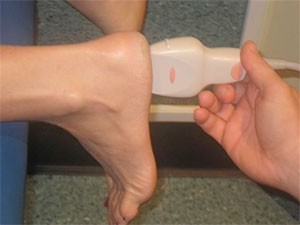
Unfortunately, because plantar fasciitis is so common, it is also easy for some doctors to carelessly misdiagnose heel pain if they don’t take the time to examine the internal structure of the foot. Only an ultrasound can detect the level of detail needed to properly diagnose the injury.
Thanks to research performed by the good Dr. Rock Positano at the Hospital for Special Surgery in NYC, we now know just how crucial the ultrasound is for diagnosing heel pain. Dr. Positano’s team reviewed the medical files of over 140 patients diagnosed with plantar fasciitis, then gave them each an ultrasound. They found that while 73% were correctly diagnosed, an astounding 34% showed undiagnosed ligament tears. In 15% of the feet, the ultrasounds also revealed at least one benign cyst called a plantar fibroma.
When Misdiagnosis Leads to Mistreatment
What’s even more troublesome is that the treatment plans for each of these three conditions can differ greatly, and what works well for one condition may worsen another. Usually, a doctor will advise stretching for a patient suffering from plantar fasciitis. This usually clears up the pain within 3-6 weeks. However, stretching a torn ligament will only exacerbate the injury, since more ligament tears require strict rest and sometimes even surgery. A plantar fibroma might require surgery, but usually the pain can be managed with an orthotic insert.
The best way to avoid a misdiagnosis is to request an ultrasound when visiting your foot and ankle specialist for heel pain.
How do I know if I have Plantar Fasciitis?

The only way to know for sure if your heel pain is caused by plantar fasciitis is to visit your foot and ankle specialist for an ultrasound. You’ll want to see your specialist if you’re experiencing some of these tell-tale symptoms:
- Either dull or sharp pain in the heel or arch, in one or both feet
- Heel/arch pain during first morning steps
- Heel/arch pain after a long period of rest, standing, or walking
- Heel/arch pain while climbing stairs or standing on tip-toes
- Pain subsides after 10-15 minutes, but worsens throughout the course of the day
To schedule a consultation, please call (855) 557-5400 or make an appointment now.
Dr. Bob Baravarian is conveniently located in Los Angeles, near Cedars-Sinai Medical Center, providing expert foot and ankle care for patients throughout Southern California.