What is Plantar Fasciitis?
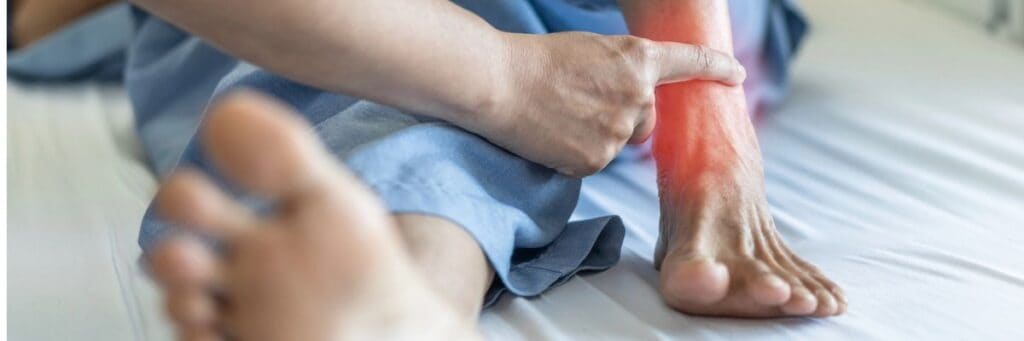
The plantar fascia is a strong band of ligament running along the bottom of your foot, connecting your heel bone (calcaneus) to the base of your toes. It acts as a resilient shock absorber and supports your arch with every step. When repetitive overuse causes that tissue to develop micro-tears and become inflamed, the result is plantar fasciitis – one of the most common and frustrating sources of heel pain Dr. Bob Baravarian treats at DOCS Foot and Ankle.

The condition develops when the plantar fascia is stressed more than it can comfortably handle. Tight calf muscles and a stiff Achilles tendon are frequent culprits, since they transfer extra load onto the heel with every stride. Flat feet or high arches change how force is distributed across the foot, making the fascia work harder than it should. Sudden increases in activity – a new running program, a job that keeps you on hard floors all day – can push already-stressed tissue past its limit. Carrying extra body weight adds to that load with every step.
The most common risk factors Dr. Bob sees in his patients include:
Flat feet or high arches that alter foot mechanics
Tight Achilles tendon or calf muscles
Sudden increases in activity level or training volume
Prolonged standing on hard surfaces
Recent weight gain that increases load on the heel
Worn-out or unsupportive footwear
How Dr. Bob Diagnoses Plantar Fasciitis
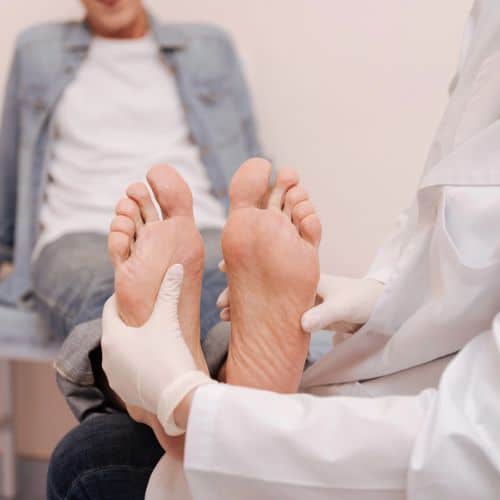
Diagnosis is usually straightforward. Dr. Bob starts with a thorough physical exam, gently pressing along the plantar fascia to pinpoint tenderness and assessing your foot’s range of motion, arch structure, and Achilles tendon flexibility. He listens carefully to your full history – when the pain started, what makes it worse, your activity level, and your footwear habits – because personalized care starts with truly understanding your situation.
In most cases, a clinical exam is all that is needed. When there is any uncertainty – or when symptoms suggest a stress fracture, nerve entrapment, heel spur, or bone spur – Dr. Bob may order imaging. An X-ray rules out fractures and bony changes, while an ultrasound-guided assessment or MRI reveals the degree of plantar fascia thickening or tearing. A gait analysis may also identify biomechanical contributors like overpronation or abnormal toe spring. This precision ensures your treatment plan targets the root cause of your pain from day one.
1. Conservative Care is The First Treatment Option
Rest, ice, stretching, night splints, anti-inflammatory medications, and supportive orthotics resolve over 70% of plantar fasciitis cases with consistent use. Dr. Bob’s team walks you through each of these five pillars personally, building a tailored treatment plan around your lifestyle and the severity of your condition. Most patients who commit to eight to twelve weeks of conservative care never need to go further – but when they do, the advanced options below are waiting.
Stretching Exercises and At-Home Care for Plantar Fasciitis
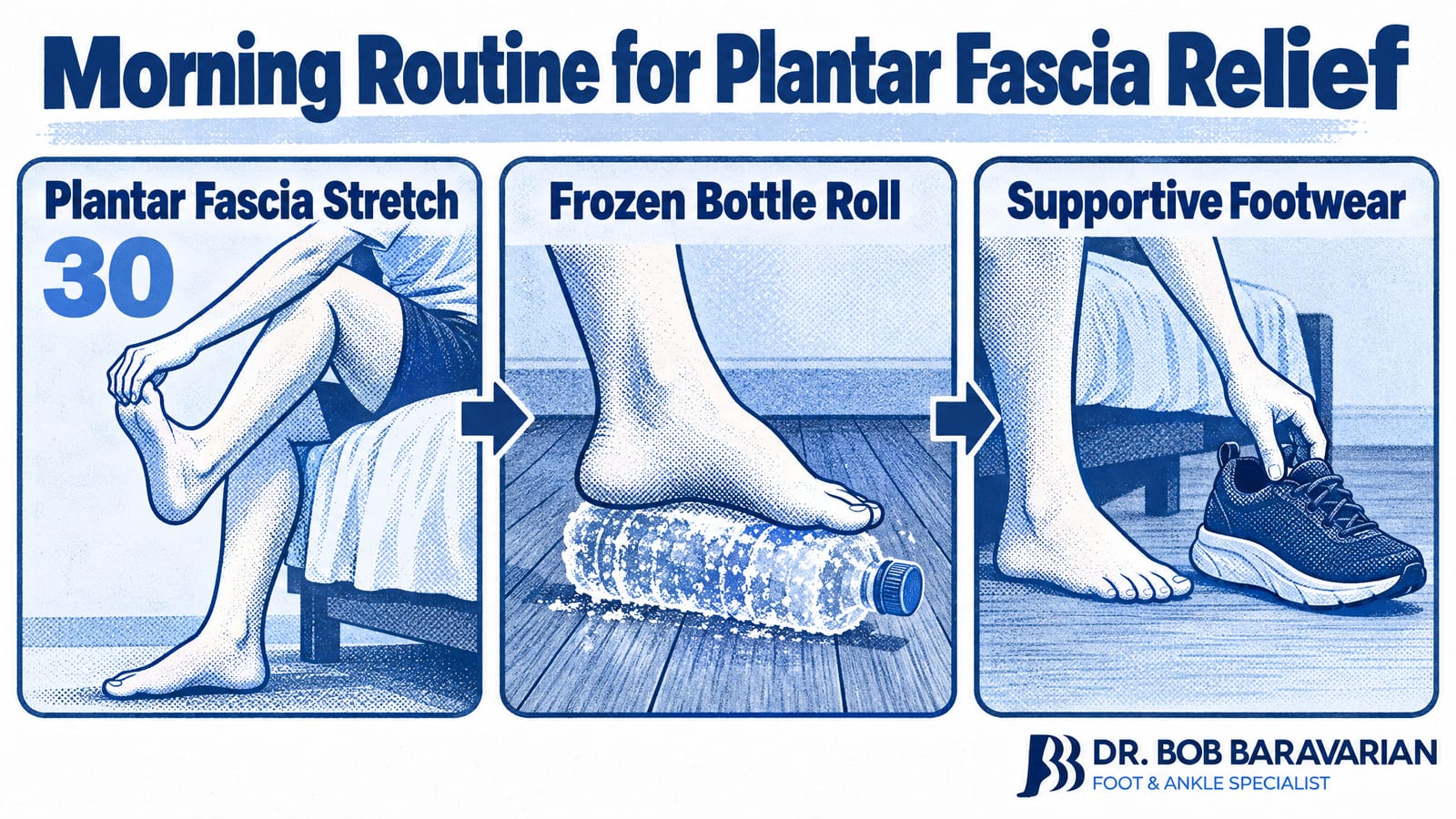
A consistent morning routine is your first line of defense against plantar fasciitis pain. Before you take your first step out of bed, pull your toes back toward your shin and hold for 30 seconds – repeat three times; this plantar fascia stretch directly relieves tension at the heel insertion point. Follow that immediately with a frozen water bottle roll: just two to three minutes of gentle pressure under the arch reduces inflammation and primes the foot for the day ahead. Finally, slip into supportive footwear before you ever touch the floor – going barefoot on hard surfaces first thing in the morning is one of the most common ways patients undo overnight progress. Most patients notice meaningful improvement within four to six weeks of keeping this sequence consistent every single day.
Night Splints
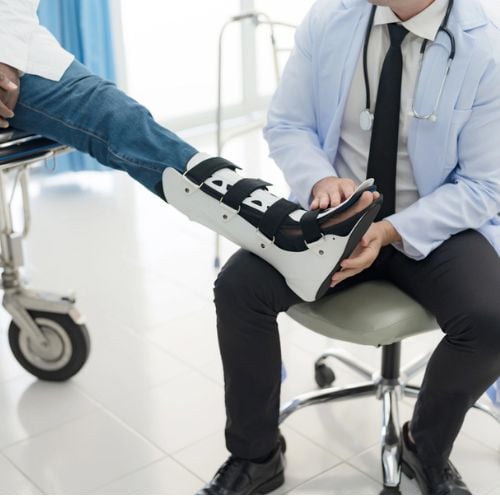
That stabbing morning pain happens because the plantar fascia tightens overnight while your foot rests in a pointed position. A night splint holds your foot at a gentle 90-degree angle while you sleep, keeping the fascia in a mild stretch so it does not contract and micro-tear again when you stand. Many patients find that adding a night splint alone produces noticeable relief within two to four weeks. Plantar fasciitis socks with built-in dorsiflexion support offer a lighter alternative for those who find rigid splints uncomfortable.
Anti-Inflammatory Medications
Short-term use of NSAIDs such as ibuprofen or naproxen reduces acute inflammation and makes it easier to stay active during recovery. Dr. Bob’s team advises on appropriate dosing and duration – typically two to four weeks – because long-term NSAID use carries its own risks and does not address the underlying mechanical problem. Corticosteroid injections are occasionally considered for acute flare-ups, though repeated cortisone use carries a risk of fat pad atrophy and, in rare cases, fascia rupture, which is why Dr. Bob uses them selectively.
Orthotics and Footwear
Supportive footwear and custom or over-the-counter orthotics redistribute pressure away from the inflamed fascia and correct biomechanical issues – such as flat feet or overpronation – that caused the problem in the first place. Look for shoes with firm arch support, adequate heel cushioning, and a slight heel raise. Avoid walking barefoot on hard floors, especially first thing in the morning. Custom orthotics prescribed by Dr. Bob are molded specifically to your foot structure and consistently outperform generic insoles for patients with significant arch or gait abnormalities.
Ice, Rest, and Activity Modification
Rolling a frozen water bottle under your foot for 10 to 15 minutes after activity reduces localized inflammation and provides immediate pain relief. Reducing high-impact activities like running or jumping – even temporarily – gives the fascia the recovery window it needs. Low-impact movement like swimming or cycling keeps you active without aggravating the heel.
At-Home Morning Routine for Ongoing Relief
Before taking your first step each morning, sit on the edge of the bed and perform the plantar fascia stretch – toes pulled back toward your shin, held for 30 seconds, three repetitions per foot. Follow that with a frozen bottle roll for five to ten minutes to calm overnight inflammation. Then step into supportive footwear immediately; never walk barefoot on hard floors first thing. For more practical foot-care habits, see our guide on working-from-home foot syndrome. This simple sequence, done consistently, reinforces everything else in your treatment plan.
When conservative care has been given a genuine trial and pain persists, Dr. Bob evaluates each case individually and moves to the advanced, regenerative treatments below – pioneering non-metal, minimally invasive, and regenerative techniques that deliver faster healing, less pain, and great results.
2. Platelet-Rich Plasma Therapy
When the body is injured, healing cells rush to the site – but with a chronic condition like plantar fasciitis, that healing response stalls before the job is finished. Platelet-rich plasma (PRP) therapy restarts that process by concentrating healing platelets from your own blood in a centrifuge and injecting them directly into the damaged fascia. Because the treatment uses nothing foreign or synthetic, there is virtually no risk of rejection or allergic reaction.
Most patients require one to three PRP sessions spaced four to six weeks apart, depending on the severity of the condition. Many notice a meaningful reduction in heel pain within four to six weeks of their first session, with continued improvement over the following two to three months as the regenerative process takes hold. PRP fits naturally into a minimally invasive treatment pathway and is an excellent option for patients who want to avoid surgery. Georgia P., who underwent two PRP procedures with Dr. Bob’s team, described minimal pain and was impressed by how straightforward the recovery felt. Dr. Bob tailors every plan to your specific injury, activity level, and goals – as if caring for a member of his own family.
3. Stem Cell Therapy
Stem cell therapy takes regenerative medicine a step further by harvesting your body’s most powerful repair cells directly from your blood. Dr. Bob isolates these cells, removes redundant material, and injects a concentrated collection of regenerative stem cells into the sole of the foot, where they multiply, thrive, and recruit resident cells to renew the fight against fascia inflammation.
What sets Dr. Bob’s stem cell protocol apart is adding hyaluronic acid to every infusion. Hyaluronic acid lubricates the plantar fascia, reduces friction at the injury site, and increases the tissue’s long-term resilience – a combination that goes beyond what PRP alone can achieve. Where PRP delivers a concentrated burst of growth factors to kickstart healing, stem cell therapy introduces living, self-replicating cells that actively direct tissue repair over a longer window – making it a meaningfully more potent regenerative stimulus for patients with stubborn or advanced cases. This makes autologous stem cell therapy a strong option for patients with more advanced tendinopathy or those who have had a partial response to PRP and need a more potent regenerative stimulus.
The procedure is well tolerated and involves minimal discomfort. Most patients return to light activity within a few days, with progressive improvement over six to twelve weeks as the new cells integrate and the fascia remodels. Full tissue remodeling can continue for up to six months, which is why Dr. Bob schedules follow-up evaluations to track your progress and adjust your tailored treatment plan as healing unfolds. Dr. Bob considers stem cell therapy for patients who have completed conservative care without lasting relief and who want to avoid surgical intervention. Ideal candidates have tried PRP at least once, have imaging-confirmed tendinopathy, and are committed to a structured recovery protocol. Because the cells come from your own body, the risk profile is very low, making it a compelling next step in a personalized, minimally invasive care pathway.
4. Amniotic Stem Cell Therapy
Amniotic stem cell therapy represents one of the most advanced options in regenerative medicine for chronic plantar fasciitis. It uses cells derived from amniotic fluid collected during cesarean section births – a rich biological source with an exceptionally high stem cell concentration that is processed, screened, and made available as an off-the-shelf treatment, meaning no blood draw is required from the patient.
What makes amniotic therapy uniquely powerful is the presence of an extracellular matrix (ECM) – a structural scaffold that is absent in both PRP and autologous stem cell therapy. The ECM actively facilitates cell migration to the site of inflammation and more effectively signals local cells to re-engage in tissue repair. Think of it as providing not just the workers, but the entire construction framework they need to rebuild the damaged fascia efficiently.
Because the ECM accelerates cell recruitment from the very start, many patients notice symptomatic relief a little earlier than they would with autologous PRP alone – though meaningful tissue remodeling still unfolds over eight to twelve weeks. Most patients return to light daily activity within a few days of the injection, with progressive improvement continuing through the following three months.
In practice, amniotic stem cell therapy tends to be considered for patients with more significant fascia damage, those who prefer to avoid a blood draw, or those who have had a limited response to autologous PRP or stem cell injections. It is also a strong option for patients whose imaging shows a thickened, chronically inflamed fascia that has not responded to conservative care – a pattern Dr. Bob sees regularly in active adults and those who have been managing symptoms for a year or more. Dr. Bob evaluates each patient’s imaging, symptom history, and lifestyle to determine whether amniotic therapy, autologous stem cells, or a combination protocol offers the best path forward – always tailoring the plan as if caring for family.
5. Topaz Coblation Microdebridement
Topaz microdebridement is a minimally invasive, 20-minute procedure performed under sedation and a local nerve block. A grid of tiny channels is created over the plantar fascia, and the Topaz probe delivers precise bursts of radiofrequency energy through each one — breaking up scar tissue, stimulating new collagen, and restoring healthy blood flow to the chronically damaged area. The result is a controlled reset: a stalled chronic condition becomes an acute healing response the body can resolve.
What sets Dr. Bob apart is that he helped build this technology. He has been involved in Topaz research and development for over 10 years, contributing to the clinical studies that shaped how the probe is used for plantar fasciitis and other foot and ankle conditions. Patients benefit directly from that expertise every time the procedure is performed.
Most patients bear weight the same day and return to light activity within one to two weeks, with continued improvement over six to eight weeks as new collagen matures. Topaz is best suited for patients who have completed a full course of conservative care — typically three to six months — without lasting relief, and who want to avoid open surgery. It is often combined with PRP or amniotic biologics in a single session to amplify the regenerative response.
6. The TenJet System
The TenJet system uses a high-velocity saline jet — delivered through a needle-sized probe under real-time ultrasound guidance — to precisely debride damaged plantar fascia tissue without disturbing the healthy tissue around it. No incision, no general anesthesia, and no lengthy recovery: most patients return to normal activity within two to four weeks.
What makes TenJet particularly powerful at DOCS Foot and Ankle is how Dr. Bob deploys it. Rather than using TenJet alone, he routinely pairs it with a PRP or amniotic stem cell injection in the same session. The debridement clears away degenerated tissue that blocks healing; the biologic injection then floods the freshly prepared site with growth factors or regenerative cells—creating a combined stimulus that neither treatment achieves on its own.
TenJet is an excellent option for patients with imaging-confirmed plantar fascia tendinopathy who have not responded to conservative care and want a non-surgical, ultrasound-guided solution. It is also well suited to active patients who need a faster return to sport than open procedures allow. Dr. Bob tailors the biologic pairing — PRP versus amniotic — to each patient’s imaging findings, symptom duration, and recovery goals.
7. Dysport Injections
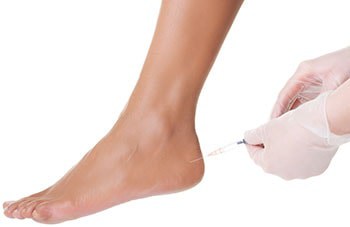
Dysport is a botulinum toxin type A – similar to Botox but superior in two important ways: it acts one to two days sooner and spreads across a wider treatment area. When injected into the plantar fascia, Dysport temporarily blocks the nerve signals that tell the surrounding muscles to contract. Less contraction means less pulling on the heel bone, which is exactly what an inflamed, overloaded fascia needs to calm down and begin healing. Think of it as hitting a reset button on the chronic tension cycle that keeps plantar fasciitis pain going.
Dysport relief typically lasts three to six months, and in some patients the benefit extends for years. Dr. Bob considers Dysport for patients who have already tried conservative care – stretching, orthotics, anti-inflammatories – without lasting relief, and who want to avoid the tissue-thinning risks associated with repeated corticosteroid injections. Unlike cortisone, which suppresses inflammation but can weaken the fascia over time and carries a risk of fat pad atrophy or fascia rupture, Dysport addresses the muscular tension component directly with no structural downside. That makes it a particularly smart option for patients who need more than one round of treatment.
Most patients need just one to two injections, placed precisely along the fascia. Downtime is minimal, and many patients notice meaningful improvement within 48 to 72 hours. Combined with regenerative therapies like PRP or extracorporeal shockwave therapy (ESWT), Dysport can be a powerful component of a personalized care strategy – one Dr. Bob designs individually for every patient, as if caring for family.
8. Shockwave Therapy
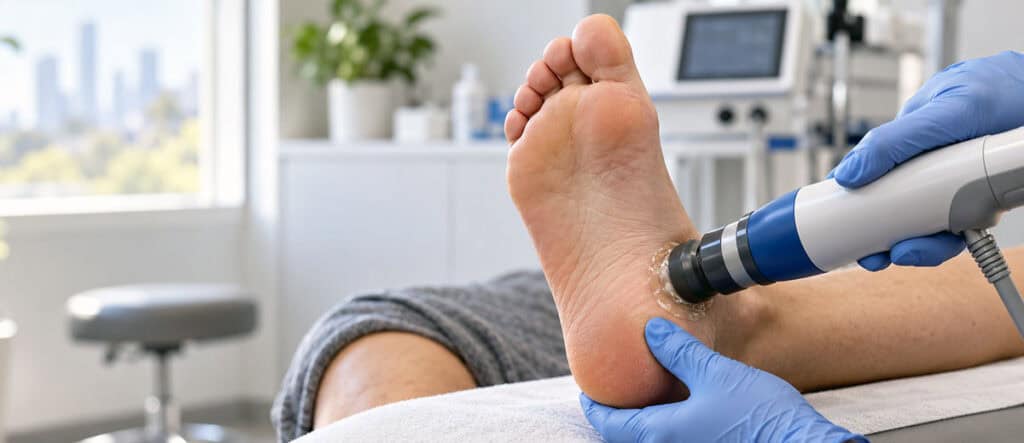
Extracorporeal shockwave therapy (ESWT) is a highly effective option when chronic plantar fasciitis has persisted despite conservative treatment. Electromagnetic shockwaves are directed into the inflamed fascia, creating controlled micro-traumas that break down scar tissue, calcifications, and the degenerated collagen characteristic of long-standing plantar fasciitis. This disruption signals the body to dramatically increase blood supply to the area, delivering the healing cells and nutrients needed to resolve chronic inflammation.
Low-intensity shockwave therapy is an in-office, 15-minute procedure requiring no anesthesia and typically three sessions. High-intensity shockwave therapy delivers a stronger stimulus and generally requires only one treatment, though anesthesia may be used for comfort. Dr. Bob selects the appropriate protocol based on your symptom duration, imaging findings, and how your tissue has responded to prior treatment. ESWT is non-invasive, carries no risk of fascia rupture, and has a strong evidence base – making it one of the most well-validated advanced options for patients who want to avoid any form of surgical intervention.
When to See a Specialist
Most people try to tough out heel pain on their own for a while – and that is completely understandable. But there are clear signs it is time to get a professional evaluation:
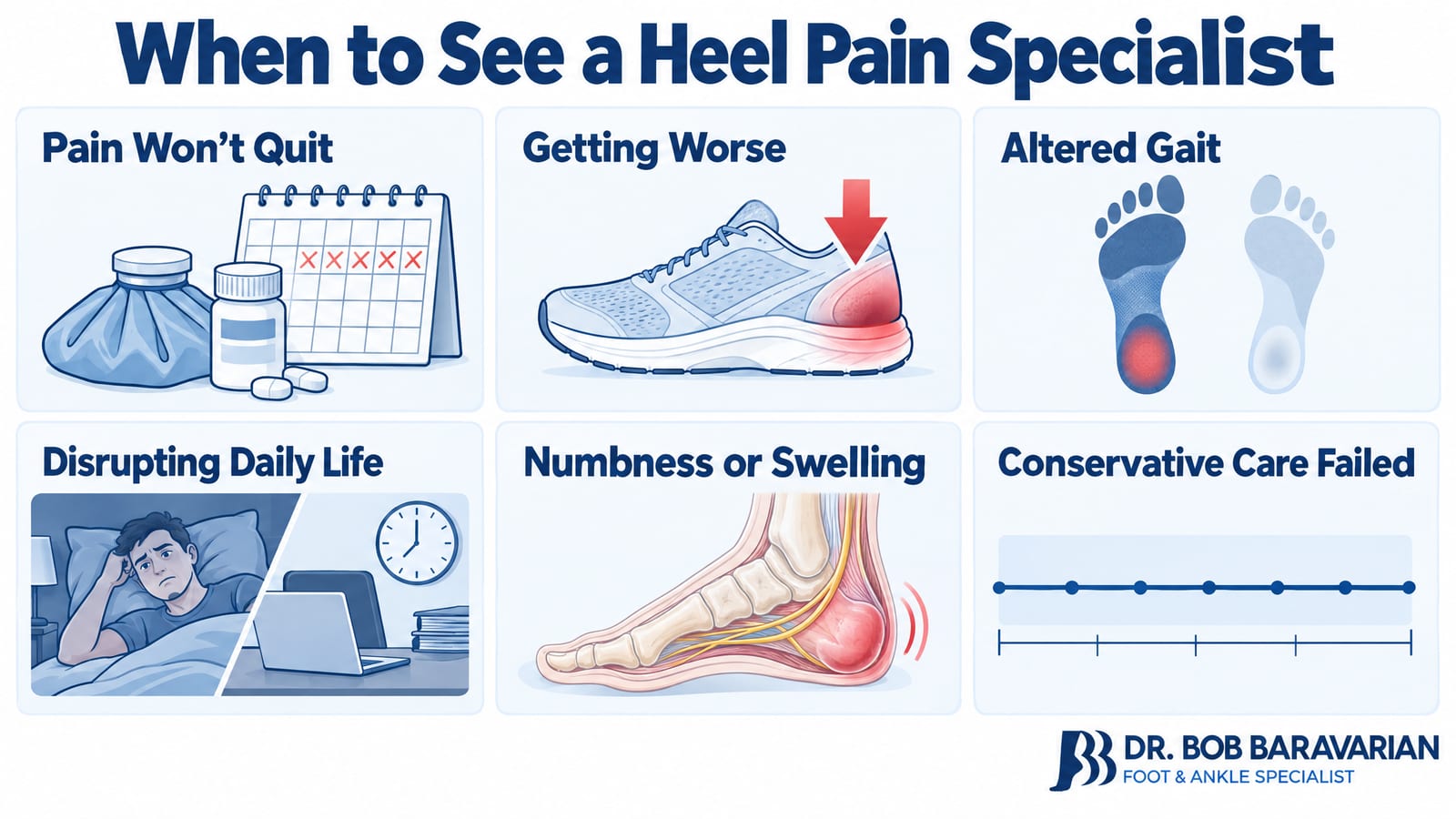
Heel pain has lasted more than a few weeks despite rest, ice, and over-the-counter anti-inflammatories
The pain is getting worse, not better, even after reducing activity
You are limping or changing the way you walk to avoid putting weight on your heel
Pain is waking you up at night or making it difficult to get through a normal workday
You have numbness, tingling, or swelling alongside heel pain – which could point to nerve entrapment or another condition
You have already tried conservative care for six to eight weeks without meaningful relief
Catching plantar fasciitis early matters more than most people realize. Left untreated, chronic inflammation can lead to heel spurs, gait changes, and secondary knee or hip pain from compensating. With a tailored treatment plan from a specialist like Dr. Bob, most patients find lasting relief without ever needing surgery. The sooner you come in, the more options you have – and the faster you get back on your feet. Plantar fasciitis is one of the most common foot problems Dr. Bob sees, and with the right plan, real and lasting relief is absolutely achievable.
Dr. Bob Is Recognized for Having Among the Highest Success Rates in the Nation
Dr. Bob Baravarian is fellowship-trained and highly skilled in every available method to relieve the persistent pain of plantar fasciitis – from foundational conservative care through the most advanced regenerative and minimally invasive techniques available anywhere. He carefully evaluates your specific condition and recommends the most effective treatment, or combination of treatments, to address it. The surgeon other doctors trust for their toughest cases, Dr. Bob takes the time to get to know every patient personally, tailoring each treatment plan as if he were caring for his family.
To schedule a consultation, please call (855) 557-5400 or make an appointment now. Dr. Bob Baravarian is conveniently located in Los Angeles, near Cedars-Sinai Medical Center, providing expert foot and ankle care for patients throughout Southern California.
Exercises