What is chronic plantar fasciitis and how is it treated?
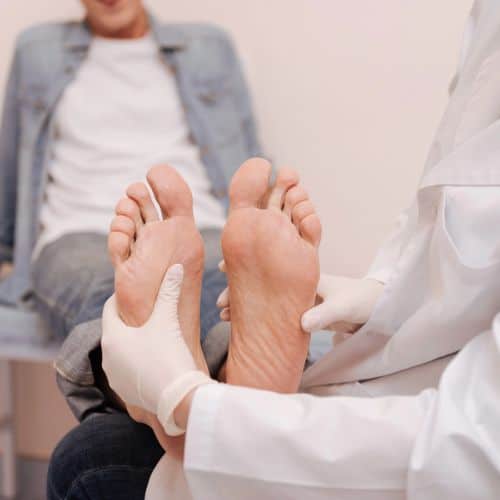
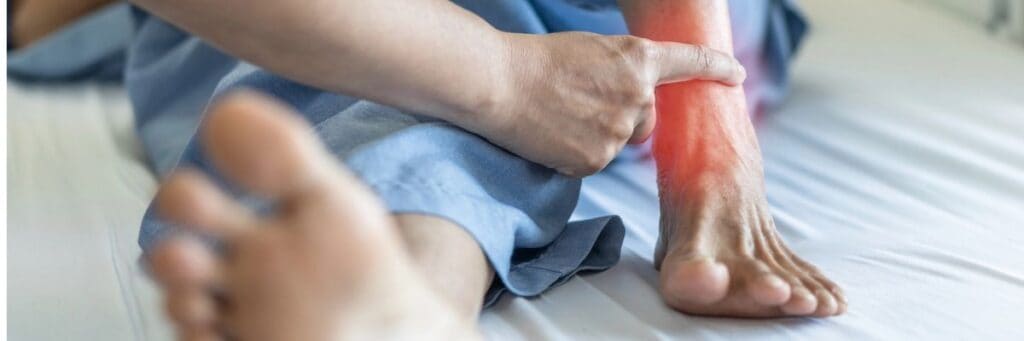
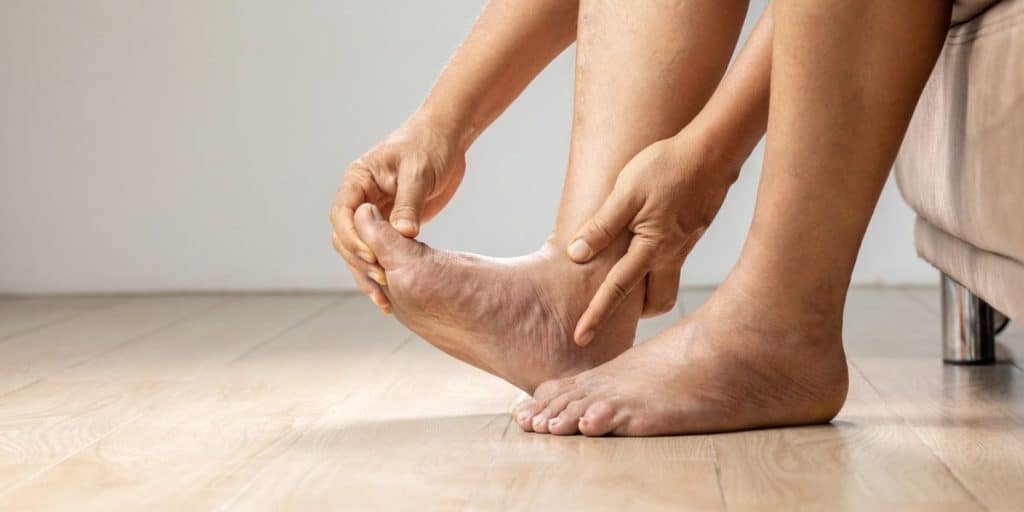
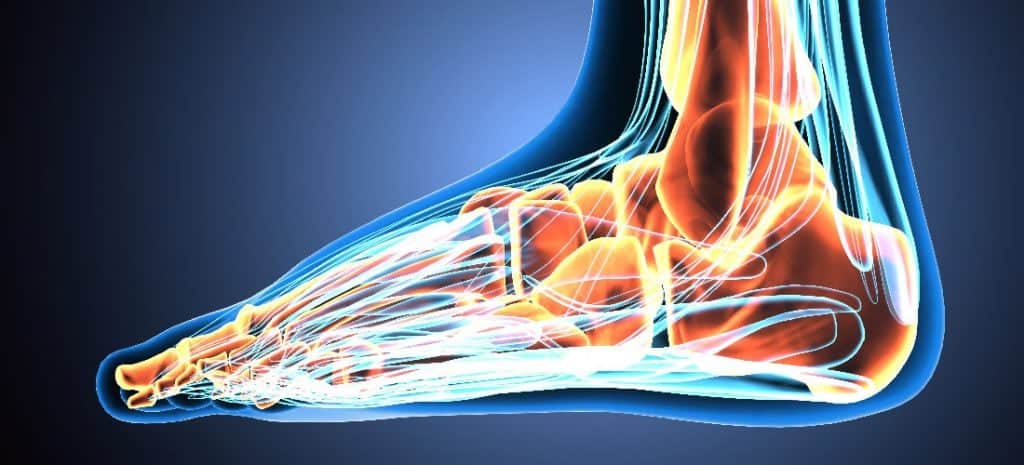
The plantar fascia is the amazingly strong, thick band of tissue that connects the heel bone to the toes. It supports the arch and helps keep your foot from curling into a ball. Chronic plantar fasciitis is defined as plantar fascia pain experienced for at least 3-6 months without resolution.
Chronic plantar fascia treatments often fail because the blood supply to the fascia region decreases or completely goes away after 3-6 months. This is because the body no longer responds to the injury and doesn’t try to heal itself.
Acute injuries often respond to conservative treatments. A chronic issue, on the other hand, requires some form of stimulation to bring blood back to the region. The increased blood flow prompts the body to heal the damage. Often, conservative treatments are attempted to resolve plantar fasciitis.
Early-stage plantar fasciitis treatments include:
- Stretching
- Taping
- Massage and icing
- Shoe modification
- Custom orthotics (or over-the-counter insoles)
Physical therapy
Mid-level treatments include:
- Cortisone injection
- Shockwave therapy
- Scraping of the fascia
When even conservative plantar fasciitis treatments fail
Sometimes conservative treatments for chronic plantar fasciitis mentioned above do not work. At that point, it is often wise to try regenerative medical treatments, including amniotic cell injection and platelet-rich plasma (PRP). These treatments fundamentally “trick the body” into paying attention to the injury and trying again to heal itself long after your body has given up.
Over 95% of our patients are back to normal with the aforementioned treatments. However, a small number of our patients (and a larger number of patients referred to our institutes) have unsuccessful plantar fascia treatment for months or even longer.
At Dr. Bob Baravarian, we have been involved in what we refer to as adjuvant therapy of the fascia, or micro plantar fasciotomy treatments, for over 15 years. We’ve done research on several of the devices used for this type of treatment and even designed some of today’s common procedures.
Advances in plantar fasciitis treatment
Over time, plantar fasciitis treatments have changed and advanced. There are now three options for breaking up the scar tissue in the area. All three treatments, Topaz, Tenex, and TenJet, have similar goals as well as positives and negatives, which we will discuss now.
Topaz therapy for chronic plantar fasciitis
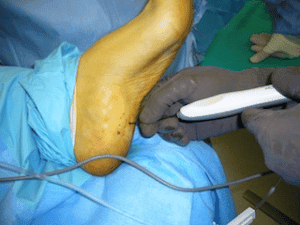
Topaz therapy was the original treatment that was introduced to us about 15 years ago. We were very involved in setting up the treatment, helped design protocols, and even participated in initial trials for the company.
The original design was through an incision on the side of the foot. The probe was used to fenestrate (pierce with more than one opening) the fascia at differing depths and angles in the region of damage. It would break up scar tissue, and microscopic fascia cuts prompted the body to heal the damaged area.
Our research led us to adjust this treatment to be performed through the sole of the foot with about 20-24 needle holes in the area of fascia damage, which was identified with ultrasound. The fascia was then fenestrated with the Topaz probe, and a burst of radiofrequency energy breaks up the scar and stimulates the body’s own response to help heal the region. The procedure worked very well, and patients would be allowed to put weight on the foot after about one week. Patients could shower in one week and overall did well. The only problem is that the multiple incisions can be painful for a while and take time to heal.
How the procedure works in practice. Topaz uses coblation – a controlled radiofrequency energy delivered through a small probe – to break down degenerative scar tissue and trigger a fresh healing response in the plantar fascia. The whole procedure typically takes 15 to 20 minutes and is performed under local anesthesia with light sedation, so you go home the same day. Ultrasound guidance is used throughout to make sure the energy is delivered precisely where the damage is, not just in the general heel area.
What the outcomes look like. Published research, including a recent systematic review in PMC, reports success rates in the range of 70-80% for meaningful pain reduction in patients with chronic plantar fasciitis who had already failed conservative care. Most patients notice gradual improvement over six to twelve weeks as the tissue remodels. Full return to normal activity typically happens between six and twelve weeks, though the initial post-procedure soreness from the needle sites can linger for two to three weeks – which is the honest trade-off with this technique.
Who is the right candidate for Topaz? You are generally a good candidate if you have had plantar fasciitis symptoms for six months or longer, have tried stretching, orthotics, physical therapy, and at least one round of injections without lasting relief, and your ultrasound shows clear thickening or degenerative change in the fascia. Topaz tends to work best when there is a well-defined zone of chronic damage rather than diffuse inflammation across the entire fascia. If your imaging shows a more widespread pattern, or if you have already had a prior procedure on the same foot, we may lean toward a different approach.
The honest pros and cons. The biggest advantage of Topaz is the track record – we have used it for over 15 years, helped shape the protocols, and know exactly what it can and cannot do. It is a proven, well-studied technique with a solid body of clinical evidence behind it. The limitation is recovery comfort: those 20-plus needle entry points on the sole of the foot can be tender underfoot for the first two to three weeks, and some patients find that more disruptive than they expected. Compared to newer single-entry systems, the wound burden is higher – which is exactly why we have continued to evaluate newer options alongside it rather than treating Topaz as the only answer.
Tenex therapy for chronic plantar fasciitis
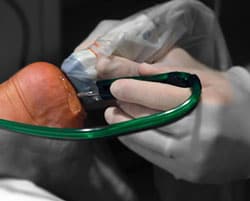
The next option that was introduced was Tenex therapy. The procedure was performed with a needle tip probe attached to suction that manually breaks up the scar tissue. It is performed under ultrasound guidance as the probe is passed back and forth and then suck out the scar tissue.
To be fair to Tenex, the broader clinical community has reported meaningful results with this technology – some studies and specialty centers cite that over 90% of patients experience significant pain relief following the procedure. For patients who had exhausted conservative care and needed something more targeted than a cortisone shot, Tenex represented a genuine step forward when it was introduced, and it helped a lot of people who had been suffering for years.
The procedure was done through a small opening but required a week or so to heal. I never found the results to be amazing. The main problem was that the large probe made a lot of cuts in the fascia and took time to heal.
At times, the larger cuts in the fascia with the large probe could cause scar tissue. While I did not see this in our patients, we treated several patients from other respected foot and ankle surgeons. Eventually, the Tenex probe was not part of our treatment options.
In practical terms, the recovery window of roughly one to two weeks sounds short, but the tissue disruption from the larger probe meant patients were not always back to full activity as quickly as we hoped. The risk of creating new scar tissue – the very problem we were trying to solve – was the limitation I could never fully get comfortable with. When a better, more precise tool became available, it was an easy decision to move on.
TenJet therapy for chronic plantar fasciitis
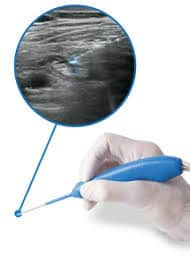
The TenJet therapy is now our favorite and best option. The TenJet machine is placed into the foot through a needle hole. The probe produces a very high-strength jet of water strong enough to break up scar tissue but not strong enough to break up good-quality fascia.
The tip is small, and controlling the amount of scar tissue break-up is very easy. This is because of the probe size and the ability to do the procedure under ultrasound guidance. The water jet breaks up the scar tissue, and the probe, which is attached to a suction machine, sucks out the scar tissue. It is very slick and fairly easy to perform once a person is trained.
Here is what actually happens during the procedure, step by step. First, the heel is numbed with a local anesthetic – no general anesthesia is needed, so you are awake and comfortable the entire time. We then use real-time ultrasound imaging to map exactly where the scar tissue has built up within the plantar fascia.
Once we have a clear picture, the TenJet probe is introduced through a single needle-sized entry point – no scalpel, no stitches. The high-velocity saline jet precisely ablates the damaged, degenerative tissue while the built-in suction simultaneously removes it from the foot. The whole procedure typically takes around 15 to 20 minutes from start to finish.
In terms of outcomes, we see success rates in the range of 80 to 90 percent for appropriately selected patients – meaning those who have genuinely exhausted conservative care for at least three to six months. I also strongly recommend combining TenJet with a PRP injection at the time of the procedure. The PRP floods the freshly cleared tissue with your own growth factors, accelerating the healing response and, in my experience, meaningfully improving the final result.
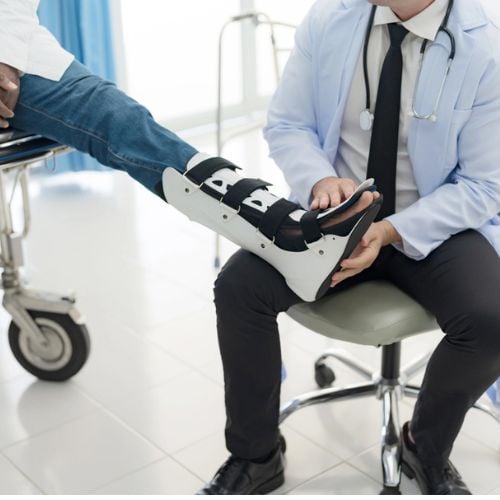
The patient can place weight on the foot immediately. However, many patients prefer to use crutches for a few days and place limited weight on the foot. A boot is worn for a week and then physical therapy is started. Patients can shower after 5 days.
Full recovery typically follows a predictable arc. Most patients are out of the boot and into supportive shoes within one to two weeks. Physical therapy runs for roughly four to six weeks, and the majority of patients report significant pain relief by the six-week mark, with continued improvement through three months. Compare that to the longer, more unpredictable recovery we used to see with Topaz, and it is easy to understand why TenJet has become my go-to recommendation.
The ideal candidate for TenJet is someone who has had plantar fasciitis pain for at least three to six months, has tried stretching, orthotics, cortisone injections, and physical therapy without lasting relief, and whose ultrasound confirms a thickened, degenerative fascia rather than a clean acute tear.
If you are still in the early weeks of heel pain, conservative care should absolutely come first – TenJet is a minimally invasive procedure, but it is still a procedure, and we only recommend it when the evidence says conservative options have run their course. Patients with active infection, certain clotting disorders, or a complete fascial rupture are not good candidates and would need a different tailored treatment plan.
Topaz vs Tenex vs TenJet: Recovery timeline and outcomes compared
If you’re weighing these three options, the honest answer is that all of them work – but they don’t work the same way, and the recovery experience is meaningfully different between them. Here’s how they actually compare when it comes to getting you back on your feet.
Topaz uses radiofrequency energy to stimulate healing in the damaged fascia tissue. Most patients are walking in a boot within a day or two, but full recovery typically takes 6 to 12 weeks. It’s a proven approach – Dr. Bob has been involved in Topaz trials for over 15 years – and success rates in published studies run around 70 to 80 percent for chronic cases. The main limitation is that it creates a controlled injury to the tissue, so there’s a real healing period to work through.
Tenex uses ultrasonic energy to break down and remove damaged tissue. Recovery is similar – roughly 4 to 8 weeks – but Dr. Bob moved away from this approach after finding that the tissue removal sometimes left patients with less predictable outcomes than he wanted for his patients.
TenJet is currently Dr. Bob’s preferred choice for most chronic plantar fasciitis cases. It uses a high-pressure saline jet to precisely debride only the damaged tissue while leaving healthy tissue intact. Most patients are weight-bearing within days, and many see meaningful improvement within 4 to 6 weeks. When combined with PRP therapy, the regenerative response is even stronger – making TenJet the most well-rounded option for patients who’ve exhausted conservative care and want faster healing with less downtime.
Added options to boost plantar fasciitis healing
The goal of all three treatments is to break up scar tissue and increase the blood supply to the damaged region. However, a boost to the body and any additional help we can provide is a bonus.
We suggest adding a PRP or amniotic cell injection to the plantar fascia region during any of the three procedures. This added boost of stimulation assists the body in better healing the fascia. It is done in the operating room or procedure room during the surgery itself.
Platelet Rich Plasma – or PRP – is a regenerative therapy drawn from your own blood. A small sample is spun in a centrifuge to concentrate the growth factors and healing proteins naturally found in your platelets. When injected directly into the damaged plantar fascia tissue immediately after Topaz, Tenex, or TenJet treatment, those concentrated growth factors signal your body to accelerate tissue repair, reduce inflammation, and lay down healthier collagen.
Think of the procedure itself as clearing the path, and PRP as the crew that rushes in to rebuild it. Amniotic fluid allograft works on a similar principle – it delivers a rich mix of growth factors and anti-inflammatory proteins to the treated area, giving your body an extra head start on healing.
In Dr. Bob’s experience, patients who combine one of these regenerative injections with their plantar fasciitis procedure tend to report less post-procedure soreness and a smoother overall recovery compared to those who skip the add-on. It is a small step that can make a meaningful difference – especially for patients who have already been through months of conservative care and want every possible advantage on their road back to pain-free walking.
If you would like to learn more about how PRP works and whether it is right for your situation, explore our dedicated PRP therapy page or reach out to Dr. Bob’s team directly to discuss your personalized treatment plan.
So what is the best solution for your plantar fasciitis pain?
All three options are great for chronic plantar fasciitis treatment, but our current best-practice option is TenJet therapy with a boost of PRP or amniotic cell injection. The procedure is very safe, does not release or majorly cut into the fascia, breaks up and removes scar tissue, and stimulates the body to heal itself. It has a very short recovery time with no or minimal non-weight bearing.
To schedule a consultation, please call (855) 557-5400 or make an appointment now.
Dr. Bob Baravarian is conveniently located in Los Angeles, near Cedars-Sinai Medical Center, providing expert foot and ankle care for patients throughout Southern California.
Frequently asked questions about Topaz, Tenex, and TenJet for plantar fasciitis
How long do I need to try conservative treatments before qualifying for one of these procedures?

Most patients need to have tried at least six months of conservative care – things like stretching, orthotics, physical therapy, and anti-inflammatory treatments – before moving on to Topaz, Tenex, or TenJet. If you’ve been dealing with chronic heel pain that just won’t quit despite doing everything right, you’re likely already a strong candidate. You can also read more about how footwear mechanics contribute to plantar fasciitis and whether simple changes might still help.
Is insurance likely to cover these procedures?
Coverage varies depending on your plan and how well you’ve documented your conservative treatment history. Topaz tends to have the longest track record with insurers. TenJet is newer, so coverage can be less predictable. Dr. Bob’s team will help you navigate the pre-authorization process so there are no surprises.
When can I get back to running or sport?
With TenJet, many patients return to light activity within two to four weeks and full sport by six to eight weeks. Topaz and Tenex timelines are similar, though individual healing varies. Adding PRP to your procedure can support faster healing and a quicker recovery overall.
Will I need surgery if these don't work?
The vast majority of patients find lasting relief with one of these minimally invasive options. In rare cases where pain persists, Dr. Bob can discuss further tailored treatment plans – always with your comfort and long-term function as the priority.