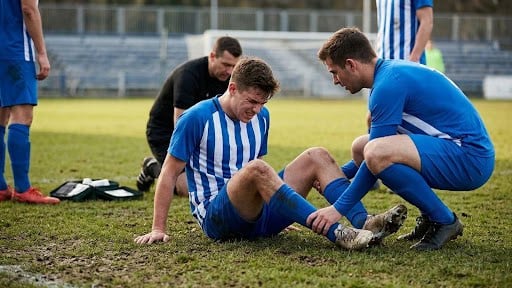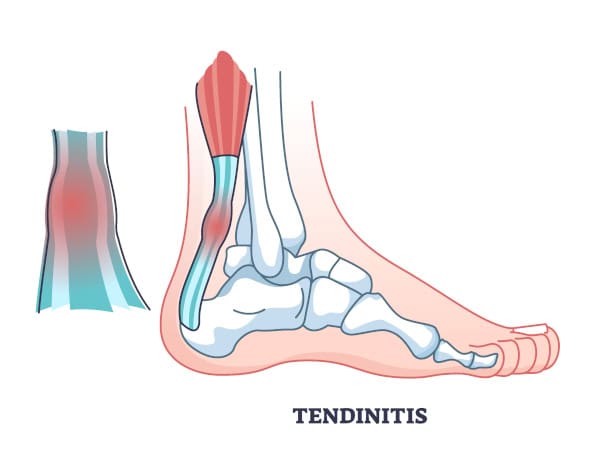
Even though the Achilles tendon is the strongest tendon in the human body, it’s prone to injury, and in fact, Achilles tendonitis is one of the most common conditions presented in our offices.
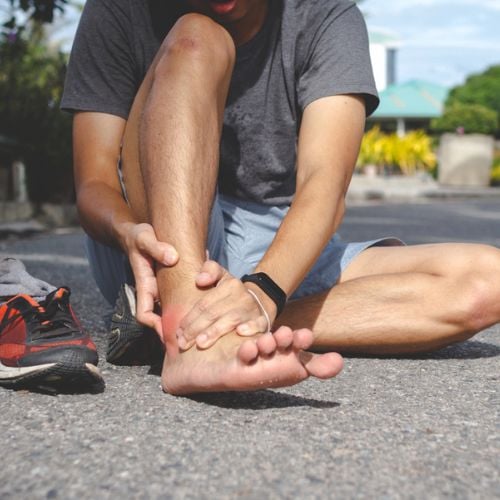
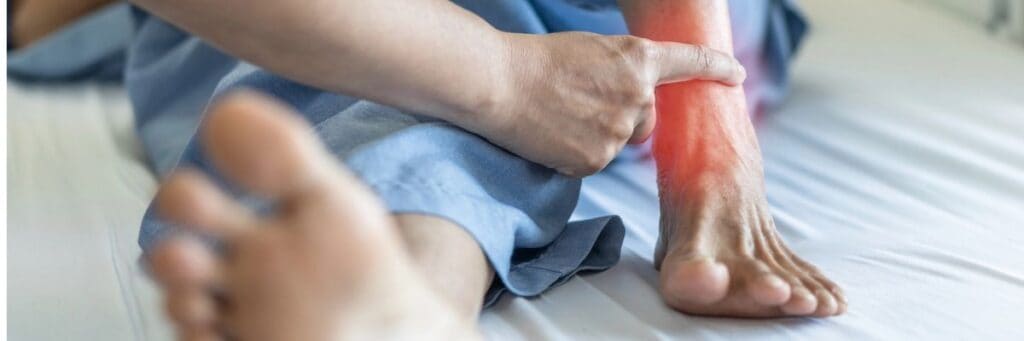
The majority of the Achilles tendon’s attachment is to the upper back portion of the heel. Pain and/or swelling in this area or along the tendon may be a sign of Achilles tendinitis.
Several factors can contribute to the inflammation that causes Achilles tendinitis; it typically presents with a gradual onset of pain and stiffness, which worsens with activity. Common causes include:
- sports such as running, dancing, jumping, and tennis
- overuse is associated with a change in the playing surface
- incorrect footwear
- high-intensity activities
- sudden increase in training and excessive hill running
If you are suffering from Achilles tendinitis, here are some important dos and don’ts to improve recovery and help prevent further damage!
Achilles Tendinitis Treatment Dos:
- It is important to abstain from activities that aggravate your pain.
- Find exercises or activities that do not irritate your Achilles tendon.
- Begin non-steroidal anti-inflammatory drug (NSAIDs) therapy such as Aleve or Ibuprofen (note: NEVER take these medications on an empty stomach as irritation or ulcers and bleeding can occur).
- Ice and massage the Achilles after activity.
- Perform warm-up and stretching exercises prior to physical activity.
- Evaluate shoe gear to assure that they provide adequate support. An orthotic or supportive insert may be necessary.
Achilles Tendinitis Treatment Don’ts:
- Do not delay treatment. Studies have shown that the longer Achilles tendinitis is present; the longer it takes to recover.
- Don’t overstretch. An eccentric stretching routine is most effective. Avoid stretches that put more strain on the Achilles; such as hanging stretches or stair stretching.
- Do not “run through the pain.” Overusing the Achilles tendon causes continued damage, which may delay recovery.
- Avoid steroid injections. Although corticosteroid injection therapy is effective at reducing inflammation if other parts of the body. There is evidence that injection of the Achilles tendon with corticosteroid may result in rupture of the tendon.
See an expert podiatrist
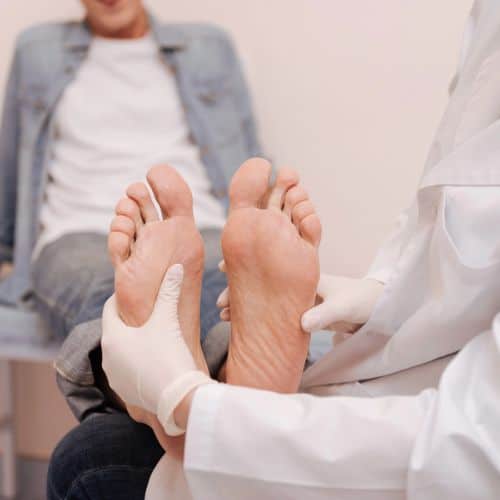
An appointment with a foot and ankle specialist can help evaluate your gait for excessive pronation and discuss proper supportive shoe gear and orthotics. It is also important to evaluate your running technique and evaluate for tightness of the calf or equinus. Imaging, such as ultrasound or MRI, is useful to check for possible tears or damage to the Achilles tendon.
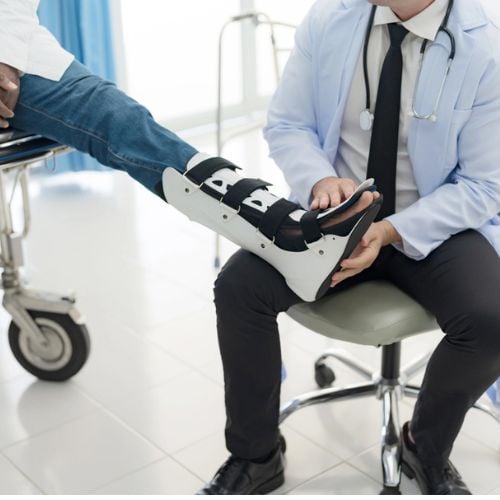
At Dr. Bob Baravarian, we prefer conservative treatment consisting of initial rest, activity modification, and anti-inflammatory medication. If necessary, walking boot immobilization is initiated. After the initial pain and discomfort have calmed down, aggressive eccentric stretching of the Achilles tendon is prescribed. Other options to reduce pain include stretching the tendon with a night splint, at-home stretching exercises, and physical therapy.
If initial therapy fails to resolve symptoms, more advanced treatments may be necessary. We commonly use PRP (platelet-rich plasma) injection for stimulating revascularization and enhancing healing at a microscopic level. PRP injection therapy is a simple procedure that is performed in our institute under local anesthetic and ultrasound guidance. Our usual post-procedure management includes immobilization for 2-6 weeks followed by range-of-motion exercises, physical therapy, and gradual return to activity.
Why choose Dr. Bob Baravarian for Achilles Tendonitis Care?
If you’re struggling with any foot or ankle issues, Dr. Bob Baravarian is here to help. A nationally recognized podiatrist and foot and ankle specialist, he offers the most advanced care with some of the highest success rates in the nation. Dr. Bob is a leader in researching, diagnosing, and treating all foot and ankle conditions and common injuries.
To schedule a consultation, please call (855) 557-5400 or make an appointment now.
Dr. Bob Baravarian is conveniently located in Los Angeles, near Cedars-Sinai Medical Center, providing expert foot and ankle care for patients throughout Southern California.