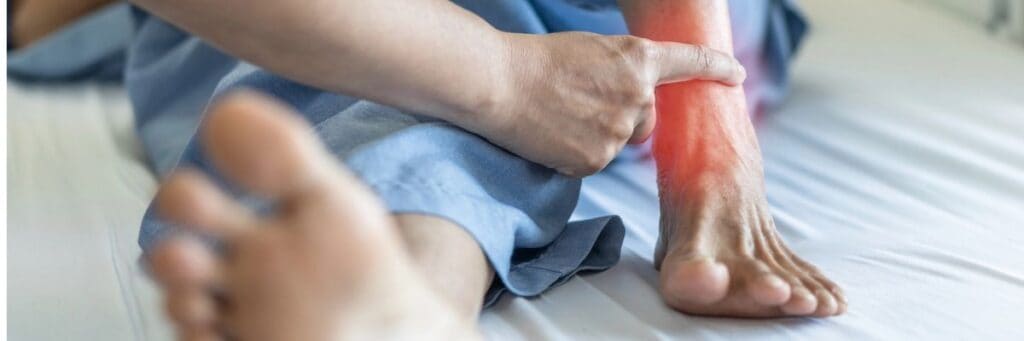
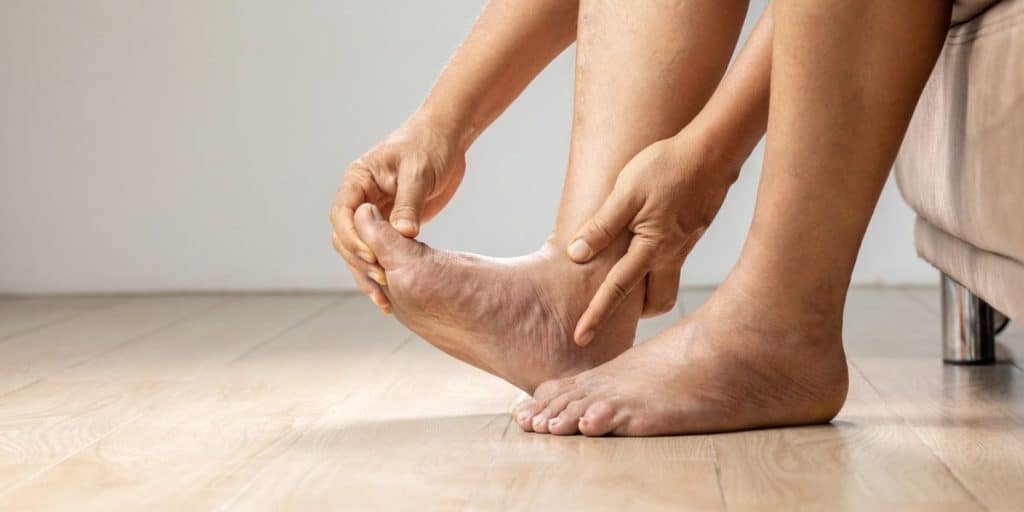
What exactly is a blister?
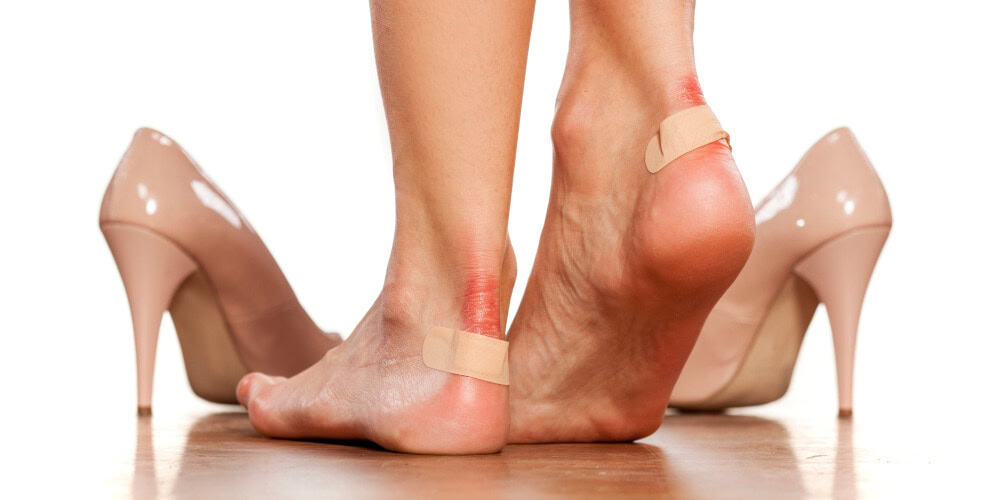
A blister is a bubble filled with clear, watery fluid (called serum) that forms under the skin. Blisters form at contact points, for example, where the foot meets a sock, or between the foot and a poor-fitting shoe.
A contact point is where continuous friction, pressure, and shear forces are too great to maintain the integrity of the skin, causing serum to leak in from adjacent tissue. Serum accumulation is the body’s natural reaction to injured skin; it’s meant to pad and cushion the skin beneath it.
The three most common types of blisters are:
- Friction blisters – caused by continuous rubbing and chafing on the skin (often by poor-fitting shoes). These are the most common type of blisters.
- Heat blisters – caused by burns, sunburns, and when the skin warms after frostbite.
- Blood blisters – caused when the skin is pinched. Instead of serum, broken blood vessels cause blood to flood the area.
What causes a blister?
The culprits are usually socks, shoes, or both rubbing against the skin. Anything that causes continuous rubbing can initiate blister formation, including:
- a faster running or walking pace
- poor-fitting shoes
- foot abnormalities (bunions, heel spurs, and hammertoes)
- swelling from heat and moisture
How can I prevent blisters on feet?
Of course, the best approach to treating blisters is to prevent them before they form. To prevent blisters, reduce shear forces, friction, and pressure on the feet. Blister prevention is very easy if you know what to do.
Get the right shoes
Everyone’s feet are different and there’s no single shoe that’s right for every foot. A new pair of shoes can cause blisters in the first few outings until the shoes are worn in. Wearing new shoes on a long walk or long-distance run causes friction in new and different areas.
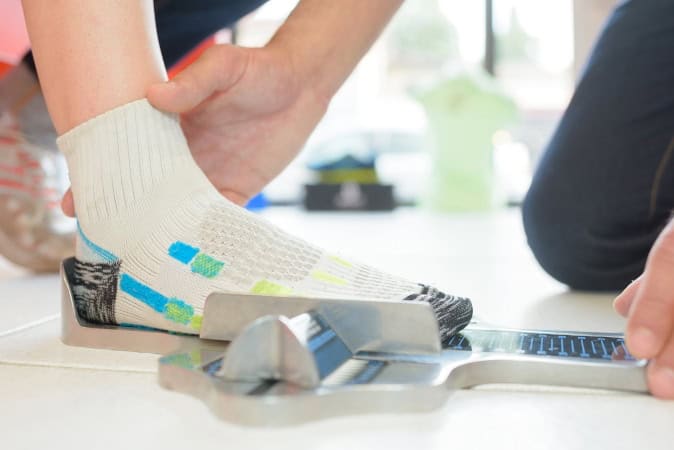
Make sure to get properly fitted for footwear. With a properly-fitted shoe, the heel shouldn’t slip and the toes shouldn’t rub against the front of the shoe. When starting with new shoes, take it slow and only go short distances on runs or walks. Even if the new shoes are the same brand and model as your old shoes, it’s best to build up mileage and speed incrementally as you break them in.
Make sure the toe box (area around the toe) also has adequate room. With a cramped toe box, the toes rub against the sides or end of the shoe. A cramped toe box can also cause damage to (or loss of) your toenails.
You probably know too-small shoes are bad for your feet, but oversized shoes aren’t any better. When shoes are too loose, the feet slide forward and back within the shoe; each step adds more blister-causing friction. There should be enough room to expand when walking, but not enough to slide around.
Wear proper-fitting inserts
Your podiatrist can evaluate the fit of your shoes, especially if you have a bunion, hammertoe, or other foot problem. Your doctor may recommend orthotics, insoles, or shoe modifications to reduce pressure areas.
Anything that causes continuous rubbing can initiate blister formation…
Choose proper socks
Socks are the interface between your foot and shoe. Socks should fit properly and not be too thick. This keeps socks from wrinkling, which can lead to rubbing and cause blisters. Wearing two pairs of socks can also reduce friction; this is a common trick among hikers.
The material of your socks is also important. Synthetic and moisture-wicking socks promote evaporation by allowing moisture to travel along with the fabric rather than being absorbed. Unlike traditional cotton socks, this removes moisture from the surface of the skin, keeping the feet dry and preventing skin breakdown.
Protect vulnerable areas
Padding, taping, and dressing hot spots that are prone to blisters can prevent their development. Common areas include prominences from bunions, hammertoes, and heel and bone spurs. Covering these areas with moleskin (soft, durable, woven fabric backed with an adhesive) or an adhesive bandage like a band-aid can significantly reduce friction and prevent blister formation.
Some patients also try applying petroleum jelly (Vaseline), antiperspirants, and talcum powder or baby powder to their feet or shoes. Using lubricants to reduce friction and or powders to absorb moisture protects your feet from blister formation, but your results may vary.
How do I treat blisters on the feet?
Even with the best attempts at reducing irritation and friction, a blister can still develop. Now what?
If the blister is small and painless, we recommend keeping the roof of the blister intact – don’t puncture or tear it. Cover the affected area with a non-adherent bandage and pad the area. It’s important to monitor the blister for any drainage or increase in size.
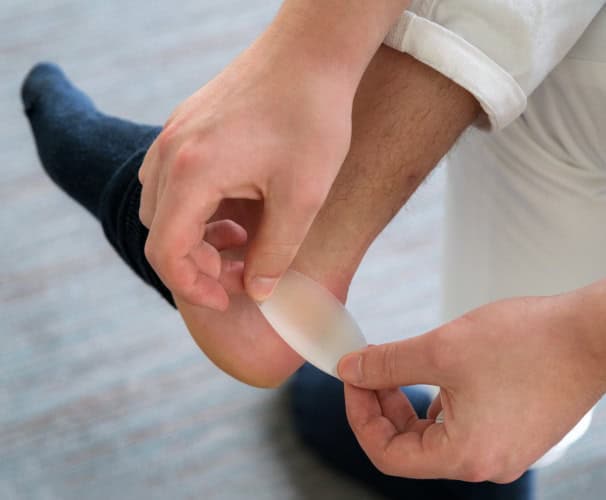
If the roof of the blister is torn or punctured, it’s important to follow proper first-aid protocols to keep the area clean and reduce the risk of infection:
- Clean the blister with soap and water or rubbing alcohol.
- Apply an antiseptic such as betadine or antibiotic ointment.
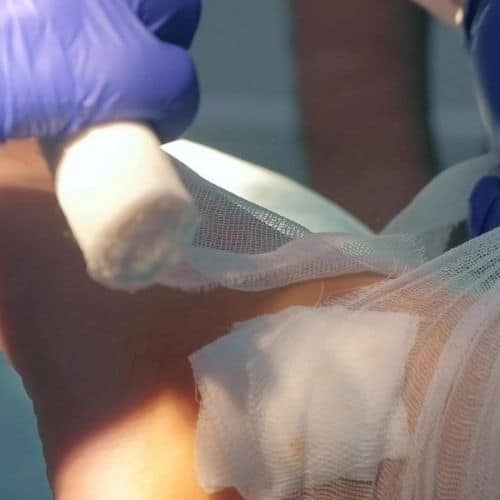
- Cover the area with a non-adherent bandage and pad the area.
With proper treatment, most blisters resolve without any complications or infection.
It’s important to monitor the area for any signs of infection, including redness, warmth, swelling, increased pain or drainage, yellow or darkened fluid, and foul odor. These may be signs of an underlying infection. Seek medical attention immediately to prevent the infection from worsening or spreading.
Individuals with medical conditions such as diabetes, neuropathy, and vascular disease, as well as those who are immunocompromised, should seek medical attention immediately. These patients have a higher risk of developing complications and infection.
How do hikers and runners prevent blisters on feet?
While runners and hikers may experience blisters more frequently, the causes and prevention are the same for anyone who experiences blisters. Anything that exacerbates friction can cause blisters, including improper footwear (too tight or too loose), prolonged periods spent running and hiking, poor running form, and irregular foot shape (such as from bunions).
Blister-prone areas in runners and hikers include the arches, soles of the feet, and toes. These areas often rub against footwear in a continuous, non-stop manner during a run or hike.
Most running and hiking blisters aren’t medical emergencies, but they are painful and shouldn’t be ignored. Many runners incur blisters during races, especially marathons, due to prolonged friction between the skin, sock, or shoe. But blisters can occur at any time, including during training runs. Non-running footwear can cause blisters as well.
Running and hiking myths perpetuate the idea that the feet will suddenly become more resilient if you push through the pain long enough. But this approach doesn’t work. Eventually, the blister breaks open, leaving a superficial wound with the potential to become infected if untreated.
Blisters can also modify the gait. This increases the risk of more blisters on other areas of the feet. It also means that more stress is placed on muscles, ligaments, and tendons. For distances, this may not cause issues. But running and hiking for extended periods can cause chaos in the lower body.
Can medical conditions cause blisters on the feet?
Any condition that weakens the outer layer of the skin can make it more vulnerable to blisters. Common medical conditions and treatments that may increase the risk of blisters on the feet include:
- chickenpox
- eczema, including dyshidrotic eczema, which causes small, itchy blisters on the edges of the toes and soles of the feet
- autoimmune conditions, such as bullous pemphigoid and pemphigus vulgaris
- diabetic neuropathy or nerve damage, causing a loss of sensation or pain in the feet
- antibiotic treatment
- blood-thinning medications
Why choose Dr. Bob Baravarian for your foot and ankle care?
If you or a family member are experiencing foot problems, Dr. Bob is here to help. As a nationally recognized podiatry specialist, he provides the most advanced foot and ankle care and is a leader in researching, diagnosing, and treating all foot and ankle conditions.
To schedule a consultation, please call (855) 557-5400 or make an appointment online now.
Dr. Bob Baravarian is conveniently located in Los Angeles, near Cedars-Sinai Medical Center, providing expert foot and ankle care for patients throughout Southern California.