Hey tennis star, it’s us, your feet! We love hitting the tennis court with you, and it’s a relatively safe way to stay in shape, whether you’re a young whippersnapper or an old soul.
The best tennis shoes for injury prevention in 2025 are engineered to provide critical support, stability, and cushioning, addressing the high impact and rapid lateral movements characteristic of tennis. These specialized shoes are crucial for safeguarding players against common foot and ankle injuries, including ankle sprains, plantar fasciitis, and Achilles tendonitis. By incorporating features like reinforced uppers for lateral stability and shock-absorbing midsoles, proper tennis footwear significantly enhances biomechanics and reduces stress on joints and tendons during intense play.
Of course, no physical activity is without its risks. The constant lateral motion and quick stops and starts across the court can put a lot of stress on us. Play it safe to avoid injuries that will keep us from having fun together.
How Do Different Tennis Court Surfaces Affect Your Feet and Ankles?
Different courts can affect us in different ways. Clay courts and fast-dry courts are our favorites! The material allows us to slide just a little, making these courts the safest for feet and ankles. As you approach your senior years, choose these materials over harder, less forgiving courts.
Outdoor courts are usually concrete or asphalt, and sometimes coated with a cushioning surface. The coating softens the surface, making the game slower, but none of these courts allow for much sliding. Same goes for indoor courts covered with carpet.
How Do You Choose the Right Tennis Shoes for Foot and Ankle Support?
To choose the right tennis shoes for foot and ankle support, prioritize shoes designed specifically for tennis. These shoes offer enough 'give' for slight court sliding and often feature padded toe boxes to prevent toe injuries. Look for shoes that hug the heels to prevent slipping and provide soft arch support. When shopping, ideally after lunch when feet are slightly swollen, try several pairs with tennis socks to ensure adequate ankle support and prevent excessive rolling.
we can slide a bit on the court. Plus, they have nifty padded toe boxes that can prevent toe injuries. Choose shoes that hug the heels to prevent slipping, and that softly support the arches.
It’s after lunch, and we have swollen slightly from the day’s activities: time to go shoe shopping! Let us try several pairs with tennis socks on, and make sure our ankles are supported and don’t roll too much.
Preventing Tennis Injuries
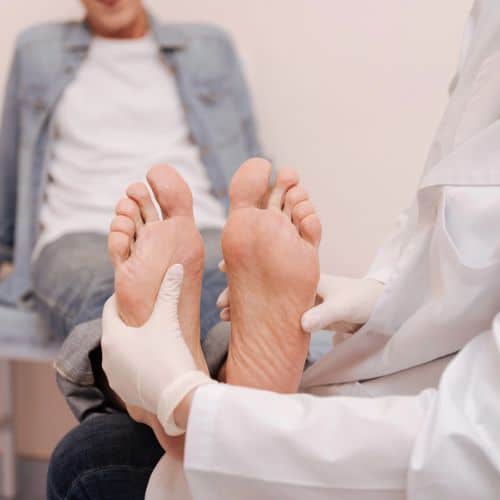
Take us to a foot and ankle specialist for evaluation before hitting the courts! He can check for bunions, or pigeon- or duck-footedness. Those conditions can be a real bummer if we don’t get custom orthotic inserts before playing.
And hey, even Andre Agassi has to stretch! Stretch our calf and hamstring muscles before playing to prevent injuries, and after the game to relax stiff muscles.
Take good care of our nails, and keep us clean and dry. Always wear socks. The best socks for us are acrylic or acrylic and natural fiber blend.
What Are Common Foot and Ankle Injuries in Tennis Players and How Are They Treated?
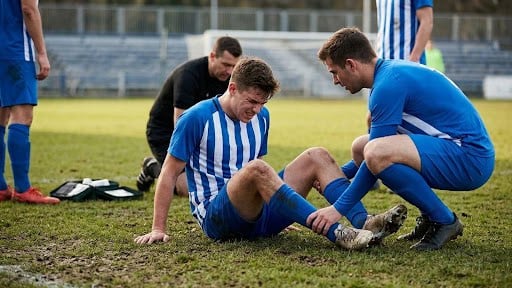
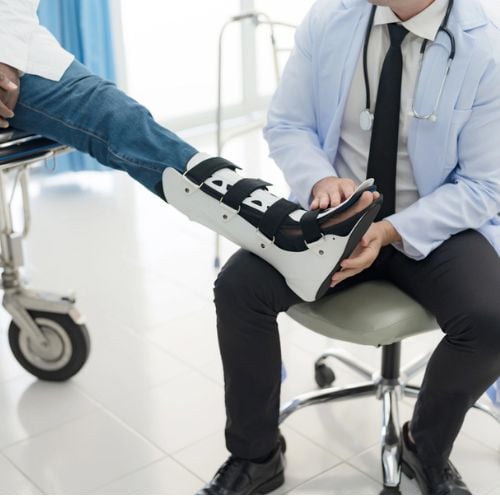
Common foot and ankle injuries in tennis players include ankle sprains, plantar fasciitis, tennis toe, stress fractures, shin splints, calluses, blisters, and corns. While some can be treated at home, others require a foot and ankle specialist. For ankle sprains, avoid weight-bearing, ice, compress, and elevate; always have a sprain checked by a specialist. Plantar fasciitis, causing arch and heel pain, often benefits from custom orthotics or conservative treatments from a specialist. Tennis toe, a bruise under the nail, can be managed with cool compresses and ice, or drained by a specialist if severe. Stress fractures and shin splints, common on harder surfaces, respond to rest, ice, and elevation. For calluses and corns, buff with a pumice stone; for blisters, carefully drain with a sterilized needle, apply antibiotic cream, and use a frictionless pad. If you have questions or concerns, consult a foot and ankle care specialist.
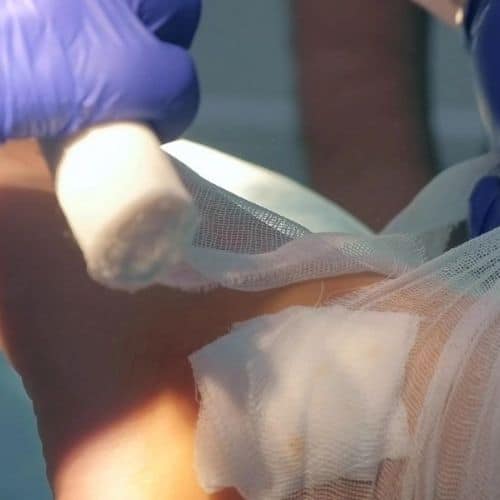
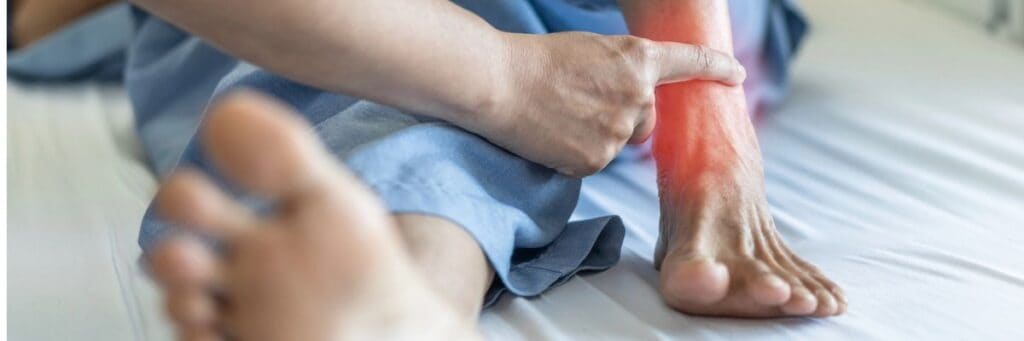
- Ankle sprains. The Mac-Daddy of all tennis injuries! If you sprain me, avoid putting any weight on me, and ice me to reduce swelling. Wrap me up nice and tight in a compression bandage and elevate. It’s always best to have a sprain checked out by a foot and ankle specialist. While ankle sprains may be common, they are also one of the most under-treated conditions around.
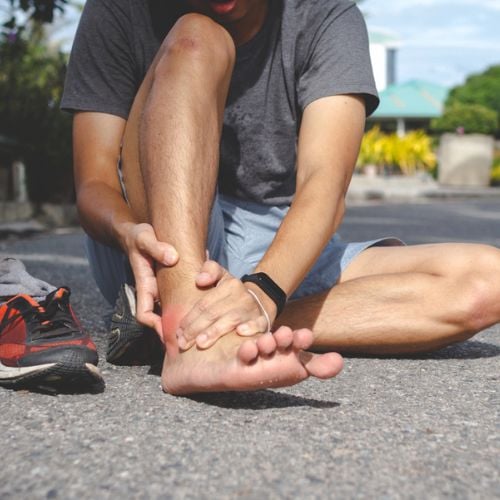
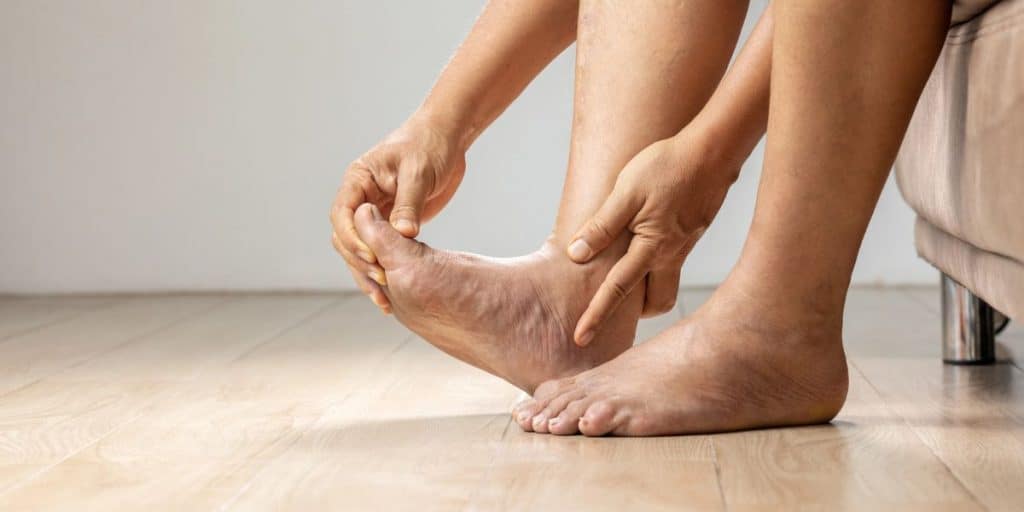
- Plantar fasciitis. Stress on our soles can cause arch and heel pain. To fix, see a foot and ankle specialist for a custom orthotic insert or to talk about other conservative treatments.
- Tennis toe. A particular kind of nasty bruise, this is when blood builds up under the nail. This shouldn’t happen if you’ve invested in proper tennis shoes. If it does, use cool compresses and ice, or if it’s really bad, take us to a foot and ankle specialist to have the blood drained.

- Stress fractures and shin splints. Ouch! These can really spoil a good time. They are more common when playing on harder surfaces. Rest, ice, and elevation will help us feel much better.
- Calluses, blisters, and corns, oh my! Be smart about self-treatment. If we have corns or calluses, don’t try to trim them with clippers. Just buff them with a pumice stone after a bath or shower. For blisters, using a sterilized needle, carefully pierce the side (don’t rip off the skin!) and drain the sore. Then, coat with a thin layer of antibiotic cream and apply a frictionless pad while the blister heals.

Thanks for the LOVE! (See that? We made a tennis joke!) Have fun out there and if you have any questions, be sure to talk to a foot and ankle care specialist.
To schedule a consultation, please call (855) 557-5400 or make an appointment now.
Dr. Bob Baravarian is conveniently located in Los Angeles, near Cedars-Sinai Medical Center, providing expert foot and ankle care for patients throughout Southern California.