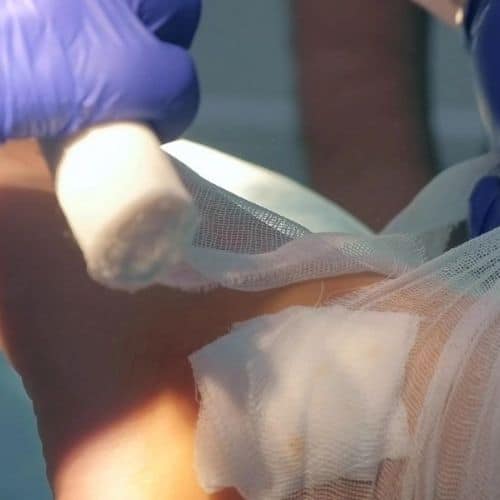
Michael Dumas, 17, was diagnosed with cutaneous larva migrans, a skin condition caused by larvae from animal hookworms.
Walking barefoot on beaches can expose individuals to hookworm infections, a parasitic condition where larvae penetrate the skin, often through the feet. These parasites, commonly found in warm, moist sand contaminated by animal feces, can cause itchy rashes, abdominal pain, and other health issues. To protect against hookworms and other infections, Dr. Bob Baravarian and DOCS Foot and Ankle recommend wearing protective footwear, even on seemingly clean beaches.

We’re all aware of the beach hazards that lurk in the ocean, like sharks, stingrays, and jellyfish, but we feel safe on the sand. Now there’s cause for caution on the dry side of the beach.
Michael Dumas, a teenage boy from Tennessee, embarked on an evangelical mission trip to South Florida. In between saving souls, he and a dozen or so traveling companions frolicked in the sand at Pompano Beach. We mean “in the sand” literally, because Michael’s friends buried him in the sand up to his neck, just for the pure fun of it.
What are the symptoms of hookworms in humans?
The symptoms of hookworms in humans typically manifest as a red, itchy rash, often appearing as small red bumps that can spread across the skin. In severe cases, like Michael's, these bumps can cover large areas such as the feet, legs, and buttocks, indicating a full-body invasion by parasitic larvae. Initially, these might be mistaken for mosquito bites, but they rapidly worsen and spread.
There are two varieties of hookworms, human and animal
The human hookworm is an intestinal parasite. When human hookworms invade a person’s body, they head to their victim’s intestines. There they cause abdominal pain, diarrhea, a decreased appetite, and weight loss.
Michael and three of his beach buddies were ultimately diagnosed as having cutaneous larva migrans, a condition caused by larvae from animal hookworms.
Why is the human body not a hospitable environment for animal hookworm larvae?
The human body is not a hospitable environment for animal hookworm larvae because these parasites are unable to mature and reproduce within a human host. Once inside, the animal hookworm larvae do not reach their intended goal of the intestines; instead, they wander just under the person’s skin. Their movements can be seen and felt, but within several weeks, the human body’s natural defense mechanisms will kill off the parasitic larvae. Michael’s case, though severe with a consequent staph infection, still illustrates this inability for the larvae to fully develop.
Michael’s case was extraordinarily severe. In addition to the standard symptoms, his hookworm infestation caused a serious staph infection. He is currently under intensive treatment for both the larva migrans and the consequent staph infection. His family hopes that he’ll be able to attend his brother’s wedding, currently scheduled for this coming August 11.
Why should you wear shoes on the beach to avoid parasites?
You should wear shoes on the beach to avoid parasites because hookworms spread when animals or humans infected with the parasite defecate in sand or soil. The feces carry the parasite’s eggs, making contaminated sand a fertile source of infestation. For instance, in Michael’s case, a dog owner may have covered pet feces with beach sand, leading to widespread larvae exposure. The Center for Disease Control (CDC) specifically recommends against walking barefoot in areas where hookworm is common and where fecal contamination of the soil may occur. If you experience foot or ankle problems, Dr. Bob Baravarian offers expert care.
There’s not really that much to investigate. Hookworms spread when animals or humans infected with the parasite defecate in sand or soil. Because the feces carry the parasite’s eggs, the contaminated sand becomes a fertile source of infestation. In Michael’s case, a dog owner may have covered his or her pet’s feces with beach sand, instead of removing it from the beach. In any event, Michael’s full-body immersion in contaminated sand exposed just about all his skin to the larvae infestation.
The Center for Disease Control (CDC) recommends “not to walk barefoot in areas where hookworm is common and where they may be fecal contamination of the soil”. The CDC also recommends “not to ingest the soil.” (In our opinion, the CDC’s advice to refrain from eating contaminated dirt should be completely unnecessary.)
If you are experiencing problems with your feet or ankles, Dr. Bob Baravarian is here to help. As a nationally recognized podiatrist and foot and ankle specialist, he provides the most advanced care with some of the highest success rates in the nation and is a leader in the research and treatment of all foot and ankle conditions.
To schedule a consultation, please call (855) 557-5400 or make an appointment now.
Dr. Bob Baravarian is conveniently located in Los Angeles, near Cedars-Sinai Medical Center, providing expert foot and ankle care for patients throughout Southern California.
Read the full article at: www.washingtonpost.com