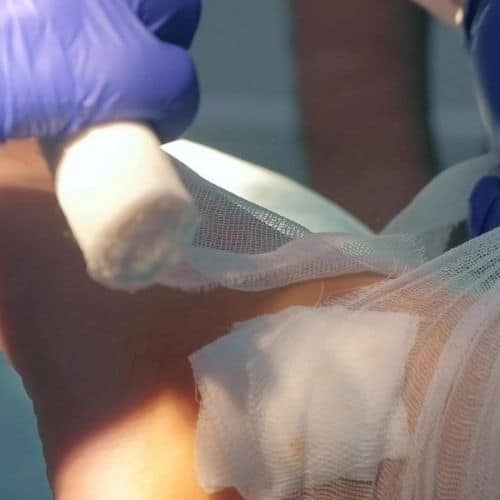
Dr. Bob Baravarian discusses diabetic foot infections
Osteomyelitis (also known as “Diabetic Foot Infection”) is one of the most significant complications a diabetic patient can have. If you or someone you know are living with diabetes mellitus you probably already know your feet are at risk, but you might not yet know how severe it can be.
Today, we’re going to discuss the causes, symptoms, and treatment options of diabetic foot osteomyelitis.
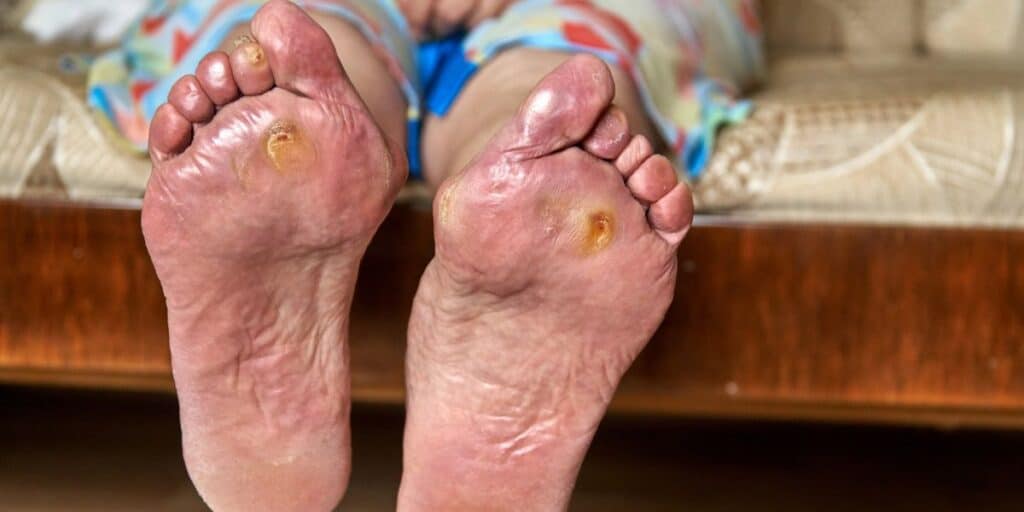
What is osteomyelitis of the foot?
Osteomyelitis is a bone infection. It commonly affects the long bones in the legs, causing pain. The prevalence of osteomyelitis in patients with diabetic foot ulcers is about 15%. In patients with diabetic foot infections, it’s 20%. Only 2 out of every 10,000 people get osteomyelitis, but risk factors include weakened immune systems or other morbidities (such as diabetes).
Osteomyelitis Causes
Osteomyelitis develops due to an open and neglected ulcer that becomes infected. The most common cause is a direct infection of the bone by the bacteria Staphylococcus aureus (a type of staph bacteria).
Diabetes increases your risk of infection for a couple of reasons. First, diabetes decreases blood flow, sometimes resulting in peripheral arterial disease (PAD) or peripheral vascular disease (PVD). Decreased blood flow inhibits healing and increases the risk of infection as cells die from lack of blood flow. The ischemic ulcers which form due to PAD or PVD damaging tissue create a risk of osteomyelitis.
Second, diabetes can lead to nerve damage (diabetic neuropathy). Peripheral neuropathy in the feet results in tingling and numbness and makes it impossible to feel injuries on the feet. When an injury on the foot isn’t felt, it isn’t treated properly. And an improperly cared-for foot wound can quickly become infected and lead to bone infection.
Osteomyelitis Symptoms
Due to the numbness caused by diabetic neuropathy, osteomyelitis can often be completely painless.
Other symptoms of acute and chronic osteomyelitis to look out for are:
- nausea
- tenderness, redness, or warmth in the infected area
- swelling
- lost range of motion
- fever and chills
- open foot wound, sometimes with pus
If you’re experiencing any of these symptoms, make an appointment with your healthcare team.
How is osteomyelitis diagnosed?
While you may come to the doctor for diabetic foot ulcers or forefoot lesions, it’s always important to run proper diagnostic tests. Because underlying osteomyelitis is present in a large portion of patients with infected foot ulcers, proper testing should always be performed. Undiagnosed osteomyelitis creates a risk of lower extremity amputation.
Diagnosis of osteomyelitis generally includes blood tests, bone scans, X-rays, magnetic resonance imaging (MRI), or computed tomography (CT) scan. However, depending on the timing of the tests, radiography may not be able to accurately show the bone infection. It can also be difficult to differentiate Charcot neuroarthropathy and osteomyelitis on an X-ray. MRIs are the most useful imaging modality when X-rays have been inconclusive, according to a study published in Diabet Foot Ankle.
A bone biopsy is also useful in diagnosing osteomyelitis and determining exactly which bacteria are involved. Examination of a bone culture helps clinicians identify the infecting pathogens more accurately than a swab of the infected ulcer. (Knowing the exact pathogens makes arranging antibiotic treatment easier.)
Blood tests are a useful diagnostic tool because they show inflammatory markers that indicate infection. White blood cells (WBC), C-reactive protein, erythrocyte sedimentation rate (ESR), and procalcitonin (PCT) are higher in diabetic foot osteomyelitis than in a soft-tissue infection.
Treatment of Diabetic Foot Osteomyelitis

In the time before antimicrobial therapy, an infected diabetic foot was often treated with major amputation (limb amputation above the knee) to prevent the spread of the infection. In 2014, Diabetes Care published a commentary entitled: “Treating Diabetic Foot Osteomyelitis Primarily With Surgery or Antibiotics: Have We Answered the Question?” According to the International Working Group on the Diabetic Foot (cited in the article), “available studies do not provide information to inform which cases [of diabetic foot osteomyelitis] may require surgery.” Because many published clinical and cohort studies have been flawed, there is no one-size-fits-all “correct” answer on how to treat osteomyelitis.
Fortunately, there are many treatment options ranging from conservative to surgical, depending on your specific infection. Depending on the progression of the infection, your doctor will decide on the best treatment options for you.
Antibiotic Treatment
Because osteomyelitis is a bone infection, it can sometimes be treated with antibiotics. The duration of antibiotic therapy is 4-8 weeks on average, but more severe infections may require longer treatment or hospitalization. We may immobilize the infected area to reduce pain and speed recovery.
Do note that, according to the Infectious Diseases Society of America’s guidelines for the diagnosis and treatment of diabetic foot infections, the incidence of antibiotic-resistant bacteria is rising, especially Methicillin-resistant Staphylococcus aureus (MRSA).
Surgical Treatment
Common surgical procedures include resection of the bone to remove necrotic tissue and (often) amputation. However, we at Dr. Bob Baravarian have developed several techniques for the removal of infected bone and delayed bone grafting or transfer. This allows us to preserve the foot and ankle and limit (or eliminate) the need for amputation.
Surgical Debridement
Surgical debridement removes infected and dead tissue and/or bone from a wound. In chronic osteomyelitis, debridement is necessary as systemic antibiotics won’t reach sections of the bone that are cut off from the blood supply. For gangrene (dead tissue), debridement removes the dead tissue, allowing antibiotic therapy to reach the surviving tissue through the bloodstream.
Offloading
For proper diabetic foot ulcer wound care, pressure must be removed from the ulcer. Relieving pressure allows the wound to heal and prevents further infection. Offloading utilizes special shoes, a cast, crutches, or even a wheelchair to relieve pressure from the ulcerated area.
Osteomyelitis Prevention
Proper foot care and examination is the first step in preventing ulceration and infection. Proper foot care includes:
- wearing well-fitting shoes to prevent blisters and calluses
- washing feet every day
- using lotion to keep feet moist (but keep the space between toes dry!)
- examining feet every day for cuts, scrapes, blisters, sores, or warm spots
- scheduling regular diabetic foot exams and follow-ups with your doctor
Other easy methods of preventing osteomyelitis include not smoking and keeping blood glucose levels under control.
Dr. Bob Baravarian, the Best Choice for Diabetic Foot Treatment
Dr. Bob employs cutting-edge treatments for patients with diabetic foot infections. His goal is always to use non-surgical options whenever possible to promote healing, and when surgery is necessary, he focuses on the least invasive approach to restore health quickly. Dr. Bob understands the unique challenges diabetics face in caring for their feet and is committed to providing the highest level of care.
Dr. Bob specializes in all aspects of diabetic foot care and we have expertise in all forms of ulcer treatment including specialized brace formation, casting technique, surgical wound closure, and genetic skin graft use.
To schedule a consultation, please call (855) 557-5400 or make an appointment now.
Dr. Bob Baravarian is conveniently located in Los Angeles, near Cedars-Sinai Medical Center, providing expert foot and ankle care for patients throughout Southern California.
Sources:
Jeffcoate WJ, Lipsky BA, Berendt AR, et al., International Working Group on the Diabetic Foot. Unresolved issues in the management of ulcers of the foot in diabetes. Diabet Med 2008;25:1380–1389pmid:19046235 CrossRef
Lavery LA, Peters EJ, Armstrong DG, Wendel CS, Murdoch DP, Lipsky BA. Risk factors for developing osteomyelitis in patients with diabetic foot wounds. Diabetes Res Clin Pract. 2009;83:347–52. [PubMed]
Meyr AJ, Singh S, Zhang X, Khilko N, Mukherjee A, Sheridan MJ, et al. Statistical reliability of bone biopsy for the diagnosis of diabetic foot osteomyelitis. J Foot Ankle Surg. 2011;50:663–7.
Singh N, Armstrong DG, Lipsky BA. Preventing foot ulcers in patients with diabetes. JAMA. 2005;293(2):217–228. doi:10.1001/jama.293.2.21