Morton’s neuroma is a painful foot condition that affects about 1 in 3 people at some point in their lives. It occurs when the tissue around a nerve in the foot, usually between the third and fourth toes, gets thicker and becomes inflamed. Morton’s neuroma is painful and can cause a burning sensation.
If you’re dealing with this issue, you may be exploring ways to find relief without resorting to surgery. Here are 10 non-surgical treatments that may help alleviate Morton’s neuroma symptoms.
1. Orthotic devices
Custom orthotics are a valuable non-surgical treatment option for those suffering from Morton’s neuroma. These specially designed shoe inserts are tailored to fit the unique contours of a person’s feet.
Unlike over-the-counter inserts, custom orthotics are crafted based on an individual’s foot shape and biomechanics, making them a more effective, personalized solution to address each patient’s unique needs with Morton’s neuroma.
For Morton’s neuroma, custom orthotics often include metatarsal pads or specific cushioning to relieve stress on the ball of the foot and improve foot alignment. They offer targeted support to alleviate excessive pressure on the nerve, causing pain, and reduce irritation around the affected nerve.
Thus, custom orthotics can significantly minimize discomfort and improve walking comfort by redistributing weight away from the neuroma.
2. Footwear modifications
Choosing the right shoes can significantly reduce pressure on the affected nerve, easing pain and discomfort.
Shoes with a wide-toe box are particularly beneficial. They allow the toes to spread naturally, minimizing compression between the third and fourth toes, where Morton’s neuroma typically occurs.
Additionally, shoes with ample cushioning and arch support can help distribute weight more evenly across the entire foot, reducing stress on the ball of your foot. Avoiding high heels or shoes with narrow, pointed toes is also essential, as these styles can intensify pressure on the nerves in the forefoot.
3. Physical therapy
Physical therapy can be an effective approach for managing Morton’s neuroma. It focuses on exercises and techniques that improve foot mechanics, relieve nerve pressure, and reduce inflammation.
A physical therapist may guide patients through specific stretches to increase flexibility in the toes and foot, which can ease tension around the affected nerve. Strengthening exercises for the foot and lower leg can also improve stability and help with proper weight distribution, reducing stress on the neuroma.
Therapists might also use manual therapy, such as massage therapy, to relieve muscle tightness in the foot and calf. This promotes better blood flow to the area and alleviates some nerve irritation. Therapists can also teach gait correction techniques to prevent undue pressure on the ball of the foot while walking or standing.
4. Corticosteroid injections
Cortisone injections are a common treatment option for Morton’s neuroma, especially when other conservative methods have not provided adequate relief. This powerful anti-inflammatory medication is injected directly around the irritated nerve to reduce swelling and inflammation. By calming the inflammation in the surrounding tissues, cortisone injections can provide rapid pain relief, often lasting several weeks or months.
These shots can work well, but they’re only temporary fixes, and the effects will eventually wear off. Getting too many steroid injections may weaken nearby tissues and potentially lead to other complications, so Dr. Bob Baravarian (Dr. Bob) uses them sparingly.
5. Extracorporeal shockwave therapy
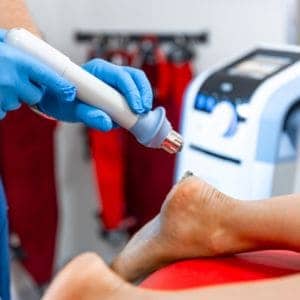
Extracorporeal shockwave therapy (ESWT) uses strong sound waves to help heal the sore area. It is also often used for other foot problems.
Shockwaves can be helpful because they stimulate the release of stem cells, which helps with tissue healing. If orthotics and cortisone injections don’t provide relief, shockwave therapy may be a good option. The treatment usually takes about 15 minutes and is done once a week for 3-5 weeks.
If shockwaves are not successful in treating the neuroma, we will likely recommend cryotherapy.
6. Cryotherapy ablation
Cryotherapy ablation is similar to radiofrequency (see treatment #7 below) but uses extreme cold instead of heat to treat the nerve. Cryotherapy freezes and destroys the problematic nerve tissue. We find it more effective because nerves are generally more sensitive to cold.
Additionally, our specialists use amniotic stem cell injections simultaneously, which can help with tissue healing and prevent scar tissue from forming around the nerve.
Treatment usually takes 15-20 minutes, and you go home the same day.
One of the reasons cryotherapy is so effective for Morton’s neuroma is that it precisely targets the problematic nerve, leaving surrounding tissues unaffected. This results in less inflammation and pain during recovery. Amnio injections can be used simultaneously to help with tissue healing and prevent scar tissue.
Additionally, the procedure is performed in the office, reducing the risks and complications associated with hospital-based surgeries. Patients experience fewer side effects; most report significant long-term relief after treatment.
Dr. Baravarian states, “Cryotherapy is the best minimally invasive treatment with the lowest amount of scarring and the lowest risk associated with it, as far as burning the nerve or damaging the nerve.”
However, despite its advantages, very few practices offer cryotherapy for Morton’s neuroma. The primary reason is the high cost of the cryotherapy machine and its specialized equipment. The investment required for this technology can be prohibitive for smaller practices and training, and expertise is needed to perform the procedure effectively, which further limits its availability. Dr. Bob is proud to offer cryotherapy at his clinic.
7. Radiofrequency ablation
In this procedure, a thin needle is guided to the area near the neuroma, and radiofrequency waves are delivered through the needle to generate heat. This heat effectively “ablates” or disables the nerve, interrupting its ability to send pain signals to the brain.
Radiofrequency ablation doesn’t require major surgery and can often be done with local anesthesia.
Dr. Bob performs radiofrequency ablation in some instances. One reason is that the procedure is considered riskier and more aggressive than cryotherapy. Another is that it can burn the nerve and cause more scarring.
8. Alcohol sclerosing injections
We use alcohol sclerosing injections to treat Morton’s neuroma on a selective basis. This is because, like radiofrequency, alcohol sclerosing tends to burn the nerve.
When it is performed, we inject an alcohol solution directly into the sore area. The alcohol breaks down the nerve tissue, which might help with pain.
While some studies show promising results, it’s important to know that you might need several alcohol injections over a few weeks. Also, your foot might hurt a lot after the injection. After five years, only about 29% of people who get this treatment are completely pain-free.
9. Platelet-rich plasma therapy
Platelet-rich plasma therapy (PRP) is a newer treatment that uses your blood to help heal your foot. Your Dr. Bob foot and ankle specialist takes a small sample of your blood, processes it to concentrate the platelets, and injects it into the sore area.
PRP therapy is thought to help with healing and reduce swelling. While it’s becoming more popular for various conditions, we’re still studying how well it works, specifically for Morton’s neuroma.
The treatment usually takes about 30 minutes and might be repeated every 4-6 weeks.
10. Botulinum toxin injections (Botox)
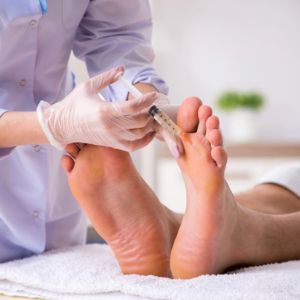
Some foot and ankle practices offer botulinum toxin or Botox injections. However, these injections are generally ineffective for treating Morton’s neuroma because they don’t address the underlying issues that cause this condition.
Morton’s neuroma is primarily a nerve irritation caused by tissue thickening around the nerve. This leads to pain, swelling, and inflammation between the toes. Botox temporarily paralyzes muscles, so it is commonly used to relieve muscle-related conditions or spasms.
Since Morton’s neuroma is not a muscle-related issue but rather a nerve compression problem, Botox injections do not effectively alleviate the pressure or inflammation on the nerve.
While some might hope that Botox could reduce pain by interrupting nerve signals, studies and clinical experience show that it is not reliable for Morton’s neuroma.
When to consider surgical intervention
While these conservative treatments often work well, sometimes surgery might be needed. If you’ve tried many therapies and still have unacceptable pain that affects your daily life, it might be time to talk to Dr. Bob about surgery.
Surgery for Morton’s neuroma (called a neurectomy) involves removing the affected part of the nerve.
Our neuroma specialists have learned that burying the nerve in the muscle dramatically reduces stump neuroma and other post-surgical problems. A stump neuroma occurs when nerve tissue is severed and tries to regrow. By burying the nerve in a muscle in the arch area, the nerve is happy, and the chance of regrowth is low.
Recovery from surgery can take a few weeks to a couple of months.
Morton's Neuroma Treatment FAQs
What is the best non-surgical treatment for Morton's neuroma?

There’s no single best treatment. Most patients start with wider, low-heeled shoes and metatarsal pads or orthotics to take pressure off the nerve. Corticosteroid injections can relieve pain if those aren’t enough. Dr. Bob Baravarian at DOCS Foot and Ankle tailors conservative care to each patient before considering surgery.
Can Morton's neuroma be treated without surgery?
Yes. Many patients with Morton’s neuroma achieve significant relief without surgery through a combination of orthotics, padding, injection therapy, and footwear changes. Surgery is typically considered only when conservative treatments have been tried for three to six months without adequate improvement.
How long does it take for Morton's neuroma to heal without surgery?
With consistent non-surgical treatment, many patients notice improvement within six to twelve weeks. Full resolution can take three to six months, depending on the severity of the neuroma and how consistently the treatment plan is followed.
When should I see a doctor for Morton's neuroma?
You should see a foot specialist if you experience persistent burning, tingling, or numbness between your toes that does not improve with rest and wider footwear, or if the pain is interfering with daily activities. Early evaluation by a podiatrist like Dr. Bob Baravarian can prevent the condition from worsening and expand your non-surgical treatment options.
Prevention and long-term management
To prevent or manage Morton’s neuroma in the long term, you may need to make some changes in your life. Here are a few prevention tips for Morton’s Neuroma:
- Wear shoes with a wide front part and low heels.
- Use custom orthotics to reduce pressure on your foot.
- Try to maintain a healthy weight to reduce stress on your feet.
- Avoid activities that put a lot of stress on your feet.
- Stretch your feet regularly to keep them flexible.
- Try foot-strengthening exercises. For example, you could use your toes to scrunch up a towel. This can help make your feet stronger and more flexible.
- Regular foot massages can also help improve blood flow and reduce tension in the sore area.
Dealing with Morton’s neuroma can be challenging, but there are non-surgical ways to manage the pain
From simple changes like wearing better shoes to more advanced treatments like cryotherapy ablation, there’s likely a solution that can work for you.
Remember, everyone’s experience with Morton’s neuroma is different. What helps one person might not help another. Working with our foot and ankle specialists is essential to find the optimum treatment plan for your needs. Be patient and try different treatments; seeing what works best for you might take some time.
If you think you have Morton’s neuroma, don’t wait to get help. Early treatment can often lead to better results and might help you avoid more serious treatments later. Our podiatrists can give you a proper diagnosis and guide you through the different treatment options.
Remember, your feet are important, and they deserve excellent care! With the right approach and treatment plan, you can effectively manage Morton’s neuroma and return to daily activities without constant foot pain.
Dr. Bob Baravarian is the best choice for Morton’s neuroma treatment
Dr. Bob is an internationally recognized foot and ankle surgeon. He uses the latest technologies and treatment options in a comfortable, family-friendly environment.
If you or anyone in your family is experiencing foot problems, we’re here to help. We offer the most advanced podiatric care and the highest success rates nationwide. We are leaders in researching, diagnosing, and treating all foot conditions.