If your feet have been aching, swelling, or feeling numb since you started a new blood pressure medication, you are not imagining things. Blood pressure medicines and foot pain are genuinely connected, and the relationship is more nuanced than most patients are told. Different antihypertensive drug classes affect your feet in very different ways – from the ankle swelling that amlodipine is notorious for, to the cold feet that beta-blockers can trigger, to the gout flares that diuretics sometimes set off. This guide walks through each major class so you can identify what might be happening with your own medication, understand what you can do about it, and know exactly when it is time to call a podiatrist.

Understanding blood pressure medication classes
Doctors have several distinct families of antihypertensive drugs to choose from, and each one lowers blood pressure through a different mechanism. That matters for your feet because the mechanism determines which side effects are most likely. The main classes are:
Calcium channel blockers (e.g., amlodipine/Norvasc, nifedipine) – relax the walls of blood vessels
Alpha-blockers (e.g., doxazosin, terazosin, tamsulosin) – block nerve signals that tighten blood vessels
Diuretics (e.g., hydrochlorothiazide, furosemide) – reduce fluid volume by increasing urination
Beta-blockers (e.g., metoprolol, atenolol) – slow the heart rate and reduce cardiac output
ACE inhibitors and ARBs (e.g., lisinopril, losartan) – block hormones that constrict blood vessels
It is important to note that alpha-blockers and calcium channel blockers are two separate drug classes with different mechanisms – a distinction that matters when you are trying to trace a foot symptom back to its source. The sections below cover each class in turn.
Calcium channel blockers: the leading cause of ankle swelling
Calcium channel blockers are among the most widely prescribed antihypertensive medications, and amlodipine (brand name Norvasc) is one of the most commonly used drugs in this class. They work by relaxing the smooth muscle in artery walls, which lowers blood pressure effectively – but that same relaxation causes the small blood vessels in your lower legs to dilate and leak fluid into surrounding tissue.
The result is peripheral edema: swelling in the feet, ankles, and lower legs that can range from mild puffiness at the end of the day to significant, pitting edema that makes shoes uncomfortable and walking painful. Studies estimate that ankle edema occurs in up to 30 percent of patients taking amlodipine at standard doses, making it the single most common foot-related complaint linked to blood pressure medicines. Research on managing amlodipine-induced ankle edema confirms that the swelling is dose-dependent and often improves when the dose is reduced or the drug is switched.
Beyond discomfort, persistent edema creates real podiatric risks: skin becomes stretched, and fragile, small wounds heal more slowly, and infection risk rises. If you are on a calcium channel blocker and your feet are swollen, don’t dismiss it.
Practical steps for calcium channel blocker edema:
Elevate your feet above heart level for 20 to 30 minutes, two to three times a day
Wear graduated compression stockings (20 to 30 mmHg) during waking hours
Reduce dietary sodium to limit fluid retention
Avoid standing for long periods without movement breaks
Ask your prescribing physician whether a dose adjustment or a switch to a different antihypertensive class is appropriate
Alpha-blockers: circulation benefits and gait-related risks
Alpha-blockers are a class of medication used primarily to relax certain muscles and help small blood vessels stay open. They work by blocking norepinephrine, a hormone that narrows blood vessels and tightens the muscles around the bladder and prostate. They are commonly prescribed for high blood pressure (hypertension) and enlarged prostate (benign prostatic hyperplasia).
Some of the most well-known alpha-blockers include:
Tamsulosin (Flomax) – commonly used to treat symptoms of an enlarged prostate
Doxazosin (Cardura) – used to treat high blood pressure and symptoms of BPH
Terazosin (Hytrin) – used to lower high blood pressure and BPH symptoms
Alfuzosin (Uroxatral) – most often used to treat BPH
Prazosin (Minipress) – a common treatment for high blood pressure, also sometimes used off-label to treat PTSD-related nightmares
The circulation upside of alpha-blockers
There is a genuine benefit worth acknowledging. Because alpha-blockers relax smooth muscle in blood vessel walls, they improve peripheral circulation. Better blood flow to the feet means improved oxygen and nutrient delivery to tissues – which is critically important for healing and tissue repair. For patients with peripheral artery disease or diabetes, this improved circulation can be a meaningful advantage over other antihypertensive options.
Downsides of alpha-blockers on your feet
While alpha-blockers offer that circulation benefit, they carry a range of side effects that can meaningfully affect foot health, stability, and day-to-day comfort. Beyond the well-known issues of dizziness, orthostatic hypotension, peripheral edema, and ankle numbness – each covered in detail below – there are two additional concerns that often go unmentioned but matter a great deal for anyone who spends time on their feet.
Tendon and muscle problems are an underappreciated downside of long-term alpha-blocker use. These medications can contribute to muscle weakness in the lower legs, which places extra strain on the tendons of the foot and ankle – particularly the Achilles tendon and the plantar fascia. Over time, that added load can tip a manageable ache into a genuine tendon injury. If you’ve noticed new heel pain, arch tightness, or a nagging ache along the back of your ankle since starting a blood pressure medication, flag it to your doctor rather than simply pushing through.
Slow healing and skin changes are equally important to understand. Alpha-blockers alter blood flow dynamics in the small vessels of the feet, and that shift can quietly impair the skin’s ability to repair itself. Minor cuts, blisters, or pressure sores that would normally resolve in a few days may linger longer than expected. The skin itself can become thinner and more fragile over time, making the feet more vulnerable to breakdown – a particular concern for patients who are also managing diabetes or peripheral vascular disease.
Taken together, these effects mean that blood pressure medicines and foot pain are more closely linked than most patients realize. Personalized care from a specialist who understands how systemic medications interact with foot and ankle health can make a real difference in catching these issues early.
Dizziness and fatigue linked to alpha-blockers
Alpha-blockers can cause dizziness and fatigue, increasing fall risk. A fall can lead to foot injuries such as fractures or sprains – injuries that can be serious, especially for older patients or anyone with osteoporosis.
Orthostatic hypotension associated with alpha-blockers
Orthostatic hypotension is a drop in blood pressure that occurs when you stand up quickly, and alpha-blockers are one of the drug classes most commonly associated with it. The mechanism is straightforward: because alpha-blockers keep blood vessels dilated, they blunt the normal reflex that redirects blood upward when you rise from a seated or lying position. Blood pools in the lower extremities, the brain gets less blood momentarily, and you feel lightheaded or unsteady.
Alpha-blockers are the most frequent culprits, but they are not alone. Calcium channel blockers – particularly amlodipine – and diuretics can also trigger orthostatic hypotension, especially when doses are increased or when a patient is taking more than one blood pressure medication at the same time. The risk is highest first thing in the morning, after meals, or following prolonged bed rest.
This matters for your feet because an unsteady gait dramatically raises fall risk, and falls are a leading cause of foot and ankle fractures. Practical steps to reduce orthostatic hypotension include:
Rising slowly from a seated or lying position, pausing at the edge of the bed or chair for 30 seconds before standing fully
Staying well hydrated throughout the day
Wearing compression stockings to reduce blood pooling in the legs
Avoiding alcohol and hot environments, which worsen vasodilation
Eating smaller, more frequent meals – large meals divert blood to the digestive system and can amplify the drop in pressure
Talking to your doctor about timing your doses; taking certain blood pressure medications at night rather than in the morning can reduce daytime dizziness episodes
If you notice that lightheadedness is causing you to shuffle, grip walls, or alter the way you walk, that compensatory gait change can place uneven stress on your feet and ankles over time – contributing to pain, tendon strain, or even stress fractures. If dizziness is affecting how you move, it is worth raising with both your prescribing physician and a foot and ankle specialist who understands how whole-body medication effects translate into foot health.
Peripheral edema linked to alpha-blockers
Peripheral edema – swelling in the feet and ankles – can occur with alpha-blockers, though it is far more common with calcium channel blockers like amlodipine. In fact, calcium channel blockers are the single biggest medication-related cause of ankle and foot swelling, affecting up to one in three patients on amlodipine at higher doses. ACE inhibitors and ARBs can also contribute indirectly by altering fluid regulation, and diuretics, while often prescribed to counter edema, can paradoxically trigger rebound swelling if stopped abruptly.
When edema occurs, swelling causes discomfort, alters your gait, and creates downstream risks: skin becomes stretched and fragile, small cuts or blisters heal more slowly, and infection risk increases. Prolonged swelling can also place extra stress on tendons and joints, making existing foot conditions noticeably worse over time.
Practical steps to manage medication-related edema include:
Elevating your feet above heart level for 20-30 minutes several times a day
Reducing dietary salt intake to limit fluid retention
Wearing graduated compression stockings, ideally 15-20 mmHg, during waking hours
Staying gently active – short walks help pump fluid back up through the legs
Discussing a medication review with your prescribing physician if swelling is persistent
Persistent or rapidly worsening edema warrants prompt podiatric review, particularly if the skin becomes red, warm, or breaks down. You should seek urgent care if you notice open sores that are slow to heal, sudden dramatic swelling in one leg only, or any signs of infection such as warmth, streaking redness, or fever – these go beyond routine medication side effects and need professional assessment right away.
Other causes of peripheral edema include heart failure, venous insufficiency, and kidney or liver problems – so it is always worth ruling those out with your physician.
Ankle numbness and gait-mediated nerve pressure
Alpha-blockers don’t commonly cause ankle numbness as a direct side effect, but some patients report it. The mechanism is indirect: alpha-blockers can cause cramping, drowsiness, tiredness, and lightheadedness, which alter your walking pattern and posture. A changed gait can put unusual pressure on nerves in the foot and ankle, which can cause numbness, tingling, or a sensation of neuropathy even when the nerve itself is healthy. If you are experiencing ankle numbness, a podiatric evaluation can identify whether the cause is gait-related, circulatory, or something else entirely.
Tendon damage, slow healing, and skin changes from blood pressure medications
Most people focus on swelling or numbness when they think about blood pressure medicines and foot pain, but there are a few other side effects worth knowing about – especially if you’re noticing changes in your skin, wounds that won’t close, or tenderness around your tendons.
Some blood pressure medications, particularly older diuretics and certain vasodilators, can thin the skin over time and reduce the body’s ability to heal minor cuts, blisters, or sores on the feet. For anyone with diabetes or circulation issues already in the mix, this is a serious concern. A small blister that would normally resolve in a few days can linger for weeks, raising the risk of infection.
Tendon health is another area to watch. While blood pressure drugs themselves aren’t the primary culprits for tendon damage, they’re frequently prescribed alongside other medications – statins for cholesterol, for example – that are known to increase tendon stiffness and the risk of rupture, particularly in the Achilles tendon. If you’re on a combination of medications and experiencing heel pain or tightness along the back of your ankle, share your full medication list with your doctor.
Skin changes like dryness, discoloration, or unusual bruising around the feet and ankles can also signal that your circulation or tissue health is being affected at a deeper level. Don’t brush these symptoms off.
At DOCS Foot and Ankle, Dr. Bob Baravarian reviews every patient’s complete medication history before building a tailored treatment plan – because personalized care means looking at the whole picture, not just the foot in isolation. Regenerative therapies like PRP and Softwave Therapy can also support faster healing in tissues that medications may have compromised.
Diuretics: gout flares and leg cramps
Diuretics – sometimes called water pills – lower blood pressure by prompting the kidneys to excrete more sodium and water, reducing overall fluid volume. Hydrochlorothiazide is one of the most commonly prescribed, and furosemide (Lasix) is used in more severe cases. They are effective antihypertensives, but they carry two foot-specific risks that patients often do not connect to their medication.
Gout flares
Thiazide diuretics raise blood uric acid levels by reducing the kidneys’ ability to excrete it. Elevated uric acid leads to urate crystal deposits in joints – and the big toe joint is the most common site. A gout flare produces sudden, severe pain, redness, and swelling that can be debilitating. If you are on a diuretic and experience acute pain in your big toe or midfoot, gout should be high on the list of possibilities. Your physician may be able to switch you to a diuretic with a lower uric acid effect, or add urate-lowering therapy.
Muscle cramps and electrolyte imbalance
Diuretics flush out not just water but also electrolytes – particularly potassium and magnesium. Low potassium (hypokalemia) and low magnesium are common causes of painful leg and foot cramps, especially at night. If you are waking up with foot or calf cramps since starting a diuretic, an electrolyte panel from your doctor is a sensible first step. Dietary adjustments (more potassium-rich foods like bananas and sweet potatoes) or a supplement may resolve the problem without changing your medication.
Beta-blockers: cold feet and circulation changes
Beta-blockers such as metoprolol and atenolol lower blood pressure by slowing the heart rate and reducing cardiac output. A well-documented side effect is peripheral vasoconstriction – the narrowing of small blood vessels in the extremities. In the feet, this reduces blood flow, which patients often experience as persistently cold feet, even in warm weather.
For most people, this is an annoyance rather than a danger, but for patients who already have compromised circulation – those with peripheral artery disease, diabetes, or Raynaud’s phenomenon – beta-blocker-induced vasoconstriction can worsen symptoms meaningfully. Reduced blood flow also slows wound healing: a small blister or cut on the foot takes longer to close, raising infection risk. If you are on a beta-blocker and notice minor foot wounds heal slowly, or your feet are consistently cold and discolored, bring this to your podiatrist’s attention.
Some patients also experience fatigue and reduced exercise tolerance on beta-blockers, which can alter gait and balance over time – another indirect pathway to foot and ankle problems.
ACE inhibitors and ARBs: indirect edema and what to watch for
ACE inhibitors (such as lisinopril and enalapril) and angiotensin receptor blockers (ARBs, such as losartan and valsartan) are generally among the better-tolerated antihypertensives from a foot-health perspective. They do not directly cause the ankle swelling that calcium channel blockers do, and they do not restrict peripheral circulation the way beta-blockers can.
However, they still have foot-related considerations. ACE inhibitors can occasionally cause angioedema – a rapid, deep swelling of soft tissue – which, while rare, can affect the feet and ankles. More commonly, when ACE inhibitors or ARBs are used in patients with underlying kidney disease, fluid retention can develop as kidney function changes, producing secondary edema in the lower extremities. ARBs are sometimes used specifically to replace ACE inhibitors in patients who cannot tolerate the dry cough that ACE inhibitors cause, and they carry a similar but lower angioedema risk.
If you are on an ACE inhibitor or ARB and develop new foot or ankle swelling, discuss with your physician whether the medication, an underlying condition, or both are responsible.
Which blood pressure medications tend to cause the fewest foot problems?
No antihypertensive is completely free of foot-related side effects, but some classes have a more favorable profile than others for most patients:
ARBs (losartan, valsartan) generally have the lowest rate of peripheral edema and do not restrict circulation, making them a reasonable choice for patients with foot-health concerns.
ACE inhibitors share a similar profile to ARBs for most patients, with the caveat of the rare angioedema risk.
Alpha-blockers can actually improve peripheral circulation, which is a genuine advantage for patients with diabetes or peripheral artery disease – though the fall-risk and orthostatic hypotension issues need to be managed.
Calcium channel blockers are highly effective antihypertensives but carry the highest risk of ankle edema, particularly amlodipine at higher doses.
Diuretics are problematic for patients prone to gout or electrolyte imbalances.
Beta-blockers are the most likely to cause cold feet and slow wound healing in patients with pre-existing circulation issues.
The right medication is always an individual decision made with your prescribing physician, weighing cardiovascular benefit against side-effect profile. What matters is that your podiatrist and your cardiologist or primary care physician are communicating – because the best antihypertensive for your heart may need to be adjusted if it is causing significant problems for your feet.
What to do if your blood pressure medication is hurting your feet
Self-care steps you can start today
If you suspect your antihypertensive medication is contributing to foot pain, swelling, or other symptoms, these steps can help while you arrange a proper evaluation:
Elevate your feet. Raise them above heart level for 20 to 30 minutes, two to three times daily, to reduce edema.
Wear compression stockings. Graduated compression (20 to 30 mmHg) reduces fluid pooling in the lower legs and can also help with orthostatic hypotension.
Reduce sodium intake. Cutting back on salt reduces the fluid retention that worsens edema.
Stay hydrated. Counterintuitively, adequate hydration helps prevent the blood pressure drops that cause dizziness and fall risk.
Move regularly. Short walks activate the calf muscle pump, which moves fluid out of the lower legs.
Rise slowly. If orthostatic hypotension is a concern, pause at the edge of your seat before standing fully.
Never stop a blood pressure medication without medical advice. Stopping abruptly can cause dangerous blood pressure spikes.
Red-flag symptoms that warrant an urgent podiatry visit
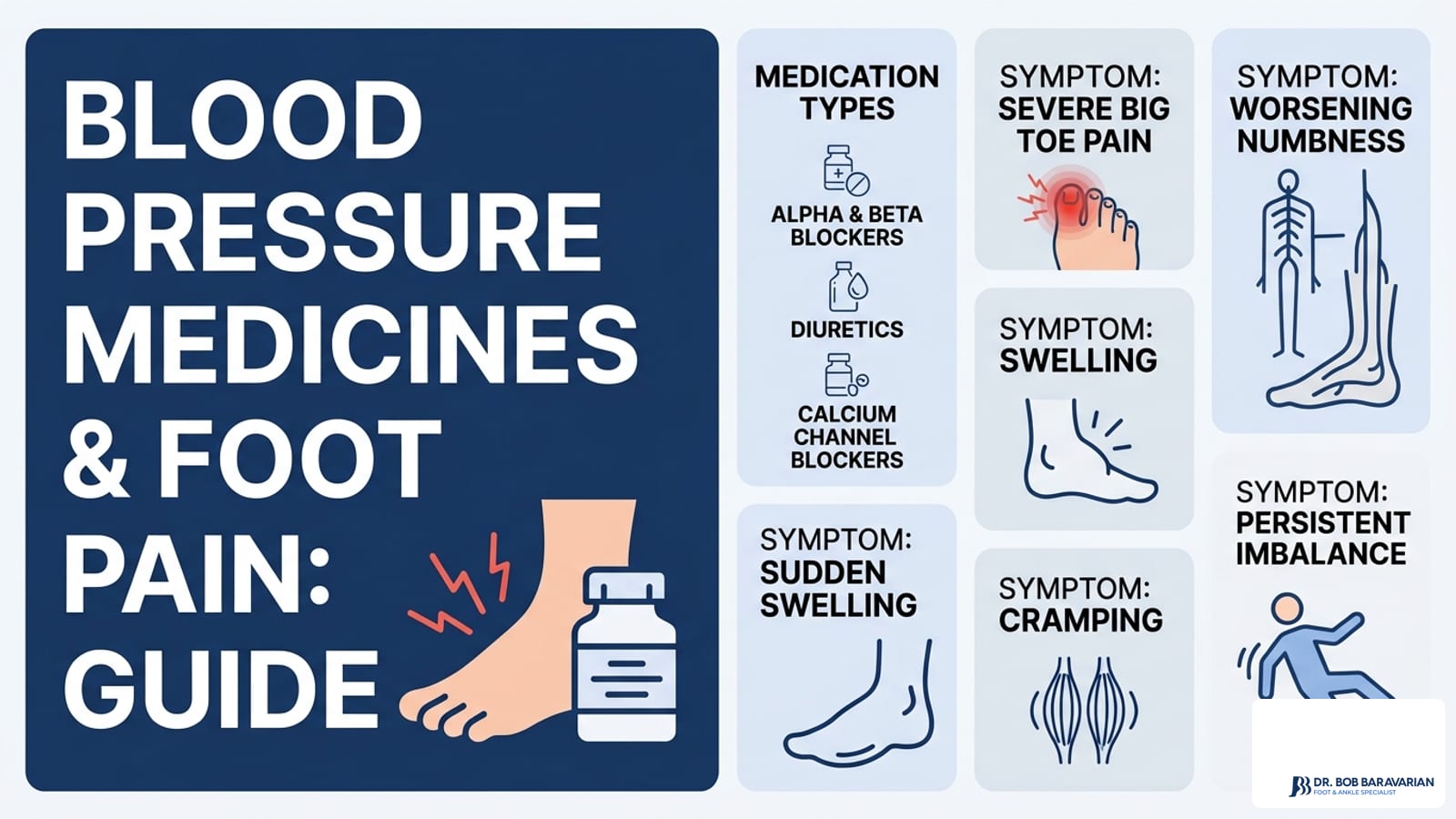
Some symptoms go beyond manageable side effects and need prompt professional attention. Contact a podiatrist or your physician urgently if you experience:
Sudden, severe swelling in one foot or ankle (could indicate a clot)
Skin that is red, warm, and tight over a swollen area (possible infection or cellulitis)
An open wound or ulcer on the foot that is not healing
Sudden, intense pain in the big toe joint (possible gout flare)
Numbness or tingling that is spreading or worsening (possible neuropathy or nerve damage)
Rapid, unexplained swelling of the foot or ankle (possible angioedema if on an ACE inhibitor)
Recurrent falls or near-falls due to dizziness or balance problems
What other medications can cause swollen feet and ankles?
Blood pressure medications get a lot of the blame for swollen feet and ankles – and often rightly so – but they’re far from the only culprits. If you’re dealing with persistent puffiness around your feet or ankles, it’s worth knowing that several other common drug classes can trigger the same problem.
Some of the most frequent offenders include:
Corticosteroids (like prednisone): These anti-inflammatory medications cause the body to retain sodium and water, which commonly leads to swelling in the lower legs, ankles, and feet – especially with long-term use.
NSAIDs (like ibuprofen and naproxen): Nonsteroidal anti-inflammatory drugs can slightly reduce kidney function, causing fluid to build up in the tissues of your feet and ankles. Ironically, the very pills people reach for to ease foot pain can sometimes make swelling worse.
Hormonal medications (including estrogen-containing contraceptives and hormone replacement therapy): Estrogen encourages fluid retention, which often shows up first in the lower extremities.
Certain diabetes medications (particularly thiazolidinediones like pioglitazone): These drugs are well known for causing peripheral edema as a side effect.
Antidepressants and mood stabilizers: Some of these medications affect fluid balance and circulation in ways that can lead to ankle swelling over time.
The tricky part is that many patients manage multiple conditions at once and take several of these medications together. That combination can make swelling significantly worse and harder to trace back to a single cause. If your feet and ankles are chronically swollen, it’s always a good idea to bring a full medication list to your appointment – especially as foot problems tend to become more complex with age. A tailored treatment plan starts with understanding the whole picture.
Whole-body approach to foot care from the surgeon other doctors trust

Managing the intersection of blood pressure medications and foot health is exactly the kind of nuanced, whole-body care that Dr. Bob Baravarian provides every day. As the surgeon other doctors trust for their toughest cases, Dr. Bob takes the time to get to know every patient personally – and that includes understanding every medication they are on before tailoring a treatment plan. He knows a foot problem doesn’t exist in isolation from the rest of your health, and the right podiatric solution must account for your cardiovascular medications, circulation, healing capacity, and lifestyle.
Whether you are dealing with amlodipine-induced ankle swelling, gout triggered by a diuretic, cold feet from a beta-blocker, or gait changes from an alpha-blocker, Dr. Bob has the expertise to identify the cause, coordinate with your prescribing physician, and develop a plan that protects your feet without compromising your heart health. Pioneering non-metal, minimally invasive, and regenerative techniques, he delivers faster healing, less pain, and great results – even for patients whose foot problems are complicated by systemic medications.
To schedule a consultation, call (855) 557-5400 or book an appointment online.
Dr. Bob Baravarian is conveniently located in Los Angeles, near Cedars-Sinai Medical Center, providing expert foot and ankle care for patients throughout Southern California.
Blood Pressure Medication FAQs
Can ACE inhibitors cause foot pain?

ACE inhibitors typically don’t cause foot pain directly but they can lead to side effects that might indirectly affect the feet, including swelling (edema)
What other medications can cause swollen feet and ankles?
Over-the-counter NSAIDs, hormones used in birth control and hormone replacement therapy, certain diabetes medications, and some antidepressants also frequently lead to swelling and fluid retention. Doctors may prescribe diuretics (water pills) to help reduce swelling.
Can calcium channel blockers cause foot pain?
Calcium channel blockers, especially amlodipine (Norvasc), are the most common cause of medication-related ankle swelling among blood pressure drugs. The swelling itself is not always painful, but it can cause a heavy, aching sensation, make shoes tight and uncomfortable, and – if left unmanaged – lead to skin changes and slow wound healing that become genuinely painful over time.
Do diuretics cause foot problems?
Yes, in two main ways. Thiazide diuretics raise uric acid levels, which can trigger gout flares – most commonly in the big toe joint. They also deplete electrolytes like potassium and magnesium, which causes painful muscle cramps in the feet and calves, often at night. Both issues are manageable with dietary changes, supplements, or a medication adjustment.
Why do beta-blockers cause cold feet?
Beta-blockers reduce cardiac output and cause peripheral vasoconstriction – narrowing of the small blood vessels in the extremities. Less blood reaches the feet, so they feel cold. For patients with already-compromised circulation (diabetes, peripheral artery disease), this effect can be more pronounced and may slow wound healing.
Which blood pressure medications cause the least foot side effects?
ARBs (such as losartan) and ACE inhibitors generally have the most favorable foot-health profile for most patients, with low rates of edema and no direct circulation restriction. Alpha-blockers can actually improve peripheral circulation, which benefits patients with diabetes or peripheral artery disease, though fall risk needs to be managed. Calcium channel blockers carry the highest edema risk, and diuretics are problematic for gout-prone patients.
Can blood pressure medication cause neuropathy or nerve damage?
Most antihypertensive medications do not directly cause neuropathy. However, reduced circulation from beta-blockers, gait changes from alpha-blocker side effects, and electrolyte imbalances from diuretics can all create conditions that mimic or worsen neuropathy symptoms. If you are experiencing persistent numbness, tingling, or burning in your feet, a podiatric evaluation is the right first step to identify the cause.
Should I stop my blood pressure medication if my feet are swollen?
No. Never stop a blood pressure medication without medical advice – doing so can cause dangerous blood pressure spikes. Instead, contact your prescribing physician to discuss the swelling, and schedule a podiatric evaluation. In many cases, a dose adjustment, a switch to a different drug class, or simple self-care measures (elevation, compression stockings, salt reduction) can resolve the foot symptoms without changing your cardiovascular protection.
When should I see a podiatrist about medication-related foot symptoms?
See a podiatrist promptly if you have worsening swelling, red or breaking skin, a wound that isn’t healing, sudden severe pain in a toe joint, spreading numbness or tingling, or recurrent falls. Dr. Bob Baravarian specializes in exactly this kind of complex, medication-influenced foot care and will coordinate with your other physicians to find the safest solution for your whole body.
Sources
-
Management of amlodipine-induced ankle https://pubmed.ncbi.nlm.nih.gov/37114573/edemahttps://pubmed.ncbi.nlm.nih.gov/37114573/
-
Types of Blood Pressure Medications | American Heart Associationhttps://www.heart.org/en/health-topics/high-blood-pressure/changes-you-can-make-to-manage-high-blood-pressure/types-of-blood-pressure-medications
-
Blood pressure lowering efficacy of dual alpha and beta blockers for primary hypertension – PMChttps://www.ncbi.nlm.nih.gov/labs/pmc/articles/PMC6486308/
-
Hydrochlorothiazide (oral route)