Catching diabetic foot complications early will allow for proper intervention and prevention of ulcerations, infections, and limb loss. That is why routine exams with a foot and ankle specialist are so critical. At the first sign of diabetic foot pain, ulcers or other diabetic foot issues, get it checked out and do not wait for your next checkup.
Otherwise, our diabetes experts recommend that anyone with type 1 or type 2 diabetes perform daily foot checks, pick proper socks and shoes and get a comprehensive foot examination and risk assessment at least once a year or more.

Why Early Treatment Is Critical
Diabetes is a serious condition that can cause a multitude of complications in your body. Many times, signs and symptoms are first detected in the feet. Our diabetic patients will often complain of numbness, tingling, or a burning sensation that is often worse during the night. That’s neuropathy.
Other patients will complain of pain when their feet are in an independent, or non-supported, position while sitting. That’s peripheral vascular disease.
The good news is that regular clinical examinations give diabetics the opportunity to detect complications (neuropathy and peripheral vascular disease) during the early stages. This allows them to get the appropriate intervention needed to prevent further complications.
What to Expect During a Diabetic Foot Exam
Vascular Examination
This checks the two major arteries of the foot. The first artery is at the top of the foot called the dorsalis pedis and the second is behind the ankle bone called the posterior tibial artery. If these arteries aren’t palpable, a Doppler machine is used to listen for proper blood flow.
Diabetes generally affects the microcirculation (for example, the small vessels that supply your toes). Therefore, we look to the tips of the toes and check for capillary refill time. This is done by applying blanching pressure to the toes and measuring the amount of time it takes for the them to regain their color. Normal capillary refill time is less than 3 seconds. Differences in skin temperature between one foot and the other may also be an indication of vascular disease or ulcerations.
If the patient has poor blood flow, it often increases their risks of infection and gangrene, and further studies may be performed.
Neurological Examination
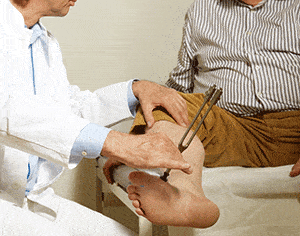
During this part of the exam a tuning fork is utilized to assess if vibratory sensation is intact. The physician places a vibrating tuning fork on the ball of the patient’s right or left large toe and asks them to report when the vibration stops. Vibratory sensation (vibration perception threshold) is generally the first sign that a patient is developing neuropathy.
Next, the physician will examine if the patient has protective sensation using a 10-gram monofilament. Some patients get nervous when they see this device because it looks like a needle.
However, looks can deceive because this instrument is similar to fishing wire and will not elicit pain. The patient will be asked to respond each time he or she feels the pressure of the monofilament on the foot. Knowing a patient’s neurological status is impaired allows the patient to be more proactive about protecting their feet.
Dermatological Examination
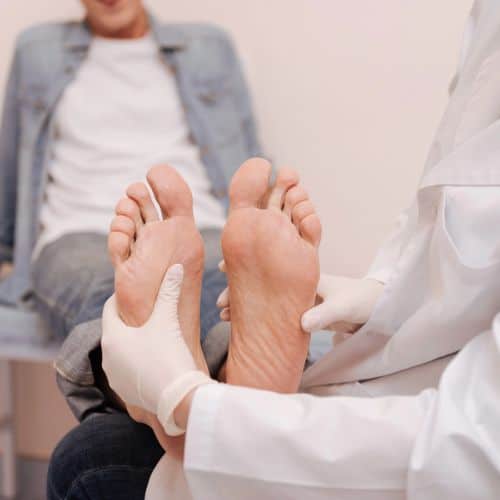
During a global inspection of the feet we look for any scaling or fissuring that can lead to a break in the skin. We check for redness, swelling and skin breakdown that may suggest an infection and examine between the toes and nails for any fungal involvement.
Diabetics have risk factor for diabetic foot ulcerations. The principal cause of this serious condition is diabetic neuropathy (loss of protective sensation) in the foot. Blisters and sores may appear on numb areas of the diabetic’s feet and heel region. Because there is sensory loss and limited or no feeling, the injury goes unnoticed and eventually becomes an entry for bacteria and infection.
If a patient has a callus due to increased pressure points, we make sure to remove it. Studies show that diabetic patients with calluses are nearly 10 times more likely to develop an underlying foot ulcer. It should be noted that tightly controlling blood glucose is critical during the treatment of a diabetic foot ulcer.
Musculoskeletal Examination
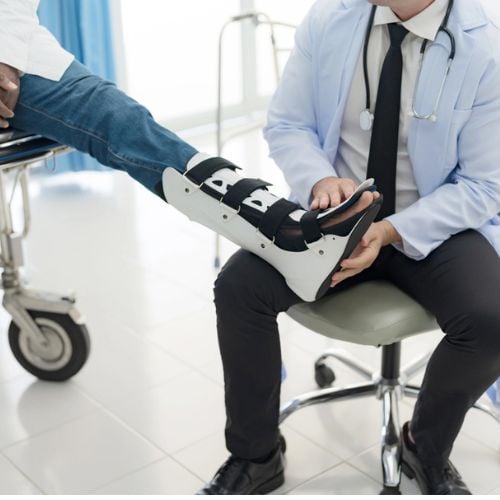
X-rays are taken to evaluate any foot deformities. This is important because abnormalities may increase plantar pressure when walking and result in calluses and ulcerations. Offloading devices such as a removable boot can prevent such complications.
Uncontrolled diabetics can also lead to a condition called Charcot arthropathy, which results in multiple fractures in the midfoot joint. Due to severe peripheral neuropathy associated with this condition, these high risk patients don’t feel any pain. They often aren’t aware of the condition and many times it goes untreated. Over time, the bone heals in an abnormal position leading to a rockerbottom foot type.
Evaluating and staging this condition, especially in the early stages, can limit complications such as ulcerations due to improper foot position, infection, and even surgery.
Dr. Bob, the Best Choice for Diabetic Foot Care
From preventive lecture series and diabetic shoe programs to the salvage of severe ulcerated feet and neuropathy, Dr. Bob Baravarian is a world leader in state-of-the-art diabetic foot care. The latest techniques for diabetic therapy are available at his center.
Dr. Bob, along with his team, is nationally recognized as one of the top foot and ankle specialists in California. With decades of experience treating diabetic patients, he understands the unique challenges that diabetes presents for foot health.
The American Diabetes Association (ADA) and the American Association of Clinical Endocrinologists recommend a comprehensive foot exam at least once a year—or more frequently if you have existing foot problems. To schedule a consultation, please call (855) 557-5400 or make an appointment now.
Dr. Bob Baravarian is conveniently located in Los Angeles, near Cedars-Sinai Medical Center, providing expert foot and ankle care for patients throughout Southern California.