Dr. Bob discusses Achilles tendon injuries and advanced treatments.
What are Achilles Tendinitis and Achilles Tendinosis?
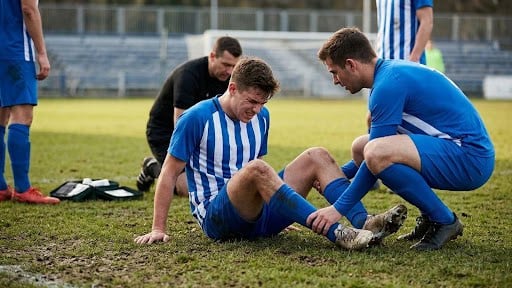
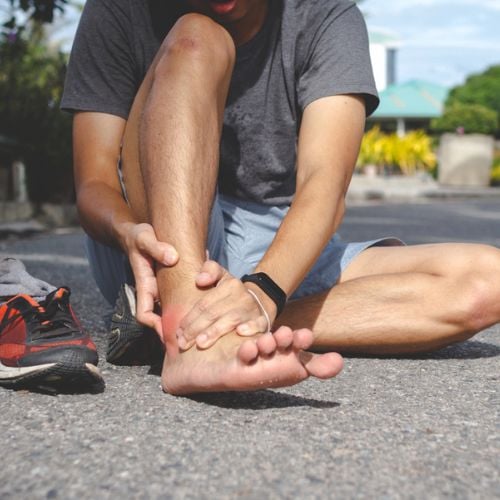
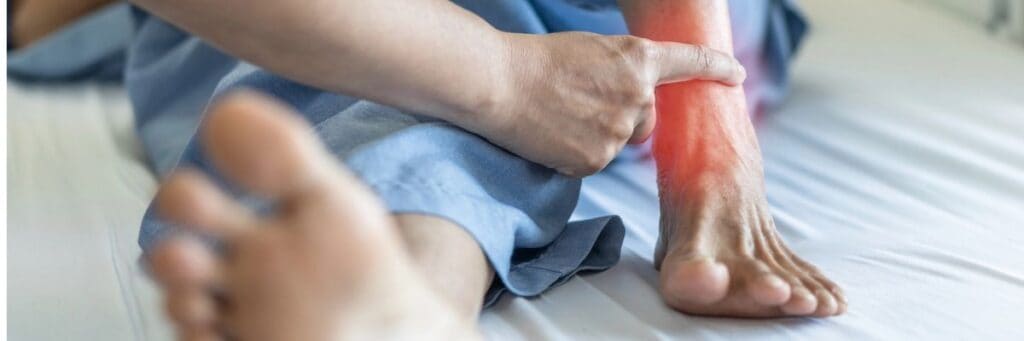
The Achilles tendon (calcaneal tendon) is one of the longest tendons in your body, extending from your calf muscles to the heel bone. Achilles tendinitis is a common overuse injury that results in inflammation of the tendon. Many people feel a dull ache, stiffness, or tenderness just above the heel. This overuse injury results from repetitive stress to the tendon.
Achilles tendinitis vs. tendinosis: what’s the difference?
Achilles tendinosis is very similar to tendinitis with one critical difference: it has now become a chronic condition, usually because the injury wasn’t properly treated early on. When the condition progresses to degeneration, thickening of the tendon along with scar tissue can occur, resulting in partial tearing of the tendon fibers. At this point, without medical intervention, the pain will remain or get worse over time.
What are the symptoms of Achilles tendinitis?
Patients often report a mild ache in the lower region of the calf or above the heel after activity. There may be tenderness or stiffness after rest, the tendon may be swollen and painful to touch, and standing on your toes may be difficult. It may be painful to “push off” while walking, and you may have heel pain when stretching your calf.
If you have severe pain and difficulty walking, it may indicate small tears in the tendon.
Hearing a snapping or popping noise during the injury or having a hard time flexing your foot or pointing your toes is something you never want to ignore. These indicate a possible complete Achilles tendon rupture, and you will want to contact our healthcare providers immediately. Read more about Achilles tendon tears and ruptures here.
If your symptoms include redness and a bony bump along the back of the heel bone, you may have an Achilles heel spur.
What causes Achilles tendinitis?
The most common risk factors are:
- Overuse or a sudden increase in activity level
- Tight calf muscles
- Running too often or running on hard surfaces
- A sudden increase in the distance of running or walking
- Jumping a lot (as in basketball)
- Wearing shoes without proper support
- Insufficient or no warm-up or stretching prior to physical activity
- A heel bone spur
- Pronation deformity of the foot, which results in hyperextension of the tendon
- Certain types of antibiotics, called fluoroquinolones, have been associated with higher rates of Achilles tendinitis.
How does Dr. Bob diagnose an Achilles injury?
The first step of diagnosis is a physical exam along with a review of your symptoms and medical history. The physical exam involves an examination of your lower leg and the back of your ankle for inflammation. You may be asked to stand on the balls of your feet so our doctor can see your range of motion and flexibility.
Our doctor can observe the integrity of your tendon by squeezing the calf muscle while you are lying on your stomach on the exam table.
Additional imaging, such as X-rays, may be used to further assess the extent of Achilles tendonitis or tendinosis. These imaging tests can provide a clearer picture of the condition of the tendon and help our specialists determine the severity of the problem. Other imaging options, such as ultrasound or MRI, may be ordered to provide more detailed information or to confirm a suspected rupture or tear.
What are conservative treatments for Achilles tendinitis?
Luckily, most Achilles injuries are highly treatable, but become more difficult to treat once the condition becomes chronic. This is why seeing a doctor early is the smartest approach to Achilles injuries. Conservative treatment options include:
- Orthotic inserts or heel lifts
- Wearing shoes with adequate cushioning
- Stretching
- Night splinting
- Physical therapy and strengthening exercises
- Sport modifications like switching to low-impact activities (swimming, weight training, rowing, cycling)
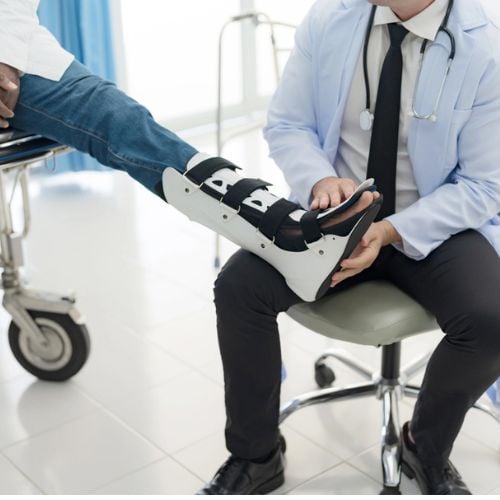
- A brace or walking boot to immobilize the tendon during the healing
- Nonsteroidal anti-inflammatory drugs (NSAIDs) like ibuprofen or naproxen can reduce inflammation and provide pain relief
- Applying icepacks for 20 minutes per hour while the injury is painful
Advanced non-invasive treatments for Achilles tendinosis
Our goal during the treatment of chronic Achilles tendinosis is to convert a chronic, noninflammatory condition to a more acute inflammatory condition. Reducing your tendonitis from chronic to acute allows your body to heal the damaged area.
Rest, ice, and anti-inflammatory treatments do not always help a chronic condition, as inflammation is not the primary problem present. However, physical therapy can be very helpful, and often includes scar tissue-focused modalities in the form of Astym (augmented soft tissue manipulation) or Graston techniques. Both techniques focus on breaking down restrictive tissues and restoring normal function.
Dr. Baravarian opts for the least invasive option whenever possible. Our foot and ankle experts are trained in multiple state-of-the-art techniques for treating Achilles tendon problems without surgery, including:
SoftWave
The scar tissue is broken apart in the damaged tendon through a combination of ultrasonic sound waves, light waves, and shockwaves. This activates the body’s stem cell response to help heal the region.
Platelet Rich Plasma (PRP)
In this treatment, the patient’s own platelet-rich plasma is injected into the affected tendon. The growth factors in the platelets spur healing and recovery. Dr. Bob uses ultrasound guidance during the injection process and uses a “peppering technique” to break up the scar tissue while injecting small amounts of PRP. After treatment, patients are often given a walking boot to rest the tendon and provide comfort.
Amniotic fluid injections
Amniotic fluid triggers a stem cell response and causes an inflammatory healing response in the region of injection. In general, amniotic fluid injections are less painful for patients than PRP. Again, peppering and ultrasound guidance are preferable but not essential, and using a boot may be a good option. It is not rare to repeat the PRP or amniotic injection a second time, four to six weeks after the first injection, in stubborn cases.
Topaz
The Topaz Procedure is a minimally invasive procedure performed in our operating room. Small holes are made in the tendon to stimulate the body’s natural healing process to heal the damaged tendon and reduce scar tissue.
Tenex and TenJet
The Tenex and TenJet probes remove scar tissue in a more mechanical manner. Using ultrasound guidance, our surgeon inserts the probe, breaks apart the scar tissue, and removes it with suction. TenJet utilizes a power saline jet system that will break up the scar and debride it, while the Tenex system debrides and aspirates by reducing the target tissue to liquid.
Extracorporeal shockwave therapy
This non-invasive procedure delivers small, controlled, low-energy shockwaves that cause micro-trauma to the damaged tissue. This initiates the healing response, allowing new blood vessels to form in the area and signals more growth factors and nutrients to the area.
Surgery options for Achilles tendon repair
Occasionally, damage to the Achilles is so severe that it doesn’t respond to non-surgical treatment options. In these rare cases, Achilles surgery is needed to remove scar tissue and repair the tendon, allowing it to heal properly.
This surgery involves examining the Achilles tendon intra-operatively and removing any damaged or scarred tissue. This procedure may leave a defect in the Achilles tendon, potentially weakening it. A graft can be used to augment the repair of this tendon if there’s a big scarred lesion.
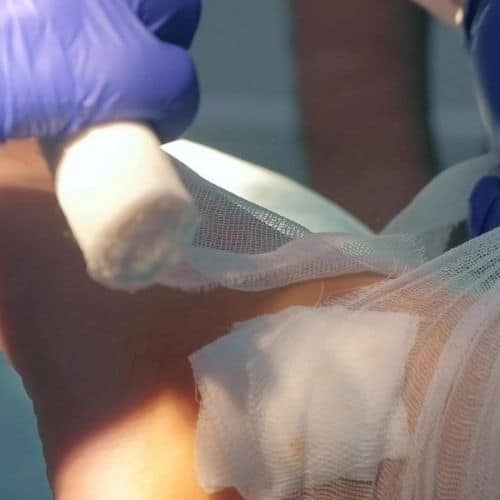
This surgery requires extensive rehabilitation, and patients will need to be immobilized in a cast for about 4-12 weeks, depending on the extent of scar tissue that was removed.
Dr. Bob’s Achilles Tendinitis & Tendinosis Fast Facts
- The Achilles tendon is one of the longest tendons in your body, extending from your calf muscles to the calcaneus (heel bone).
- Symptoms of new Achilles injuries include mild ache, tenderness, swelling, difficulty standing on toes, and severe pain with walking.
- An untreated or undertreated Achilles injury can cause degeneration, thickening of the tendon, and partial tearing of the fibers that cannot heal on its own.
- Diagnosis involves a physical exam, review of symptoms, and imaging tests such as X-rays, ultrasound, or MRI.
- Conservative treatments include orthotic inserts, stretching, physical therapy, NSAIDs, and non-invasive treatments like PRP, stem cell therapy, and shockwave therapy. Steroid injections are not recommended.
- Surgery may be necessary for severe cases, involving the removal of scar tissue and tendon repair, followed by extensive rehabilitation.
- Our doctors offer the most advanced non-invasive treatments and state-of-the-art minimally invasive surgical techniques for Achilles tendon problems.
Dr. Bob: The best choice for your Achilles tendon care in Los Angeles
Dr. Bob is a nationally recognized leader in the treatment of Achilles tendon problems. He has worked closely in the development of new minimally invasive surgical techniques, including the PARS technique. The PARS technique is a minimally invasive state-of-the-art technology that results in higher success rates, less scarring, and a quicker, stronger recovery.
Dr. Bob always opts for the most conservative treatment. You can be assured that you are being truly cared for by Dr. Baravarian, with decades of experience and state-of-the-art techniques. If you are experiencing Achilles tendon pain, we encourage you to schedule a consultation with one of our foot and ankle specialists.
To schedule a consultation, please call (855) 557-5400 or make an appointment online.
Dr. Bob Baravarian is conveniently located in Los Angeles, near Cedars-Sinai Medical Center, providing expert foot and ankle care for patients throughout Southern California.
Achilles Tendinitis FAQs
Are steroid injections helpful in the treatment of Achilles tendon disorders?

Steroid injections in or around the Achilles tendon have been linked to tendon rupture and aren’t recommended.
Do you commonly use ultrasound and magnetic resonance imaging (MRI) to evaluate Achilles pain?
Yes, both ultrasound and magnetic resonance imaging (MRI) are commonly used diagnostic tools to evaluate heel pain, including conditions related to the Achilles tendon or Haglund’s deformity.
Can Haglund’s deformity contribute to Achilles tendonitis?
Haglund’s deformity, also known as “pump bump,” is a bony enlargement at the back of the heel bone. This deformity can indeed lead to the development of Achilles tendonitis.
Sources
-
Pronation in runners
https://link.springer.com/article/10.2165/00007256-199826030-00003 -
Efficacy of heel lifts versus calf muscle eccentric exercise for mid-portion Achilles tendinopathy (the HEALTHY trial): study protocol for a randomised trial.
https://jfootankleres.biomedcentral.com/articles/10.1186/s13047-019-0325-2