Dr. Baravarian introduces his breakthrough non-metal Achilles repair with less pain, swelling, and faster recovery.
Expert Achilles tendon rupture repair with Dr. Baravarian
Dr. Bob Baravarian, a nationally recognized Los Angeles foot and ankle surgeon, performs Achilles tendon rupture repair using a minimally invasive technique that requires only a one-centimeter incision.
His exclusive advanced approach, called non-metal PARS (Percutaneous Achilles Repair System), is performed without any metal surgical hardware, which reduces scar tissue and minimizes healing complications while allowing the healthy portion of the tendon to be securely reattached to the heel bone.
The result is faster recovery, less discomfort, and excellent long-term outcomes backed by Dr. Baravarian’s decades of surgical expertise.
What’s an Achilles rupture?
The Achilles tendon is a strong band of tissue that connects your calf muscles to your heel bone. When this tendon is partially torn, some of the fibers are damaged but the tendon remains intact. A complete tear, or rupture, means the tendon fibers have fully separated, splitting it into two parts.
Most Achilles tendon injuries occur a few inches above where the tendon attaches to the heel bone, though they can also happen right at the heel or higher up the calf.
What are the symptoms of a ruptured or torn Achilles?
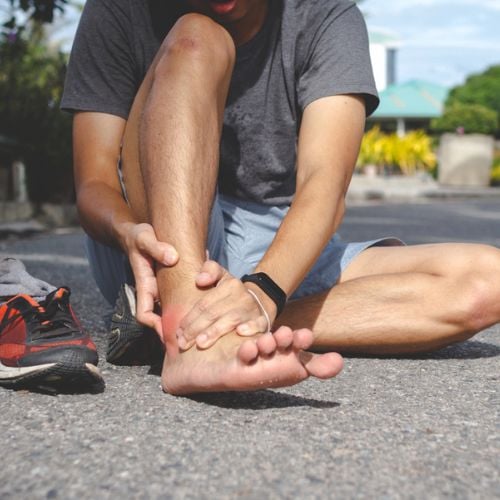
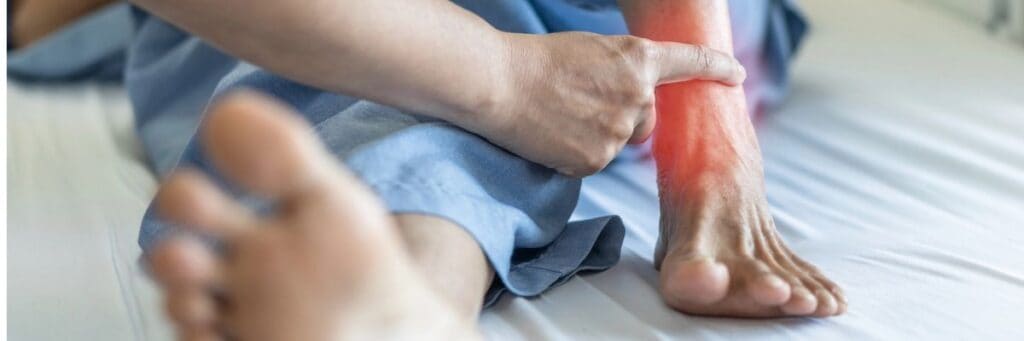
Sudden, sharp pain in the back of the ankle is usually experienced with an acute Achilles tendon rupture. Patients may even feel a “pop” of the tendon and some report that it “felt like a shot” or that they thought that someone “kicked the back of their leg.”
Patients relate that the pain does not last very long and, although there is swelling on the bag of the leg, the pain often subsides. Some patients may not realize they have an Achilles tendon tear for a while, resulting in a chronic tear that may require additional care beyond a primary Achilles repair surgery.
Some patients come in complaining they “sprained their ankle,” but under examination, we find weakness to plantar flexion and a palpable gap in the tendon.
What are risk factors for an Achilles tendon rupture?
Most acute ruptured tendons we see in our practice are patients between their early 20s and late 60s and engage in frequent physical activity.
Factors that may increase your risk of Achilles tendon rupture include:
- Sex. Men are up to five times more likely to experience an Achilles tendon rupture than women.
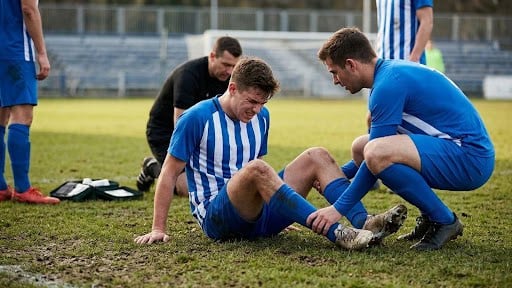
- Recreational sports. Achilles tendon injuries are more frequently observed in sports that involve activities like running, jumping, and sudden changes in movement, such as soccer, basketball, and tennis.
- Steroid injections. Some physicians may administer steroid injections into the ankle joint to alleviate pain and inflammation. However, it’s important to note that this treatment can potentially weaken nearby tendons and has been linked to an increased risk of Achilles tendon ruptures.
- Certain antibiotics. Research shows that fluoroquinolone antibiotics, such as Ciprofloxacin (Cipro) or Levofloxacin (Levaquin), have been associated with an elevated risk of Achilles tendon rupture.
- Obesity. Excessive body weight places additional strain on the Achilles tendon, making it more susceptible to injury.
- Medical conditions. Certain systemic diseases, such as rheumatoid arthritis and diabetes, can affect the health of the tendons, including the Achilles tendon.
- Pre-existing Achilles tendinopathy. If your Achilles tendon is already injured or under strain, it is more prone to a tear or rupture.
- Weekend warriors. Adults who don’t train regularly and then exercise at a high intensity are suddenly at risk of Achilles tendon injuries or tears.
After experiencing an Achilles tendon tear, there is a 6% chance of sustaining the same injury in the opposite foot.
Because Achilles ruptures so often happen during sports, they’re one of the injuries we treat most in active patients. If you’re an athlete weighing your options, our guide to the best podiatrists in Los Angeles for sports injuries explains how sports-focused care differs and what a faster return to sport looks like.
How is a torn Achilles tendon diagnosed?
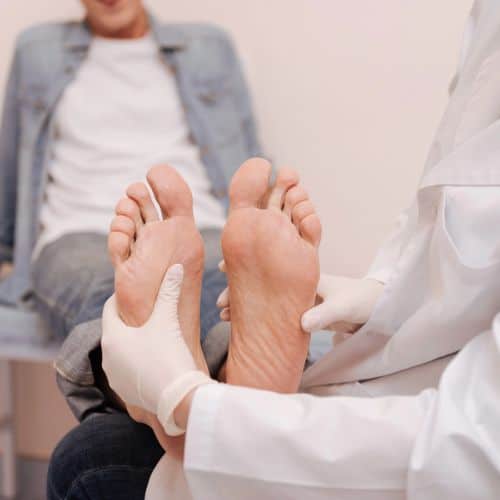
During the physical exam, we will look for swelling, bruising, and possible defects near the rupture region. We will also test the functionality of the calf muscle as well as your level of plantar flexion (ankle flexing).
We may also perform the Thompson Test by squeezing the calf muscle. If the foot does not move downward with this squeeze, the Achilles is not attached to the muscle and indicates a ruptured tendon.
While we can usually assess and diagnose a tear with a simple examination, we often turn to imaging to confirm the diagnosis. Magnetic resonance imaging (MRI) is a mainstay of imaging, but we also use in-office ultrasound for testing and diagnostics. Ultrasound testing is inexpensive, fast, and easy to perform, as well as dynamic. Utrasound shows us if the tendon ends approximate plantarflexion, which is helpful in planning the treatment course.
What are the treatments for a torn Achilles tendon?
Treatments for an Achilles tendon tear can be categorized into non-surgical and surgical options. Non-surgical methods typically include rest, ice, compression, and elevation (RICE), along with physical therapy and sometimes immobilization in a cast or brace to allow the tendon to heal naturally.
On the other hand, surgical intervention may be recommended to repair the tendon, particularly in cases where complete rupture has occurred or in active individuals who may demand quicker recovery times and diminished risk of re-injury.
Partially torn Achilles treatment
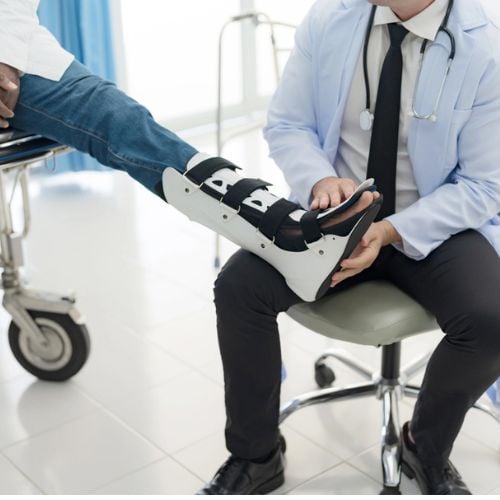
Nonsurgical treatments may be an option if the Achilles is only partially torn. These nonoperative treatments include a walking boot or cast immobilizing the tendon while it heals. It is important to note that conservative treatments are associated with a high rate of re-injury or re-rupture of the Achilles.
Surgical repair of a partially torn Achilles tendon can be performed, but the exact treatment we choose will depend on the extent of your injury. An acute, partially torn Achilles can be repaired by sewing the torn area back together. If the partial tear is chronic and the tendon has an abundance of scar tissue, this scar tissue may need to be surgically removed.
Occasionally, a graft can be wrapped around the tendon’s defect to help augment the repair. This is done as outpatient surgery and includes many benefits over conservative options, including a reduced re-rupture rate, improved muscle function of the ankle, and quick return to pre-injury activity levels.
Patients generally wear a cast for three weeks to immobilize the Achilles tendon while it heals. Once the cast is off, we’ll refer you to physical therapy to strengthen the tendon and improve your range of motion.
Ruptured Achilles tendon treatment
If an Achilles is completely ruptured, surgery is generally required to reattach the tendon. Surgery provides stronger tendon repair and potentially lower the chance of a future tear. We utilize the our exclusive non-metal surgical percutaneous Achilles repair system (or PARS) minimally invasive technique. This metal free surgical technique offers a faster and more aesthetically pleasing recovery than traditional methods.
It’s rare for us to consider non-surgical Achilles casting as an option for acute rupture of the Achilles tendon, but it is sometimes worth considering. Depending on what the ultrasound shows, we may be able to cast the ankle in a plantarflexed position. However, nonsurgical treatment does come with a higher rate of re-rupture and longer recovery time. Casting can also result in a tendon that is weak or not at its optimal length.
What is the non-metal PARS procedure for Achilles ruptures?
The minimally invasive PARS surgical technique allows for a very small incision, much less scarring, and a cleaner, speedier recovery. Our recovery process has resulted in weight-bearing and physical therapy, often at four weeks, and a return to sports activity at about three months.
We use the Ossio non-metal surgical hardware in our exclusive perfected PARS Achilles tendon rupture technique. This reduces heel reaction and greatly improves healing and tendon strength.
Read more about the non-metal PARS procedure here.
Achilles tendon repair surgery recovery
After torn Achilles surgery, you will be in a cast for five weeks to allow the tendon to heal. At five weeks, you will be placed in a tall boot with one inch of lift — at this point, you’ll be cleared for weight-bearing and will start physical therapy to recover your range of motion. Over three weeks, portions of the lift will slowly be removed during follow-up appointments. At ten weeks post-surgery, protection can be removed, and therapy continues.
Full recovery may take three to six months. During this time, prescription or over-the-counter pain medicine may be used to manage any pain, though our patients generally do not need it.
Why Dr. Baravarian is the best choice for ruptured Achilles treatment in Los Angeles
Dr. Bob Baravarian is a nationally recognized leader in the treatment of Achilles tendon injuries. He has worked closely in the development of new minimally invasive surgical techniques, including his non-metal PARS technique using OssioFiber metal-free screws and pins that he helped develop.
Dr. Baravarian’s exclusive non-metal PARS technique is a minimally invasive state-of-the-art technology that results in higher success rates, less scarring, and a quicker, stronger recovery.
While Dr. Bob is an Achilles tendon repair specialist, he always opts for the most conservative treatment first. Why? Because if you can avoid surgery and heal, you should.
To schedule a consultation, please call (855) 557-5400 or make an appointment now.
Dr. Bob Baravarian is conveniently located in Los Angeles, near Cedars-Sinai Medical Center and Beverly Hills, providing expert foot and ankle care for patients throughout Southern California.
Ruptured Achilles FAQs
How can you prevent Achilles tendon injuries?

While you can’t always foresee accidental injuries like Achilles tendon tears, there are proactive measures you can adopt to lower the risk of an Achilles tendon rupture, which include:
- Warm-up routine: Before engaging in any workout or sports activity, it’s essential to perform warm-up exercises. These activities help prepare your muscles and tendons for the demands of physical exertion.
- Gradual intensity increase: Gradually increasing the intensity of your workouts and activities is crucial. This allows your body to adapt and become better equipped to handle the stress placed on your Achilles tendon.
- Regular stretching: Incorporate regular stretching into your routine, focusing on your calf muscles and Achilles tendons. Stretching helps maintain flexibility and can reduce the risk of injury.
- Avoid smoking. Smoking negatively affects tendon health and should be avoided as it increases the risk of tendon injuries, including Achilles tendon tears.
Can Achilles tendinitis or tendinosis contribute to a rupture?
Yes. Achilles tendinitis is commonly an overuse condition characterized by inflammation and irritation of the Achilles tendon, which is the large tendon at the back of the leg that connects your calf muscles (gastrocnemius) to your heel bone (calcaneus). When the tendon is inflamed, it becomes weaker and more susceptible to injury, including a rupture.
What is insertional Achilles tendonitis?
Unlike non-insertional Achilles tendonitis, which affects the middle portion of the tendon, insertional Achilles tendonitis occurs at the lower end of the tendon, near the heel bone.
How should one manage the symptoms of an Achilles tendon rupture before seeking medical attention?
If you suspect an Achilles tendon rupture, it’s crucial to take immediate steps to manage the symptoms before seeking medical attention. Here’s what you can do:
- Rest: Avoid putting weight on the affected leg. Resting the tendon can prevent further damage.
- Ice: Apply ice to the injured area to reduce swelling and alleviate pain. Use a cloth or towel to protect your skin, and apply the ice for 15-20 minutes every one to two hours during the first 48 hours.
- Compression: Wrapping the injured leg with an elastic bandage or compression sleeve can help control swelling. Be careful not to wrap it too tightly, as it may impede blood circulation.
- Elevation: Elevate your leg above the level of your heart when resting.
- Pain medication: Over-the-counter pain relievers like ibuprofen or acetaminophen can help manage pain and inflammation.
What happens if an Achilles tendon rupture is not treated?
If a ruptured Achilles tendon has been neglected or misdiagnosed, the muscle will retract, and a simple end-to-end repair of the torn tendon is often no longer possible. In these cases, the calf muscle can be lengthened to reattach the two ends, or a tendon transfer can be performed to reconstruct the Achilles tendon.
In cases where a tendon transfer is needed, the flexor tendon to the big toe is harvested and attached to the heel bone to function as the Achilles tendon. Recovery from this procedure is usually similar to acute tendon tear repair, and extensive therapy will be needed to strengthen the area.
Sources
-
Achilles tendon rupture
https://orthoinfo.aaos.org/en/diseases–conditions/achilles-tendon-rupture-tear-video -
Ankle Tendon Disorders and Ruptures
www.sciencedirect.com/science/article/abs/pii/B9780323025881500725