What Is Burning Foot Pain?
Burning foot pain is exactly what it sounds like: a sensation of heat, tingling, or scorching discomfort in one or both feet that can range from mildly annoying to completely debilitating. Some people describe it as walking on hot coals. Others notice a pins-and-needles feeling, numbness, or a dull ache that flares up at night and disrupts sleep. Whatever form it takes, burning foot pain signals that something needs attention.
Burning foot pain is also surprisingly common. It affects people of all ages and activity levels, from athletes dealing with overuse injuries to older adults managing diabetic neuropathy and nerve compression. Because so many different issues can produce the same burning sensation, and because the underlying cause can worsen over time if left untreated, getting an accurate diagnosis is the essential first step toward real relief.
At DOCS Foot and Ankle, Dr. Bob Baravarian takes a thorough, personalized approach to understanding why your feet burn. Rather than guessing, he uses advanced diagnostics to pinpoint the exact cause and build a treatment plan designed around your specific needs, because the right answer for one patient may be completely different for another.
Common Causes of Burning Feet
A burning sensation in the feet is usually caused by a problem in the foot’s nervous system or vascular system, or both. Because the same symptom can arise from many different conditions, an accurate diagnosis is everything. Here are the most common causes we see at DOCS Foot and Ankle, each covered in more detail below:
- Peripheral neuropathy, diabetic and non-diabetic
- Tarsal tunnel syndrome
- Morton’s neuroma
- Peripheral vascular disease and poor circulation
- Erythromelalgia
- Athlete’s foot (tinea pedis)
- Vitamin B12 or folate deficiency
- Hypothyroidism
Other contributors include traumatic nerve compression, badly fitting footwear that presses on nerves or blood vessels, sciatica and other spinal issues, structural deformities such as bunions, inflammation of blood vessels, frostbite, and alcohol-related nerve damage.
Peripheral Neuropathy (Diabetic and Non-Diabetic)
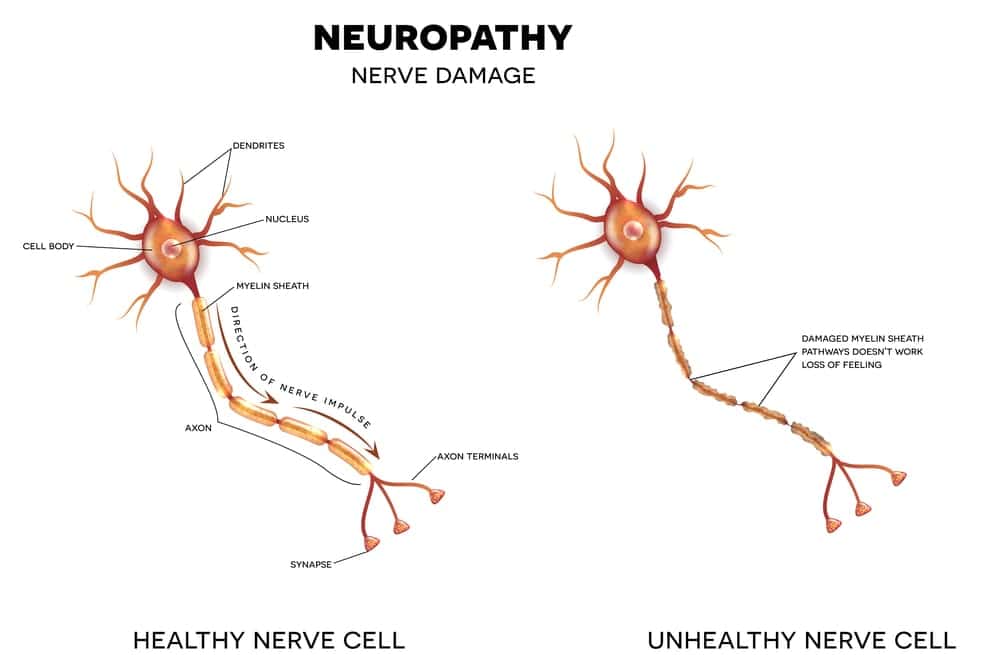
Peripheral neuropathy is the single most common source of burning feet. It describes damage to the peripheral nerves that carry signals between your feet and your brain, and it typically produces burning, tingling, or a pins-and-needles sensation that often starts in the toes and moves up over time.
Diabetes is the leading cause. Chronically elevated blood sugar damages small nerves in the feet, producing diabetic peripheral neuropathy. This is one of the most frequent reasons patients come to us with burning foot pain, and because diabetic neuropathy can progress quickly, early intervention matters.
Neuropathy is not always tied to diabetes, however. Non-diabetic causes include nerve damage from heavy alcohol use, vitamin deficiencies, thyroid disease, certain medications and chemotherapy, autoimmune conditions, and, in some cases, no identifiable cause at all (idiopathic neuropathy). Because the treatment path differs depending on the driver, identifying the type of neuropathy is a key part of the workup.
Tarsal Tunnel Syndrome
Tarsal tunnel syndrome is the foot’s version of the better-known carpal tunnel syndrome of the wrist. The tarsal tunnel is a narrow space between the bones on the inner side of the foot near the ankle.
The posterior tibial nerve passes through this tunnel, and when it becomes compressed or entrapped, it can produce burning, tingling, numbness, or a shooting, electric-shock sensation that radiates into the sole and toes.
Symptoms often worsen with activity or prolonged standing and may ease with rest. Because the pain can be felt along the arch and heel, tarsal tunnel syndrome is sometimes mistaken for plantar fasciitis, which is one reason a careful, hands-on evaluation is important.
Morton’s Neuroma
Morton’s neuroma is a thickening of the tissue around one of the nerves that runs between the toes, most often between the third and fourth toes. It typically causes burning or sharp pain in the ball of the foot, sometimes with the feeling of a pebble in the shoe or numbness in the neighboring toes. Narrow or high-heeled footwear tends to aggravate it. Morton’s neuroma sits within a family of forefoot conditions that also includes metatarsalgia and capsulitis, which can produce overlapping symptoms.
Peripheral Vascular Disease
Not all burning feet come from the nerves. Peripheral vascular disease, also called peripheral artery disease, occurs when narrowed or blocked arteries reduce blood flow to the feet and legs.
Poor circulation can cause burning, cramping, aching, and discomfort, often worse during activity such as walking and relieved by rest. Vascular causes deserve prompt attention because reduced circulation affects wound healing and overall foot health, particularly in people with diabetes.
Erythromelalgia
Erythromelalgia is a rare neurovascular condition marked by episodes of intense burning pain, redness, and warmth, most often in the feet and sometimes the hands. Episodes are frequently triggered by heat, exercise, or standing, and are classically relieved by cooling or elevating the affected foot.
Erythromelalgia can occur on its own or alongside other medical conditions, so a specialist evaluation helps distinguish it from more common causes of burning feet and guides appropriate management.
Athlete’s Foot (Tinea Pedis)
Athlete’s foot is a common fungal infection that can cause burning, itching, stinging, and irritation, particularly between the toes and along the soles. The skin may appear red, scaly, cracked, or peeling.
Because it is a surface infection rather than a nerve problem or contact dermatitis, athlete’s foot often responds well to antifungal treatment, but persistent or recurring cases should be evaluated, especially in people with diabetes or circulation problems.
Vitamin Deficiency (B12 and Folate)
Nutritional deficiencies, especially low vitamin B12 and folate, can impair nerve function and trigger burning sensations throughout the feet. These deficiencies are easy to overlook and are identified with a simple blood test.
When a deficiency is the underlying cause, correcting it is often one of the most effective long-term treatments.
Hypothyroidism
An underactive thyroid, or hypothyroidism, can contribute to nerve damage over time and lead to burning foot symptoms that are easy to miss. Because thyroid-related neuropathy develops gradually and often accompanies other subtle symptoms, checking thyroid function is a routine part of a thorough burning foot evaluation.
Symptom Differentiation: What Your Burning Pattern Means

Burning foot pain can show up in a surprising number of ways, and the specific pattern of your symptoms often points toward the underlying cause. Knowing what to look for, and how to describe it to Dr. Bob, helps you get to the right diagnosis faster.
- Burning or heat in the soles: A persistent feeling of warmth or fire in the bottom of your feet, even when the skin feels cool to the touch, is one of the most common complaints and a classic sign of nerve involvement.
- Numbness or tingling: Pins-and-needles sensations that travel through the toes or across the ball of the foot often accompany diabetic neuropathy or nerve compression.
- Symptoms that worsen at night: If your burning intensifies when you lie down or rest, that pattern strongly suggests a nerve-related condition rather than a structural one.
- Redness and warmth that flares and eases with cooling: Burning combined with visibly red, hot skin that improves when you cool the foot can point toward erythromelalgia or a circulatory issue.
- Sharp or shooting pain: Electric-shock sensations radiating from the heel or arch may point to tarsal tunnel syndrome.
- Burning in the ball of the foot: Pain concentrated behind the toes, sometimes with a pebble-in-the-shoe feeling, is typical of Morton’s neuroma.
- Toe cramping or curling alongside burning: When burning combines with toe cramping and curling, the picture becomes more complex and warrants a closer look.
If any of these sound familiar, especially if they disrupt your sleep or daily routine, early evaluation leads to faster relief.
When to See a Doctor About Burning Foot Pain
Burning foot pain can feel easy to brush off at first. Maybe you blame it on a long day or a new pair of shoes. But certain signs show that what you are experiencing goes beyond everyday fatigue and deserves a professional evaluation.
Schedule an appointment with a podiatrist or foot and ankle specialist if you notice any of the following:
- Burning pain that persists for more than a few days without an obvious cause
- Numbness, tingling, or a pins-and-needles sensation that keeps coming back
- Burning that wakes you at night or regularly disrupts your sleep
- Symptoms that are spreading from your feet up toward your ankles or legs
- Visible skin changes such as redness, swelling, or unusual warmth
- Pain that affects how you walk, stand, or go about your daily routine
- A known condition like diabetes, since diabetic neuropathy can progress quickly and early intervention matters
Seek emergency care immediately. Some symptoms call for urgent attention rather than a scheduled visit. Call 911 if burning or numbness comes on suddenly and is accompanied by facial drooping, weakness on one side of the body, blurred vision, loss of balance, confusion, or difficulty speaking, as these can be signs of a stroke.
Rapidly progressing numbness or weakness that climbs up both legs also warrants emergency evaluation, because it can reflect a serious nerve or spinal cord problem. When in doubt about sudden or fast-worsening symptoms, do not wait.
How Dr. Bob Diagnoses Burning Foot Pain

Because so many different conditions can cause that familiar heat and discomfort, an accurate diagnosis is the essential first step toward real relief. Getting to the root of your burning foot pain is a thorough but straightforward process.
During your initial consultation, Dr. Bob will take a detailed medical history, asking about when the burning started, whether it is worse at night, and whether you have any underlying conditions like diabetes or thyroid disease. He will also ask about your lifestyle, footwear habits, and any medications you are currently taking, since all of these factors can play a role.
From there, a hands-on physical examination helps pinpoint the source of your symptoms. Dr. Bob will assess sensation, reflexes, circulation, and the overall structure of your foot and ankle. Depending on what he finds, he may recommend one or more of the following:
- Nerve conduction studies to measure how well electrical signals travel through your nerves
- Blood tests to check for diabetes, kidney disease, vitamin B12 or folate deficiency, and hypothyroidism
- Imaging studies such as MRI or ultrasound to rule out structural causes like nerve entrapment or soft tissue damage
- Vascular assessment if peripheral vascular disease is suspected
This personalized approach means your treatment plan is built on a precise understanding of what is actually driving your pain, not guesswork.
Treatment Options for Burning Foot Pain
Whatever the cause, improving your diet and increasing healthy physical activity is often a good starting point toward recovery. In some cases, burning is temporary. Intense exercise or athletic activity can briefly compress nerves and blood vessels in the feet, and this type of numbness usually subsides with time and rest.
When burning foot pain is a symptom of a diagnosed condition such as blood vessel disease, sciatica, or diabetes, the most effective approach is to treat that underlying condition alongside the foot symptoms. Dr. Bob and his team use several well-established treatment options, chosen according to the underlying cause:
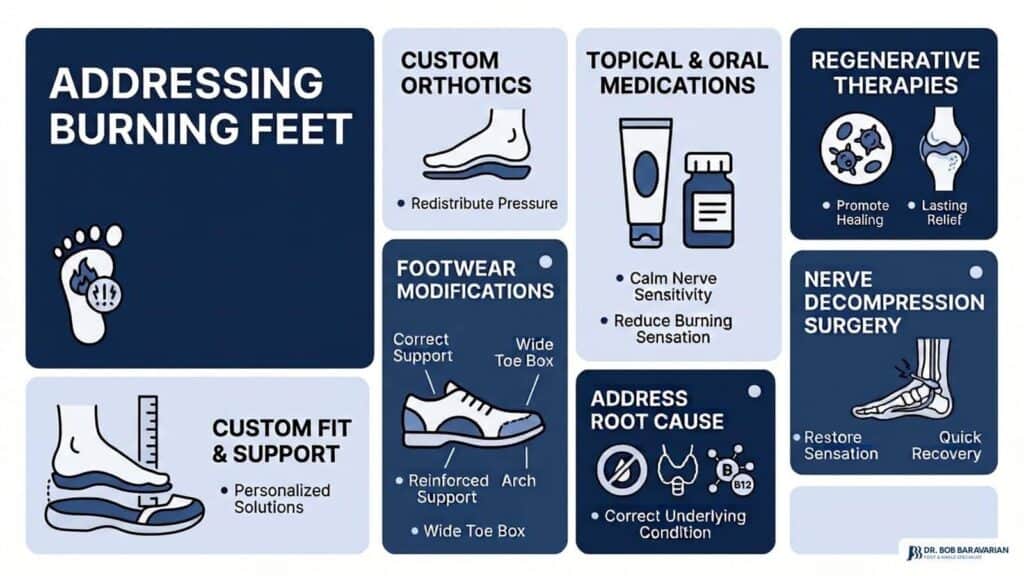
- Custom orthotics and footwear modifications. For conditions like tarsal tunnel syndrome or Morton’s neuroma, custom orthotics redistribute pressure away from irritated nerves, reducing friction and compression with every step. Proper footwear, with a wide toe box and adequate arch support, can make a meaningful difference on its own.
- Topical and oral medications. Topical creams containing capsaicin or lidocaine can calm nerve hypersensitivity at the skin level. For more systemic neuropathy, physicians may prescribe medications such as gabapentin, pregabalin, or certain antidepressants, and some patients use supplements like alpha-lipoic acid, to help reduce nerve-related burning.
- Regenerative therapies. Platelet Rich Plasma (PRP) therapy uses components of your own blood to support healing in damaged soft tissue, and Softwave Therapy is a non-invasive option sometimes used for chronic nerve and tendon chronic pain. These therapies may be considered as part of a broader plan, and Dr. Bob will explain what the current evidence does and does not support for your specific diagnosis.
- Nerve decompression surgery. When conservative care does not resolve tarsal tunnel syndrome or a compressed posterior tibial nerve, surgical decompression can release the entrapped nerve and relieve symptoms. Dr. Bob’s minimally invasive approach is designed to limit disruption to surrounding tissue and support a smoother recovery compared with traditional open techniques.
- Addressing the root cause. For burning feet tied to vitamin B12 deficiency, hypothyroidism, or diabetes, correcting the underlying condition is the most effective long-term treatment. Dr. Bob works closely with your primary care team so your plan covers every angle, not just the foot symptoms.
For severe or chronic cases, treatment options may also include physical therapy, anti-inflammatory medications, and, in more serious situations, a minor surgical procedure to relieve pressure on the affected nerves or blood vessels. Every plan is built around your specific diagnosis, your lifestyle, and your goals.
Self-Care Guidance for Burning Feet

While a specialist should evaluate persistent or worsening symptoms, several everyday habits can support foot health and may ease mild burning:
- Choose well-fitting shoes with a wide toe box and good arch support, and avoid narrow or high-heeled styles that compress the nerves.
- Keep your feet clean and fully dry, especially between the toes, to reduce the risk of athlete’s foot.
- If you have diabetes, keep your blood sugar well controlled and inspect your feet daily for cuts, blisters, redness, or changes in sensation.
- Cool an actively burning foot with a cool (not ice-cold) compress or by elevating it, particularly if cooling brings relief.
- Limit alcohol, which can contribute to nerve damage over time.
- Stay active with gentle, regular movement to support healthy circulation.
- Moisturize dry skin, but avoid applying lotion between the toes.
If self-care does not bring improvement within a few days, or if symptoms are spreading or disrupting your sleep, see a foot and ankle specialist. People with diabetes or known circulation problems should be evaluated sooner rather than trying to manage burning feet on their own.
About Dr. Bob Baravarian
Dr. Bob Baravarian is a board-certified foot and ankle surgeon known for taking on complex cases and for a patient-centered approach that starts with listening. He is recognized for his work with minimally invasive techniques and, when appropriate, regenerative approaches intended to support healing rather than simply mask symptoms. Whether your burning foot pain calls for conservative management or a more advanced approach, Dr. Bob builds every treatment plan around your specific diagnosis, your lifestyle, and your goals.
Schedule Your Burning Foot Pain Evaluation in Los Angeles
If burning foot pain is disrupting your sleep, your workouts, or your daily routine, you deserve answers and a clear path forward. Dr. Bob Baravarian and the team at DOCS Foot and Ankle offer personalized care designed to get to the root of your pain, not just cover it up.
To schedule a consultation, please call (855) 557-5400 or request an appointment online.
Dr. Bob Baravarian is conveniently located in Los Angeles, near Cedars-Sinai Medical Center, providing expert foot and ankle care for patients throughout Southern California.
Frequently Asked Questions About Burning Foot Pain
What causes burning feet at night?

Burning that intensifies at night is common with nerve-related conditions such as peripheral neuropathy and tarsal tunnel syndrome. When you lie down and outside distractions fade, nerve pain often feels more noticeable. Nighttime burning that recurs is a good reason to have your nerves and circulation evaluated.
Is burning foot pain a sign of diabetes?
It can be. Diabetic peripheral neuropathy is one of the leading causes of burning feet, and burning or tingling in the toes is sometimes an early sign of diabetes or prediabetes. A simple blood test can check your blood sugar, so burning feet without an obvious cause are worth discussing with a doctor.
Can burning feet be cured?
It depends on the cause. When burning stems from a reversible issue such as a vitamin deficiency, a fungal infection, or nerve compression that can be released, symptoms often resolve with the right treatment. When it stems from a chronic condition such as diabetic neuropathy, the goal shifts to controlling the underlying disease and managing symptoms effectively—sometimes utilizing options like duloxetine—so you can stay comfortable and active. Early evaluation generally means more options and better outcomes.
How is tarsal tunnel syndrome different from plantar fasciitis?
Both can cause pain along the bottom of the foot, but the quality and source differ. Plantar fasciitis is a mechanical problem of the plantar fascia, and it classically causes sharp heel pain with the first steps in the morning. Tarsal tunnel syndrome is a nerve compression problem that tends to produce burning, tingling, or shooting sensations that radiate into the sole and toes, often worse with activity or at night. Because they are treated differently, a proper diagnosis matters.
What tests diagnose burning foot pain?
Diagnosis starts with a medical history and a hands-on exam of sensation, reflexes, circulation, and foot structure. From there, testing may include nerve conduction studies, blood tests for diabetes and vitamin or thyroid issues, imaging such as MRI or ultrasound, and a vascular assessment if circulation is a concern.
How long does burning foot treatment take?
Timelines vary with the cause and the treatment. Some patients feel relief within days of a footwear change, an orthotic, or a topical medication, while conditions like diabetic neuropathy are managed over the long term. After a diagnosis, Dr. Bob can give you a realistic sense of what to expect for your situation.
When should I see a specialist versus my primary care doctor?
Primary care is a reasonable first stop for general health issues that may contribute to burning feet, such as blood sugar or thyroid concerns. A foot and ankle specialist is the right choice when the problem is focused in the foot itself, such as suspected tarsal tunnel syndrome, Morton’s neuroma, or a structural issue, or when burning is persistent, worsening, or not responding to initial care.
Is burning feet the same as paresthesia?
Burning and tingling in the feet fall under a broader term, paresthesia, which simply means an abnormal sensation such as burning, prickling, or numbness. The medical community sometimes refers to persistent burning feet as Grierson-Gopalan syndrome, or burning feet syndrome, though in practice the symptom has many possible root causes. It can stem from nerve damage, poor circulation, fungal infections, nutritional deficiencies, or underlying conditions like diabetes or hypothyroidism.