A scar is an area of fibrous tissue that forms after an injury to the skin. It can result from a cut, scrape, burn, or ulcer. The appearance of a scar can vary depending on various factors, including the depth of the wound, the location of the wound, genetics, and age. Most scars will tend to fade over time but may never go away completely. Some patients are more prone to developing raised, or hypertrophic/keloid scars. These are scars where the tissue extends past the original wound. These scars do not tend to regress over time and often will return even with excision.
Surgical scar treatment involves a variety of medical and cosmetic procedures aimed at improving the appearance and texture of scars following surgery. Dr. Bob Baravarian at DOCS Foot and Ankle in Los Angeles provides multiple options to help patients achieve smoother, less noticeable skin. These treatments are crucial for enhancing aesthetic outcomes and alleviating any discomfort associated with surgical scars, supporting a more confident recovery.
There are various treatment options that may help minimize the appearance of the scar. Some treatment options are outlined below:
How do occlusive dressings help reduce scars?
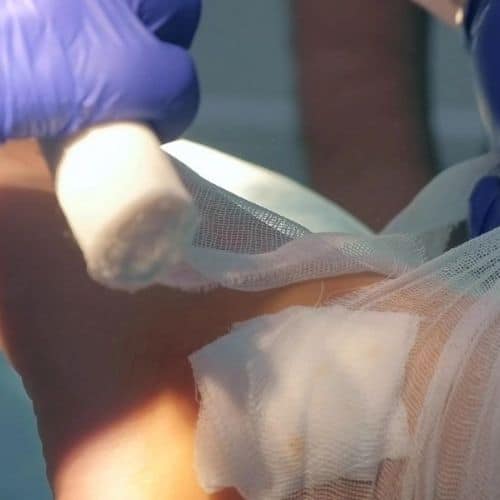
Silicone gel sheets or dressings have been used to reduce the appearance of scars by hydrating and occluding the scar.
How does corticosteroid therapy treat scars?
Steroid injections into the scar help to reduce inflammation and helps to reduce activity of cells that produce the scar. Topical steroids can also help thin the tissue and reduce inflammation in the scar as well.
Laser therapy for the treatment of scars
There have been various studies outlining the successful reduction in scar appearance with the use of various lasers. Non-ablative lasers work to reduce scars by heating up the scar to break up fibrous tissue that has built up in the scar while also promoting new collagen production that helps to remodel the skin. Several treatments may be necessary to get the desired effect.
When is surgical excision of a scar recommended?
Scars that are painful and raised can be excised, but this will only cause a new scar. If there is a painful scar on the bottom of the foot, certain plastic surgery techniques can be done to rotate skin in order to move the scar to a less painful area of the foot.
To prevent recurrence of a painful and thick scar, scars that are excised should be closed with the skin edges under minimal tension. Excision of scars can be helpful in combination with other modalities discussed above.


What are the key takeaways about scar treatment options?
There are various treatment options available to make scars less prominent and painful, as scars can be an unpleasant reminder of a prior injury and some may not completely resolve on their own. Notably, some scars on the bottom of the foot can be very painful to walk on, making effective treatment crucial.
To schedule a consultation, please call (855) 557-5400 or make an appointment now.
Dr. Bob Baravarian is conveniently located in Los Angeles, near Cedars-Sinai Medical Center, providing expert foot and ankle care for patients throughout Southern California.