Athlete’s foot, or tinea pedis, is a very common fungal skin infection of the skin that affects the web spaces between the toes and soles of the feet. Fungal infections can be contagious as they are passed from one person to the next, especially in public areas where people go barefoot. This infection is commonly spread on contaminated floors of public spaces such as locker rooms, swimming pools, or nail salons. This infection is commonly spread on contaminated floors of public spaces such as gyms, swimming pools, or nail salons.
Athlete's foot, also known as tinea pedis, is a common fungal infection that affects the skin on the feet, primarily caused by a group of fungi called dermatophytes. This contagious condition thrives in warm, moist environments such as public showers, locker rooms, and sweaty shoes. Symptoms often include itching, burning, redness, scaling, and sometimes blistering, typically appearing between the toes or on the soles. Effective treatment for athlete's foot usually involves antifungal medications and consistent foot hygiene practices.

What are the symptoms of athlete’s foot?
Patients will often present with:
- itching and burning of the feet.
- red, scaly or peeling skin
- blistering
Some patients may not notice anything wrong with their feet and think it is just “dry skin”.
How is athlete’s foot diagnosed?
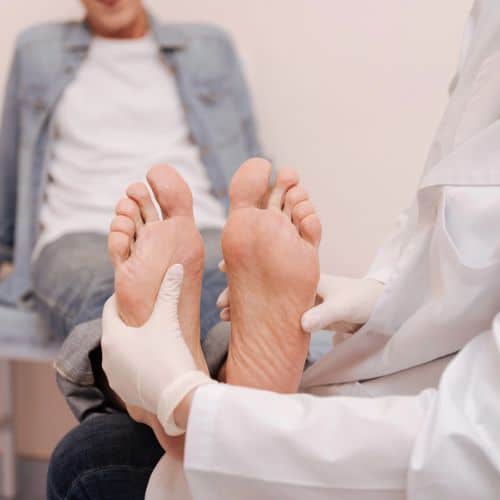
Podiatrists are often able to diagnose athlete’s foot infection simply by looking at it.
A skin lesion biopsy may be performed to rule out other conditions, such as psoriasis, dermatitis, or a low-grade skin infection. Your podiatrist will scrape off a small piece of the infected skin and place it in a potassium hydroxide (KOH) solution. The KOH dissolves normal skin cells so that only fungal cells are visible.
What are risk factors for developing fungal infection?
There are many possible causes of skin irritation of the foot that may not necessarily be caused by a fungus. Allergic reactions from a foreign material (contact dermatitis), eczema, and psoriasis are all differential diagnoses to athlete’s foot.
People with a low immune system will typically be more at risk for developing a fungal infection. This includes people with diabetes, HIV/AIDS, and cancer, who have more trouble fighting foreign pathogens in their bodies.
How can you prevent athlete’s foot?
Most cases of athlete’s foot can be avoided by wearing waterproof shoes or flip-flops when walking around in locker rooms, public showers, and public pool areas.
Because fungi thrive in a moist environment, it’s important to keep your feet dry and:
- thoroughly drying your feet with a towel after having a shower or bath or after swimming
- wear shoes that aren’t too tight and let your feet breathe
- wear socks made from material that draws moisture away from the feet, such as cotton, silk, or wool.
- not wearing the same pair of shoes two days in a row
- taking your shoes off as often as possible
- wear shoes that are well-ventilated and made of natural materials
- Applying talcum powder or antifungal powder to your feet to absorb moisture.
Athlete’s foot treatment
Treatment for athlete’s foot includes topical medication to help stop the fungus from replicating and growing on your foot. There are many different fungal medications on the market, including over the counter (OTC) medications and prescription medications. These products contain clotrimazole, miconazole, tolnaftate or terbinafine.
Antifungal medications are available as tablets, powders, liquids, gels, sprays and creams. After applying medication to the affected area, it is important to wash hands thoroughly with soap and warm water to avoid spreading to other parts of the body.
More severe cases that are resistant to antifungal creams may require an oral pill to rid the fungus. These pills contain fluconazole, itraconazole or terbinafine.
Athlete's foot FAQs
Can athlete's foot spread?

Yes, athlete’s foot can spread to other parts of the body, often by touching the infected area and then touching another body part, such as the hands or groin, and it can also spread to other people through direct contact or by walking barefoot in contaminated areas like locker rooms or showers.
Will athlete's foot go away on its own?
Athlete’s foot may not always go away on its own without treatment. In some cases, mild forms can resolve over time with good foot hygiene, but more often, treatment with antifungal medications is necessary to fully clear the infection. Without proper treatment, the infection can persist and even spread to other parts of the body or other people.
What will happen if athlete's foot goes untreated?
If athlete’s foot goes untreated, the infection can worsen, leading to more severe itching, burning, and discomfort. The skin may crack, blister, or peel, increasing the risk of a secondary bacterial infection. Additionally, the fungus can spread to other parts of the body, including nails, hands, and groin, and potentially to other people. Untreated athlete’s foot can result in persistent and potentially painful symptoms, emphasizing the importance of early and effective treatment.
Is athlete's foot a fungus?
Yes, athlete’s foot is a foot fungus, specifically caused by fungi in the dermatophytes group. It thrives in warm, moist environments, affecting the skin on the feet.
What are the key takeaways about athlete's foot?
The key takeaways about athlete's foot are that it is a very common and readily treatable skin infection, often the most common form of tinea infections caused by dermatophyte fungi. If left untreated, the infection can worsen, potentially leading to cracked skin, secondary bacterial infections, or spreading to toenails (onychomycosis), which can be painful and harder to treat. It is important to seek professional medical advice if home remedies are ineffective, as it may indicate a different condition. For expert foot and ankle care, you can schedule a consultation with Dr. Bob Baravarian in Los Angeles by calling (855) 557-5400 or making an appointment now.
Athlete’s foot is the most common form of tinea infections. The fungi that cause athlete’s foot belong to a group that also causes jock itch and ringworm. If not treated, the skin may crack, opening up the possibility of a bacterial infection or onychomycosis. The skin infection may also spread to the toenails, causing a fungal nail infection, which can be painful and harder to treat. If home remedies do not work, it may not be a fungus, and it is important to seek a healthcare professional for medical advice to determine what it may be.
To schedule a consultation, please call (855) 557-5400 or make an appointment now.
Dr. Bob Baravarian is conveniently located in Los Angeles, near Cedars-Sinai Medical Center, providing expert foot and ankle care for patients throughout Southern California.