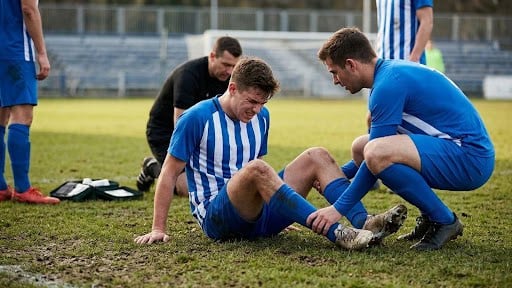
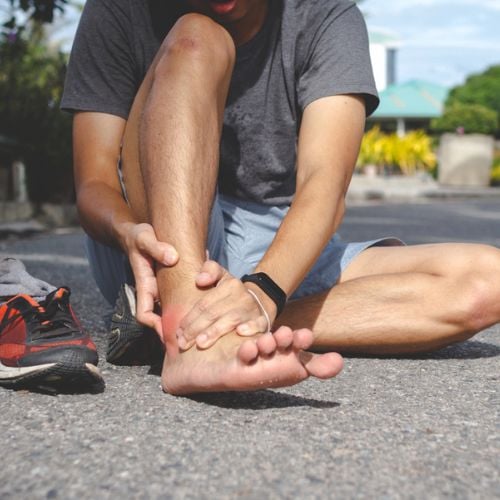
You pushed through the pain for weeks, followed generic advice, and tried different treatment strategies, but recovery from your foot or ankle injury is frustratingly slow. Over time, your injury can threaten not just your next race or game, but your ability to stay active. We hear this story every week from active patients at DOCS Foot and Ankle.
This guide is different. We explain what separates an elite sports podiatrist from a general foot doctor in Los Angeles, which treatments deliver the fastest return-to-sport results, and why Dr. Bob Baravarian has become the trusted choice for athletes and the physicians who refer their toughest cases.
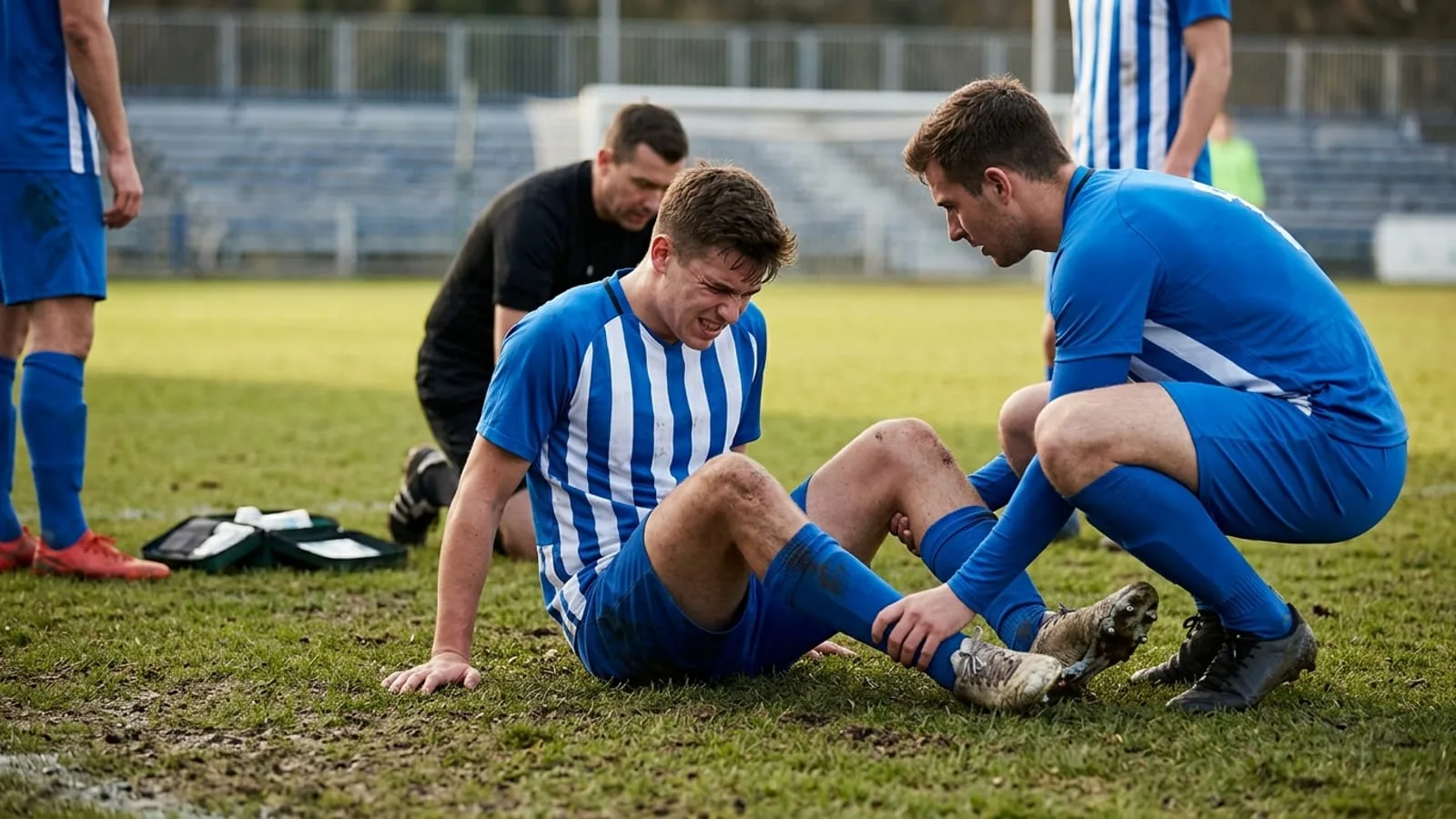
You’ll learn how to evaluate professional credentials. We’ll explain which advanced therapies may be appropriate for your injury, from PRP to metal-free minimally invasive surgery. And if you’ve already undergone surgery that didn’t resolve the problem, we’ll discuss your options and help you decide on your next steps.
What makes a sports podiatrist different — and why it matters for Los Angeles athletes
A general podiatrist handles routine foot care, including ingrown toenail treatments, diabetic foot checks, basic orthotics, and general foot health. A sports podiatrist focuses on mechanics and how your foot moves when you’re active, creates a plan to help you safely return to your sport, and considers the best surgical techniques designed to get you back on your feet as quickly as possible.
The distinction between general podiatric medicine and specialized sports podiatric surgery matters enormously when your goal isn’t just to walk without pain, but to run a half-marathon, play competitive tennis, or get back on the basketball court.
Los Angeles athletes face an additional challenge. The city’s year-round outdoor culture means there’s no natural off-season to heal. Runners, cyclists, hikers, and team sport athletes often keep training through discomfort until something finally gives. When it does, they need a specialist who understands performance demands, not just pain management.
At DOCS Foot and Ankle, we’ve built our entire practice around this reality. With over 25,000 successful surgeries performed across more than 25 years, and recognition as a Fellow of the American College of Foot and Ankle Surgeons (FACFAS), Dr. Bob Baravarian brings a level of specialty experience and knowledge that general podiatry simply cannot match.
The most common sports injuries a podiatrist treats (and when to see Dr. Baravarian for treatment)
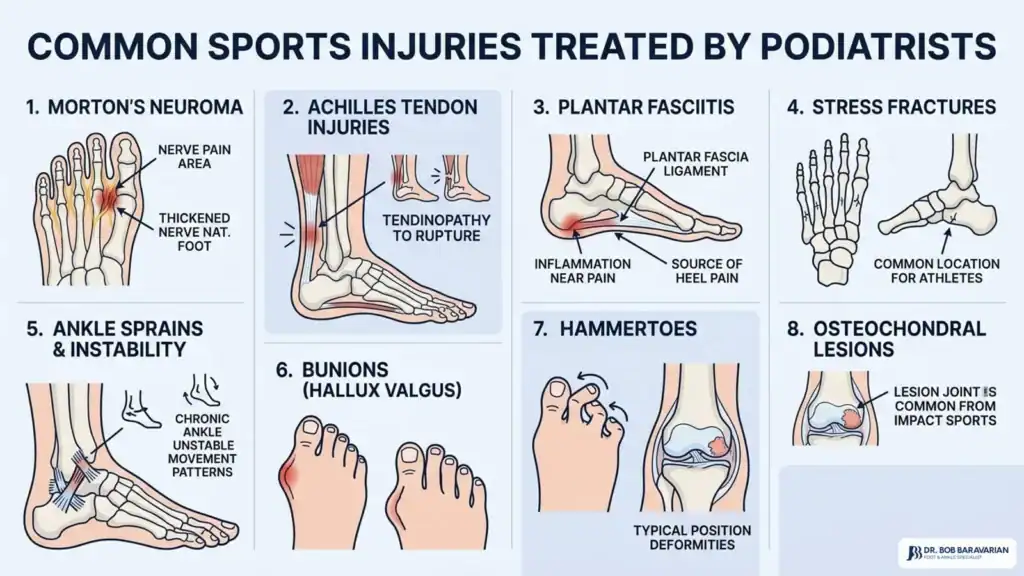
Sports podiatrists in Los Angeles treat a wide range of conditions that directly affect athletic performance. The most common include:
- Morton’s neuromas (which cause nerve pain in the ball of the foot)
- Achilles tendon injuries (from tendinopathy to full rupture)
- Plantar fasciitis (a common cause of heel pain)
- Stress fractures of the metatarsals and heel
- Ankle sprains and chronic ankle instability
- Bunions aggravated by athletic footwear
- Hammertoe deformities that worsen under repetitive loading
- Osteochondral lesions of the ankle from impact sports
When should an athlete see a podiatrist vs. an orthopedic surgeon for a foot injury?
Orthopedic surgeons train across the entire musculoskeletal system; a podiatric foot and ankle surgeon spends their entire career on this one part of the body.
As a general rule, if the injury is to the ankle or below, a board-certified foot and ankle podiatric surgeon with American Board of Foot and Ankle Surgery (ABFAS) certification and FACFAS fellowship training should be your first port of call.
This distinction matters more for complex reconstructive cases, revision surgeries, or conditions requiring advanced techniques like metal-free, minimally invasive foot surgery. The American Orthopedic Foot and Ankle Society (AOFAS) acknowledges that foot and ankle subspecialists, regardless of their training pathway, produce superior results for complex conditions and consistently deliver better outcomes.
What does a sports podiatrist treat that a regular podiatrist doesn’t?
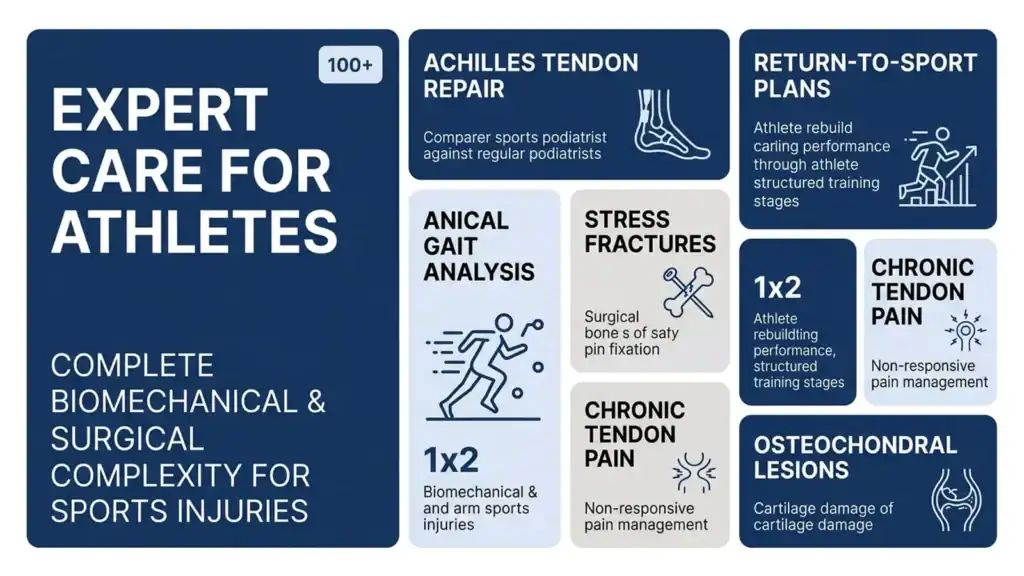
Sports podiatrists manage the full surgical and biomechanical complexity of athletic injuries, including:
- Achilles tendon ruptures that require precise repair;
- Osteochondral lesions of the ankle (cartilage damage from repeated impact);
- Stress fractures needing surgical fixation; and
- Chronic tendon pain that hasn’t responded to conservative care.
They also perform gait analysis under athletic conditions and design return-to-sport treatment plans that account for training load, not just basic healing. While most patients prioritize recovery, athletes need a plan that safely rebuilds performance and gets them back to their sport. A regular podiatrist typically does not perform these surgeries or manage this level of clinical complexity.
What to look for when choosing the best sports podiatrist in Los Angeles
Credentials are the starting point, not the finish line. Look for ABFAS board certification in foot surgery or reconstructive rearfoot and ankle surgery, FACFAS fellowship status, and training that reflects genuine expertise.
But experience matters just as much, if not more. An accomplished podiatrist who has performed hundreds or even thousands of surgeries over their career is a better choice than a less experienced surgeon. The more procedures a surgeon has performed, the more likely they are to have encountered (and resolved) rare complications or come across unusual anatomy, and the better prepared they are to handle unexpected problems.
Beyond credentials and experience, ask specific questions:
- Does the surgeon use minimally invasive techniques?
- Do they offer nonsurgical regenerative options before recommending surgery?
- Have they treated athletes at your activity level?
- Do they have experience with revision surgery if a prior procedure has failed?
These questions separate a truly elite sports podiatrist from a general surgeon with a sports medicine page on their website.
Patient outcomes tell the real story. Rachael H., one of our patients, needed bunion surgery but was hesitant to commit. But after her first consultation with Dr. Bob, she was ready to move forward with the procedure. “As soon as I met Dr. Bob, I felt 100 percent confident he was the right doctor to correct my bunion,” she said. “I’ve now had surgery on my right foot, and I’ll have the operation on my left foot in a couple of weeks. Thanks to Dr. Bob, I’ll soon be super active again and pain-free.”
You can read more verified patient reports on our sports foot and ankle care page, where more than 5,220 first-party reviews average 4.8 stars.
Advanced treatment options that get athletes back to sport faster
The treatment landscape for sports foot and ankle injuries has changed dramatically in the last decade.
Athletes no longer have to choose between “rest and hope” and “major surgery with a long recovery.” The most effective sports podiatrists in Los Angeles now offer a tiered approach: start with the least invasive option that can realistically resolve the problem, consider surgery only when necessary, and use techniques that minimize recovery time when an operation is the right call.
Dr. Bob Baravarian has performed more than 25,000 successful surgeries using pioneering metal-free techniques that eliminate hardware removal and speed return to sport for active patients. But he also considers minimally invasive options instead of reaching for his scalpel at the first opportunity.
Minimally invasive nonsurgical treatments for athletes
One minimally invasive option for athletes with chronic tendon pain that hasn’t responded to rest, or physical therapy is the TenJet System. This ultrasound-guided procedure removes damaged tendon tissue without open surgery.
For ball-of-foot pain from fat pad atrophy (common in high-mileage runners), Leneva injectable treatment restores cushioning without any incision.
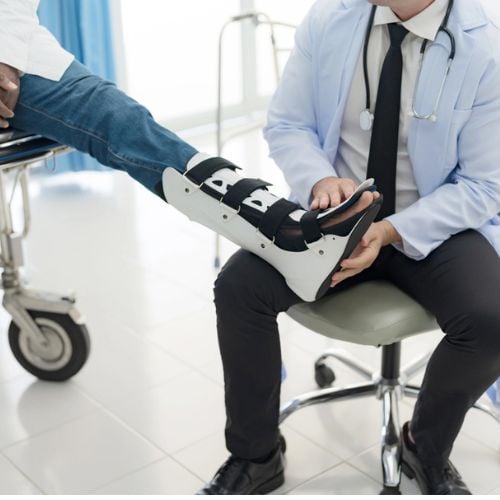
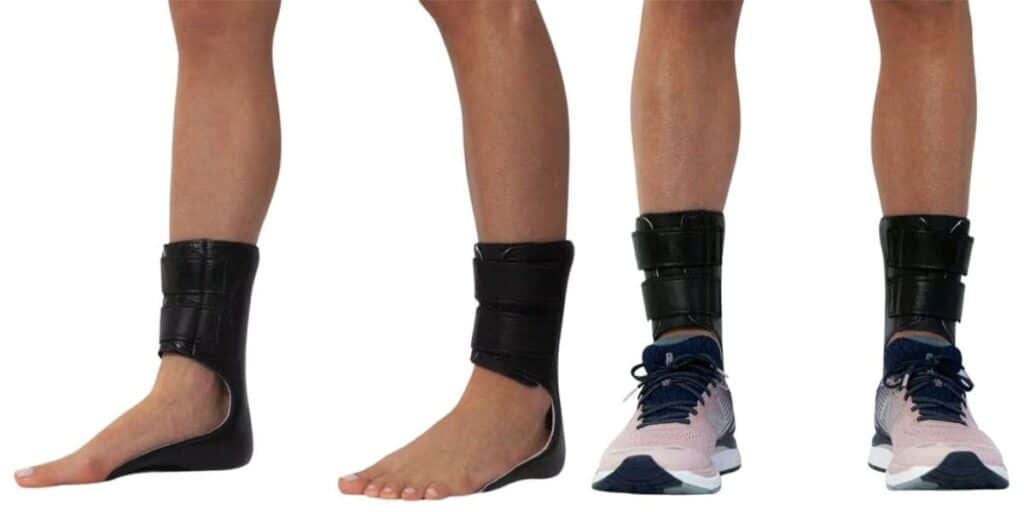
One example is our patient, Bella D., who came to us following a foot injury that had stopped her running entirely. After a thorough evaluation, targeted treatment, and a supportive boot, she returned running pain-free in no time. She says, “I feel like a whole new person. Now I can run again with no pain.” But that success wasn’t luck; it came from an accurate diagnosis and a personalized treatment plan matched precisely to her injury and goals.
Regenerative therapies for sports injuries: PRP, stem cell, and SoftWave in Los Angeles
Not every sports injury requires surgery. For many athletes, regenerative therapies offer a genuine path to full recovery and a real alternative to the operating room. At DOCS Foot and Ankle, we use three primary regenerative modalities for sports-related foot and ankle conditions.
Platelet-rich plasma
Platelet-rich plasma (PRP) uses concentrated growth factors from the patient’s own blood to accelerate tissue repair. It’s particularly effective for Achilles tendinopathy, plantar fasciitis, and partial tendon tears.
Georgia P. underwent two PRP procedures on her ankle. “It’s wonderful to find a trustworthy doctor,” she reported. “And I didn’t feel much pain.”
Research published in the National Institutes of Health’s PubMed database supports PRP for chronic tendinopathy, with multiple studies showing statistically significant improvements in pain and function compared to corticosteroid injections, which can weaken tendon tissue over time.
For athletes who want to understand whether PRP is right for their specific injury, our PRP therapy for sports-related foot and ankle injuries page covers the clinical evidence and what to expect.
Stem cell therapy
Stem cell therapy promotes healing at the cellular level and is used for more complex tissue damage where PRP alone may not be sufficient.
SoftWave therapy
SoftWave therapy delivers acoustic shockwave energy to stimulate tissue regeneration without invasive procedures. This procedure involves no injections and no downtime. For athletes’ mid-season who cannot afford any interruption to their training schedule, SoftWave is often the first option we explore.
Metal-free and minimally invasive surgery: why it changes the recovery equation for active patients
Traditional foot and ankle surgery uses metal plates, screws, and pins to stabilize bone during healing. For athletes, this creates two problems: the hardware can cause ongoing irritation during high-impact activity, and a second surgery is often required to remove it. Dr. Bob Baravarian was the first surgeon in the US to develop metal-free surgical techniques, using Ossiofiber bio-integrated hardware that gradually becomes bone over time. No metal to remove, no second procedure, and no hardware-related complications during your return to training.
This is a game changer for active patients. A runner who undergoes metal-free bunion correction doesn’t face the prospect of a hardware removal surgery six months after their initial procedure. A cyclist recovering from flat foot reconstruction using bio-integrated plates can return to training without the uncertainty of whether their hardware will need to come out. Recovery is cleaner, more predictable, and faster.
Patient SJ underwent surgery with Dr. Bob. “I had zero pain after my surgery. Everything is healing so well. He is the best,” he says, describing his experience. And that kind of outcome is what metal-free, minimally invasive techniques consistently produce when performed by a surgeon with the right skills and knowledge.
For athletes specifically considering surgical correction of a bunion, our bunion surgery for active patients in Los Angeles page explains the full range of options, including Lapiplasty 3D Bunion Repair for patients with complex three-dimensional deformities.
For athletes with mismanaged or incompletely treated Achilles injuries, our Achilles tendon rupture treatment in Los Angeles page outlines primary and revision treatment pathways and recovery timelines.
When you’ve already had surgery that didn’t work: revision and reconstructive care for athletes
Failed foot or ankle surgery is more common than most patients realize, and it’s one of the most emotionally difficult situations someone with an active lifestyle can face. You committed to a procedure, went through recovery, and still can’t return to doing what you love.
It’s understandable to feel discouraged, but don’t give up without seeing the right foot and ankle specialist who has real experience with revision surgery and can walk you through your options.
Dr. Bob Baravarian is trusted by physicians worldwide, specifically for revision and reconstructive surgery.
Two of our patients, Carmela and Nina, came to DOCS Foot and Ankle after bunion surgeries that hadn’t delivered the results they hoped for. Both underwent revision procedures and shared their experiences in video testimonials. Their outcomes demonstrate what’s possible when revision surgery is performed by a surgeon with the depth of experience to identify exactly what went wrong and how to put it right.
Revision surgery is more technically demanding than first-time surgery. Scar tissue, anatomical changes, and weakened bone can all complicate the procedure. Metal-free techniques are particularly valuable in revision cases because they avoid adding more hardware to a foot that may already have had metal implants removed or repositioned.
One of our patients, Chris H., captured it well when he described his treatment as “a first-class experience with a world-leading research surgeon.” He added, “If ‘good enough’ isn’t good enough for you, this is where you want to go.”
Why Dr. Bob Baravarian, DPM, is the trusted choice for sports foot and ankle care in Los Angeles
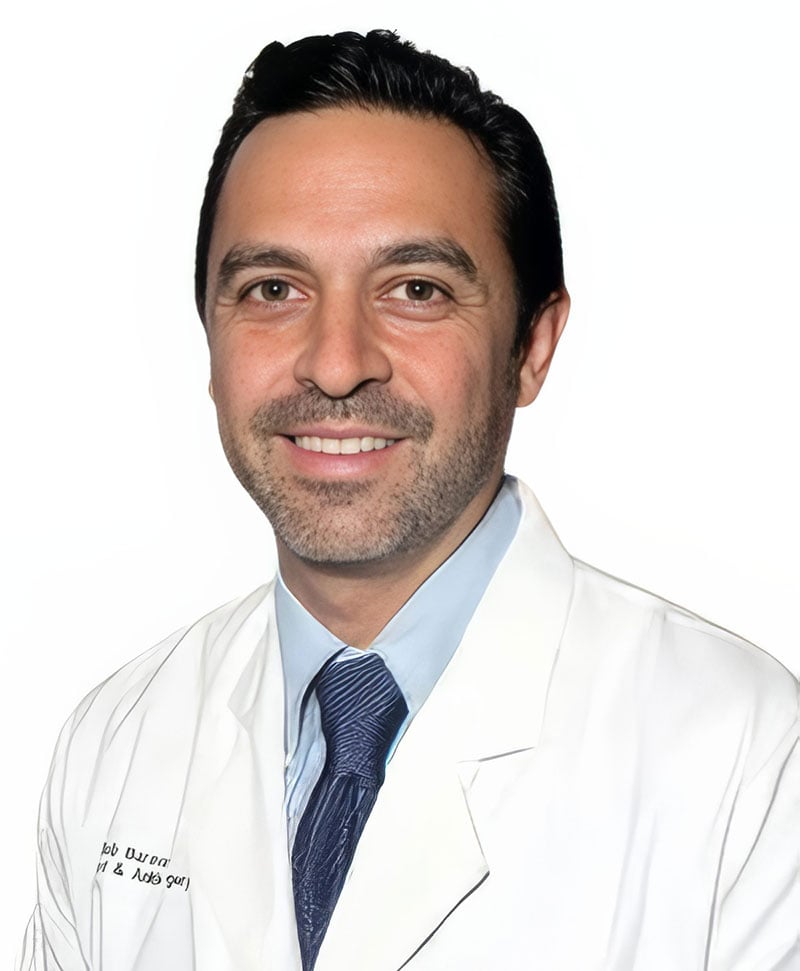
Dr. Bob’s credentials are verifiable:
- LA Magazine named him Top Doctor (#1 in Los Angeles) and Top Surgeon in California.
- He has performed more than 25,000 successful surgeries.
- He has more than 25 years of experience.
- He was the first surgeon in the US to develop metal-free surgical techniques.
Recognized internationally, not just locally, he has appeared on ABC News and in the LA Times, the Guardian, and the Boston Globe.
But credentials don’t fully explain why physicians trust Dr. Bob with their own patients’ most difficult cases, or why patients like Craig F. note: “I’ve never sat in the waiting room one minute longer than my appointment time. More important is his honest, professional approach to his craft and his commitment to my recovery.”
It’s the combination of technical excellence and genuine patient focus that makes DOCS Foot and Ankle the premier medical center for Los Angeles athletes who need more than a standard healthcare appointment with a board-certified podiatrist.
If you’re an active patient in Los Angeles dealing with a foot or ankle injury that hasn’t responded to conservative care, we can help. If you’re considering surgery and want to understand every option available, we welcome new patients to contact DOCS Foot and Ankle to schedule a consultation with Dr. Bob Baravarian.
The right specialist, technique, and plan can mean the difference between a full return to sport and years of frustration.
Frequently Asked Questions about Podiatrists
What are the most common sports injuries treated by podiatrists in Los Angeles?

The most frequently treated sports injuries at specialized foot and ankle practices in the Los Angeles area include:
- Achilles tendinopathy and rupture
- Plantar fasciitis
- Metatarsal stress fractures
- Chronic ankle instability from repeated sprains
- Bunions aggravated by athletic footwear
- Neuropathy
- Osteochondral lesions of the ankle from impact sports
- Hammertoe deformities that worsen under repetitive loading (particularly common in runners and cyclists)
Each of these conditions has both nonsurgical and surgical treatment pathways. The right choice depends on injury severity, athletic goals, and how long the condition has been present.
Is PRP therapy effective for sports-related foot and ankle injuries?
PRP therapy has strong clinical support for certain sports injuries, particularly chronic Achilles tendinopathy and plantar fasciitis that haven’t improved with physical therapy or orthotics. The treatment uses concentrated growth factors from the patient’s own blood to stimulate tissue repair at the cellular level, making it a regenerative option rather than a simple pain-masking one.
At DOCS Foot and Ankle, we use PRP as a first-line treatment for many tendon and soft-tissue injuries before considering surgery. The key is accurate diagnosis to confirm PRP is appropriate for the specific injury type and stage.
What credentials should I look for in a Los Angeles sports podiatrist?
Prioritize ABFAS board certification (specifically in foot surgery or reconstructive rearfoot and ankle surgery), FACFAS fellowship status from the American College of Foot and Ankle Surgeons, and considerable documented experience in the specific procedure you need.
Beyond formal credentials, look for a surgeon who offers both surgical and nonsurgical options, has experience with minimally invasive and regenerative techniques, and can demonstrate successful outcomes in patients with similar activity levels and injury types.
A surgeon who has performed more than 25,000 procedures and is trusted by other physicians with complex revision cases offers expertise that helps active patients feel confident they’re in the right hands.
Can minimally invasive foot surgery help athletes return to sport faster?
Yes. Minimally invasive techniques cause less soft-tissue damage, which helps limit early pain and inflammation. As a result, patients can begin weight-bearing and rehabilitation sooner, leading to faster overall recovery.
Combined with metal-free hardware like Ossiofiber bio-integrated implants, athletes can also avoid the second procedure often needed to remove traditional metal hardware. This eliminates the additional recovery period associated with that surgery.
At DOCS Foot and Ankle, we’ve found that athletes who undergo metal-free, minimally invasive procedures consistently report better outcomes compared to patients who have had traditional open surgery with metal fixation at other practices. This includes a faster return to training, less post-operative pain, and greater confidence in their recovery timeline.