Running is a great exercise, but it can cause serious musculoskeletal problems if not done right.
Each foot has 26 bones, 33 joints, and more than 100 muscles, tendons, and ligaments, and they all work together when you run.
When a problem occurs in any of these structures, there can be alignment issues and dysfunction of the feet. Weaknesses in the kinetic chain can cause ankle injuries, runner’s knee, spine issues, and lead to other imbalances and further injury.
Researchers from the Brigham and Women’s Hospital reveal that 50.2 million adults in the U.S. experience chronic body pain, including in the knee and feet. The total value of lost productivity costs the country up to $300 billion annually in missed workdays. Those with chronic pain also reported more limitations to social activities and poorer quality of life. That being said, it’s important to be aware of the common risks running poses to your feet.
Seven Common Causes of Foot Injuries
Whether you run in quick sprints or train or are a long-distance runner, there are several sports injuries you may experience if you’re not careful or lucky.
Here are some foot problems that runners are susceptible to, and their common causes:
1. Plantar fasciitis
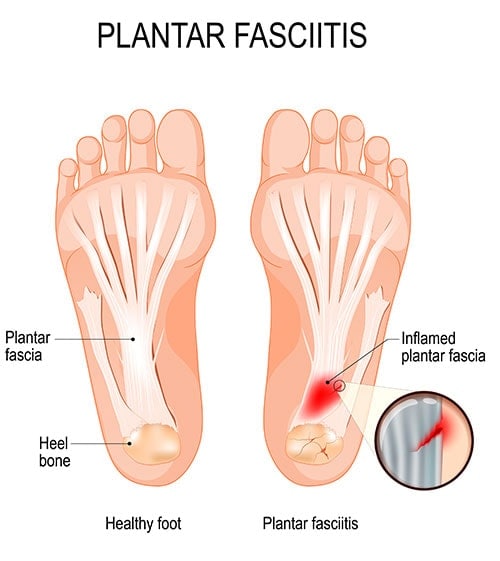
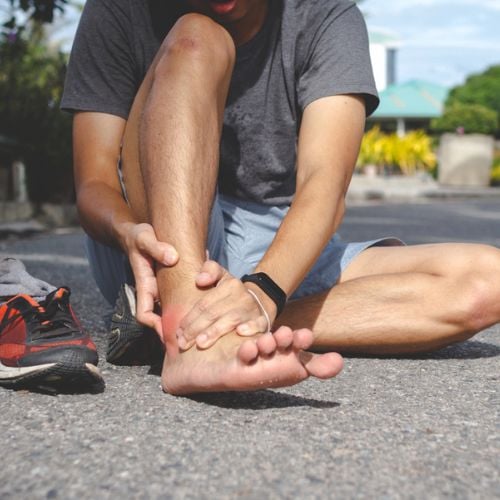
Plantar fasciitis is an inflammation of the plantar fascia, or the tissues that connect your heel bone to your toes. It’s a type of tendonitis that can develop into chronic pain over time. Plantar fasciitis occurs when the plantar fascia is damaged through excessive force or stress while running. Symptoms of plantar fasciitis include arch pain, heel pain, tightness in the foot, or a stabbing sensation on the bottom of the feet.
2. Metatarsalgia
Metatarsalgia is an irritation of the tissues and muscles surrounding any of the five long bones in the foot. The inflammation is caused by excessive contact with the ground while running, breaking down the bones and irritating the metatarsal bones. Patients who suffer from metatarsalgia need to wear proper shoes and get adequate rest after running.
Symptoms of metatarsalgia include stabbing pain in the arch of your foot or the ball of your foot, pain when flexing the bottom of your foot, numbness or tingling in the toes, and difficulty walking after a long run.
3. Stress fractures
A stress fracture is a small crack or severe bruising within the bone that causes pain and discomfort. There are different types and locations where a fracture can happen. This typically occurs in the shins and feet, especially in those who are working too intensely before the body gets used to the new activity. A stress fracture may also occur due to overuse, especially through foot injuries from running. Stress fractures are difficult to diagnose, but the main symptom is a sharp pain that worsens with activity and improves with rest.
4. Bunions
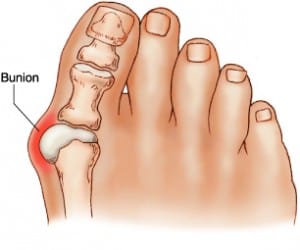
Bunions are bony bumps that form on the joint at the base of the big toe. It occurs when some of the bones in the front part of the foot move out of place, so the tip of the big toe gets pulled towards the smaller toes and forces the joint at the big toe’s base to stick out. Aside from a wider forefoot and red, sore skin, blisters may also develop under the bony protuberance — where the bunion bulges over the sole of the shoe. Wearing tight, narrow shoes may cause bunions. Standing on your feet in high heels for long periods of time, for example, forces your toes to crowd together.
Wider shoes, custom orthotics, and over-the-counter anti-inflammatory medication can ease bunion pain, but they don’t reverse the deformity. For runners, the repeated push-off at the big toe joint can speed up progression. Our surgeon’s guide to running with bunions covers which shoes and orthotics help, and when it’s time to see a specialist.
5. Achilles tendinitis
Achilles tendinitis is an overuse injury of the Achilles tendon, the band of tissue that runs down the back of your lower leg to the heel bone and connects your calf muscles to your foot. This problem commonly happens in runners who suddenly increase the intensity or duration of their run, so you may feel foot pain after running. It may also happen among middle-aged people who play active sports only on the weekends, as the structure weakens with age.
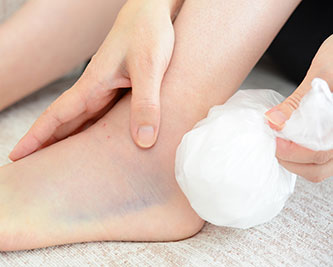
Achilles tendinitis can trigger a mild ache in the back of the leg or above the heel, as well as some tenderness or stiffness which can be relieved by movement. Self-care strategies at home like rest, ice, and non-steroidal anti-inflammatory medications can help treat this condition.
6. Morton’s neuroma
Morton’s neuroma is a condition that affects the ball of your foot, in between the metatarsal bones — which is why it’s often found between the third and fourth toes or the second and third toes. This occurs when the tissue around a nerve that leads to one of the toes thickens from irritation or compression, usually due to too-tight or high-heeled shoes.
Sometimes, people who have a foot or gait abnormality, like flat feet, high arches, or hammertoes, may also develop Morton’s neuroma due to feet instability or pressure. Pain could be intermittent, like a burning sensation in the ball of the foot or standing with a pebble in the shoe. There is no noticeable swelling with this condition, and some people don’t even feel pain at all.
7. Sesamoiditis
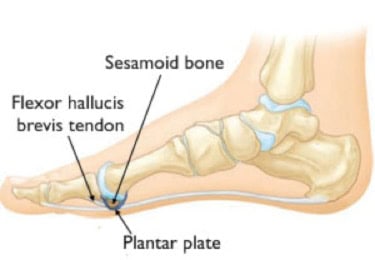
Sesamoids are the bones connected to the muscles by the tendons — which is different from other bones in the body, as those are connected at the joints. There are two, small sesamoids located on the bottom of the foot near the big toe. Sesamoiditis occurs when the tendons attached to these sesamoids become inflamed. The cause of sesamoiditis is usually strain, overwork, or repeated trauma, so it’s especially common among athletes, dancers, and joggers.
Common symptoms of sesamoiditis are mild warmth, swelling, pain, and some redness. The simplest solution is to avoid wearing poorly-fitting shoes or high heels. In some cases, nonsteroidal anti-inflammatory drugs (NSAIDs) or corticosteroid injections can be helpful as well.
What to Do if You Suspect a Foot Problem
If any of the above-mentioned conditions and their symptoms seem familiar to you, don’t worry. These are mostly treatable problems and often don’t require surgery for pain relief. Here are three tips to follow if you suspect a foot problem because of running.
Change your running shoes
Running puts a lot of stress on the feet, and poorly fitted shoes can sprain your feet and ankles. It’s important to find a good pair of shoes that offer adequate support and stability, so you can avoid developing foot injuries from running. For instance, runners with high arches would need shoes that have a lot of bend, cushioning, and arch support, while flat-footed athletes need a more rigid sole.
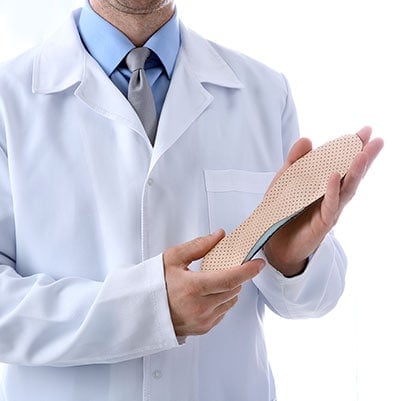
For any foot shape, the heel should be snug, while the toes need to have enough wiggle room. You can visit a specialty store for running shoes or talk to a podiatrist to choose something right for you. In some cases, they may also recommend custom-fit orthotics, which are special shoe or heel inserts that are designed to support and help your feet function better.
Manage foot pain through exercises
Overexertion can cause foot pain in runners, so it’s good to learn some techniques on how to stop foot pain when running. Regular, gentle exercises can loosen up the muscles, tendons, and other soft tissues to get feet moving normally again. An article from Medical News Today highlights various exercises that can relieve pain, as well as improve your foot’s strength, flexibility, and mobility.
Toe extensions, in particular, are effective at reducing symptoms of plantar fasciitis by easing tension in the arch of the foot. For the best outcomes, it may be good to receive medical advice from an expert in physical therapy or sports medicine; these medical professionals would know which exercises can ease pain caused by running injuries the best.
When to consult a healthcare provider
Many runners assume their foot injuries will heal over time, but that’s not always the case. Mild foot problems like ankle sprains are the most underdiagnosed and undertreated orthopedic injuries, and some practitioners overlook their severity — leading to a surprising number of chronic ankle stability problems, which could have been prevented with podiatric care.
According to the Bureau of Labor Statistics’ employment handbook, however, there are only around 11,000 podiatrists in the country, so it may be difficult to book an appointment in your area immediately.
If you can’t find a podiatrist, it’s best to get your foot assessed by a general practitioner first. Thanks to the rise of remote arrangements, you can consult with a healthcare provider from home. In fact, many of these professionals train to be remote practitioners when taking their degrees. Maryville University’s general healthcare program focuses on adapting to the changing healthcare system, as well as providing training on human anatomy and physiology. A healthcare generalist can screen your foot condition, then recommend you to a specialist as needed. This also helps facilitate the patient experience, reducing queues and the visit times.
Why more runners in Los Angeles choose Dr. Bob Baravarian for foot or ankle injuries
From plantar fasciitis to Achilles injuries to ankle sprains and more, Dr. Bob is committed to complete foot wellness. As a nationally recognized foot and ankle specialist, he provides advanced podiatric care with exceptional success rates and is a leader in researching, diagnosing, and treating all foot and ankle conditions.
Dr. Bob Baravarian is conveniently located in Los Angeles, near Cedars-Sinai Medical Center, providing expert foot and ankle care for patients throughout Southern California.
Visited 3 times, 1 visit(s) today
Patient’s Talk About Dr. Bob's Quality of Care
4.8
5,220 TOTAL 1ST PARTY REVIEWS / OUT OF 5 STARS
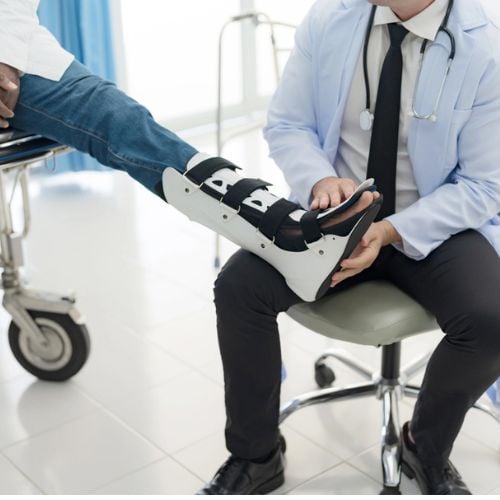
Dr. Baravarian is so great! I had an injury to my left foot. He took x-rays and provided me with a boot! I feel like a whole new person! Now I can run again with no pain!🏃♀️ I recommend you to go him for any foot and ankle issues.🦶
Dr. Baravarian is absolutely an incredible doctor. He is very experienced and I am so grateful that I found him! I had 2 PRP procedures done on my ankle and didn’t feel much pain! It’s wonderful to find a doctor that is trustworthy!
Dr. Bavarian was great. He said i didn’t need to remove part of my nail…the infection would subside. Very honest. Staff was great, kind. Irtually no wait. I recommend highly.
Dr Bob is the best! I have needed this bunion surgery for years, and when I met Dr. Bob I felt 100 percent confident he was the right Dr. to correct my bunion! I have completed the right foot and will be doing the left foot in a couple weeks! Thanks to Dr Bob I will be able to be super active and no longer have pain! I am so grateful to him.
Rachael H
I love there staff super nice and friendly and when you meet the doctor is to die for😁super friendly and he explains everything clearly and makes sure you understand everything before he leaves the room doesn’t rush you at all
I was able to get an appointment the next day after dislocating my toe. I had a great experience. The staff were friendly and the doctor answered all my questions.
I have been so impressed with Dr. Bob. Ive never sat in the waiting room one minute longer than my appointment time. That’s a real plus. More importantly is his honest, professional approach to his craft and his commitment to my recovery. He’s the best and I highly recommend him.
Dr. Baravarian is incredible! After three podiatrists and a failed surgery left me with no answers for my feet pain, Dr. Baravarian figured out the real cause of the pain in the first visit.I was ready for another surgery to fix the first one, but he held off until the root issue was treated. My hammer toe and bunion surgery went perfectly—I was amazed to have no pain afterward! Dr. Baravarian is super knowledgeable and explained everything about the surgery and recovery clearly, making me feel informed and at ease.
I also want to extend my gratitude to his staff, who were incredibly kind and supportive throughout my treatment.
dr baravarian is an excellent dr. he diagnosed my issue, prescribed the perfect remedy and his treatment has allowed me to resume all my activities. he saw me on time and his office staff is also very good
I highly recommend Dr. Baravarian. From checking in at the front desk to the doctors diagnosis everything went smoothly and diagnosis was good. After care instructions were explained well.
I consider him a knowledgeable and experienced Ankel specialist.
I chose him as my foot doctor and continue to receive treatment.
I decided to give him a 5 star rating.