Wow. That’s weird. The nail on your left big toe has turned black. What’s happening?
There are 5 possible causes of black toenails:
- Trauma, whether sudden or repetitive
- Fungal infection
- Underlying medical conditions
- Warts growing under the nail
- Subungual melanoma
1. Black toenail from trauma
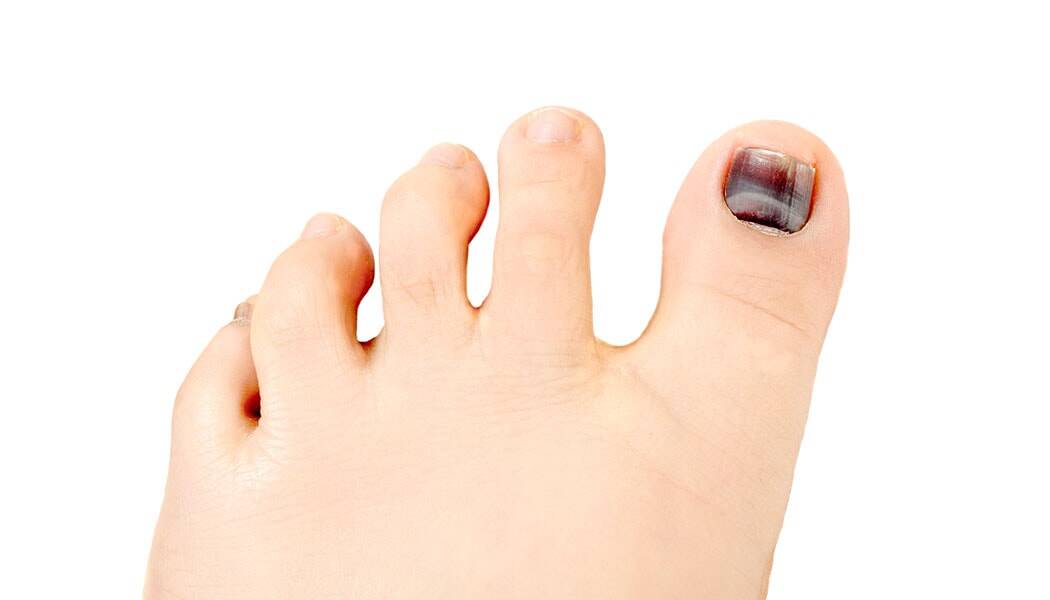
Trauma is the most common cause of a black toenail. The trauma can be abrupt or accrued over time.
Sometimes a sudden blow, like dropping a heavy object on your toe, or having your foot stomped on during a soccer game, will burst blood vessels in the nail bed and bruise the adjacent flesh.
The attrition of repetitive trauma, like constantly jamming your big toe against the end of your too-short running shoe during a half marathon, can likewise break blood vessels under a toenail. (The medical term for the resulting hemorrhagic condition is subungual hematoma.)
Symptoms of a traumatic black toenail
The most obvious symptom of a black toe caused by trauma is, of course, the discoloration of the nail itself.
Either sort of trauma to a toenail can also cause bruising, swelling, and pain.
Treatment of traumatic black toenail
In most cases of a traumatic black toenail, medical treatment may not be necessary. The black area will simply grow out and disappear.
But if a subungual hematoma is causing you significant pain, it’s time to see your podiatrist. Your doctor can poke, drill, or burn small holes into the nail. These apertures allow the collected blood to dissipate. This procedure will relieve the build-up of pressure under the nail and help restore stability to the toenail bed itself.
Prevention of traumatic black toenail
There’s not much you can do to avoid subungual hematomas caused by sudden force, other than by no longer participating in the activity during which the abrupt tends to occur. We know that’s not going to happen among our diehard athletes/patients. So wear the occasional black toe proudly, as visible proof that you’re a hard-charging athlete.
However, there are ways that you can prevent black toenails caused by repetitive impact. Trim your toenails frequently. Keep them short and square. Make sure there is at least a half-inch distance between the tip of your longest toe and the end of your shoe. And always wear shoes with a roomy toebox, to give your toes plenty of lateral space.
2. Black toenail fungus (aka onychomycosis)
A multitude of fungal varieties are present in practically every environment. Most types of fungus are harmless until they get under your skin. We mean literally under your skin.
Traumatic force, either by itself or in combination with the expansion caused by an accumulation of blood pooling under a nail, can disrupt the seal between the nail and its bed. The consequent aperture can provide an access point in the nail plate for invasive fungus.
Fungus can also invade a toenail through blisters, minor cuts, and abrasions in the adjacent flesh. Other risk factors include moist environments, poorly ventilated shoes, and socks, and going barefoot in public areas.
Symptoms of fungal infection in a toenail
When fungus gets a foothold (sorry) under a toenail, the resulting symptoms may include:
- Toenail discoloration. Fungal infections can cause the affected toenail to turn yellow, blue, green, brown, or purple, as well as black.
- Thick toenails. The nail becomes thick and brittle. Portions of the nail may break off, and the surface of the nail may become flaky.
- Foul odor. An odd, unpleasant smell may emanate from the nail.
Toenail fungus treatments
A well-established fungal infection can be difficult to remedy with home treatment. Some of the more common approaches for mild cases include topical ointments and oral medication, whether over-the-counter or by prescription.
These antifungal treatments have significant efficacy. The oral medications have the highest success rate: an approximate 75% clinical cure rate. But these medications may also cause significant side effects.
For severe fungal nail infections, your doctor may recommend the removal of the entire nail. This relatively simple procedure can be accomplished under local anesthetic in an office setting.
The latest cutting-edge technique actually involves no cutting at all. A treatment known as PinPointe™ laser has dramatically enhanced the available treatment options. This mid-infrared laser painlessly penetrates the toenail and eradicates the destructive fungus. The patient can immediately return to normal activity.
3. Black toenails can be caused by underlying medical conditions
Apparently unrelated conditions, such as diabetes, heart disease, kidney disease, and anemia, can also cause discolored toenails.
So don’t ignore any discolored toenail that doesn’t disappear on its own, and relatively promptly. Let your doctor decide the close calls.
4. Warts under a toenail
Warts are generally harmless. But in rare cases of one starting to grow under a toenail, it can lift the nail and separate it from its bed. Most warts are brown or flesh-colored, but accumulated debris under the nail can give it a black appearance.
While the location can make treatment a bit tricky, standard medical practice for warts, including injections and/or oral medication, will generally work under the nails as well.
5. Toenail turns black from a subungual melanoma
This condition is by far the direst cause of a toenail turning black. A subungual melanoma is a form of skin cancer. The discoloration can be slow and painless, which makes it difficult to recognize as a serious condition. If there’s been no trauma, and your nail is slowly changing color, it’s time to get the condition checked out by your doctor.
Why choose Dr. Bob Baravarian to treat black toenails?
If you’re experiencing toenails turning black, Dr. Bob is here to help. As a nationally recognized foot and ankle specialist, he provides advanced care with some of the highest success rates in the nation and is a leader in the research, diagnosis, and treatment of all foot and ankle conditions.
To schedule a consultation, please call (855) 557-5400 or make an appointment now.
Dr. Bob Baravarian is conveniently located in Los Angeles, near Cedars-Sinai Medical Center, providing expert foot and ankle care for patients throughout Southern California.