Most foot and ankle pain doesn’t require cutting, metal implants, or months of downtime, and for a growing number of patients in Los Angeles, it never will. If you’ve been told surgery is your only option, or if a previous procedure left you still in pain, you deserve to know that regenerative medicine has fundamentally changed what’s possible.
This guide will show you exactly which treatments exist, which conditions each one targets, and how a world-recognized Los Angeles foot and ankle surgeon combines regenerative therapies with metal-free techniques to support faster healing and less pain than traditional approaches. Specifically, you’ll learn: how to match the right regenerative therapy to your exact diagnosis, what separates newer modalities like SoftWave and TenJet from basic injections, and when regenerative medicine can help even after a prior surgery has failed.
Why Regenerative Medicine Is Changing Foot and Ankle Care in Los Angeles
Conventional treatments for foot and ankle injuries often focus on managing symptoms: reducing inflammation, immobilizing the joint, or surgically removing damaged tissue. Regenerative medicine takes a fundamentally different approach: it activates the body’s own biological repair systems, using biologic treatments and targeted therapies to support healing directly at the injury site.
The foot and ankle present a unique healing challenge that makes regenerative care especially valuable. Structures like the Achilles tendon, plantar fascia, and ankle cartilage have notoriously limited blood supply, which is precisely why injuries in this region so often become chronic, painful, and resistant to standard care. By delivering healing signals directly to these tissues, regenerative therapies aim to support repair where the body’s natural healing often falls short.
Biologics and regenerative care are a rapidly advancing area of foot and ankle practice. Evidence continues to grow for treatments like PRP, stem cell therapy, and biologic allografts, though it varies by treatment and diagnosis. What has changed most dramatically is not just the science. It is the precision with which specific therapies can now be matched to specific conditions and patient profiles.
At DOCS Foot and Ankle, Dr. Bob Baravarian brings over 25 years of experience and more than 25,000 successful procedures to every regenerative treatment plan. As the first surgeon in the USA to pioneer metal-free, bio-integrated surgical techniques, Dr. Bob applies that same world-recognized innovation to regenerative medicine, crafting a personalized, tailored treatment plan for every patient as if he were caring for his own family. The result is compassionate, highly specialized care designed to support faster healing, less pain, and lasting results.
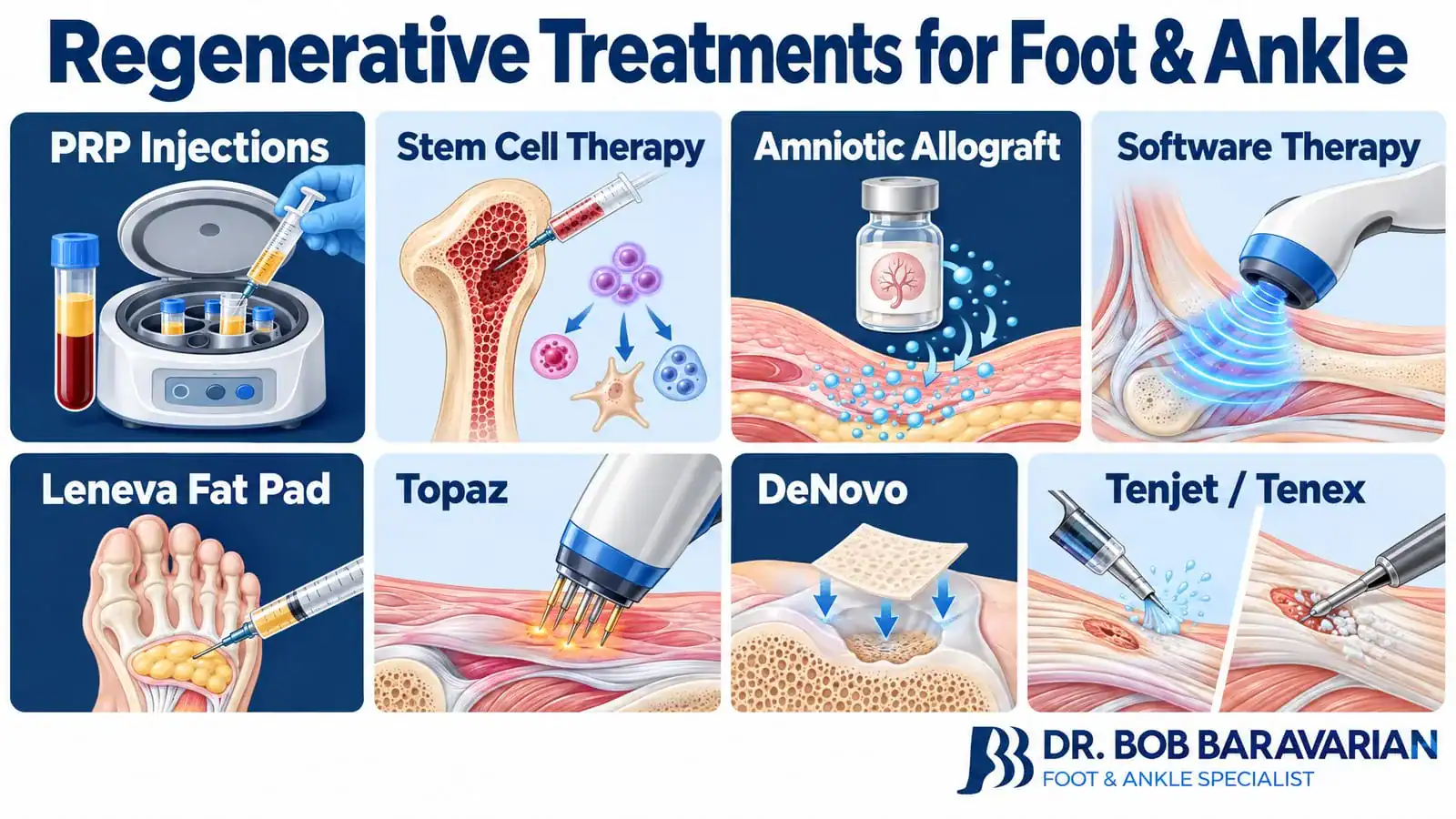
The Full Spectrum: Every Regenerative Treatment Available for Foot and Ankle Conditions
DOCS Foot and Ankle offers the full spectrum of regenerative options, each with a specific mechanism and a specific clinical role. Understanding what each one does is the first step to knowing which one you need.
Platelet Rich Plasma (PRP)
PRP is drawn from your own blood, spun in a centrifuge to concentrate platelets, and injected directly into the injured tissue.
Platelets carry growth factors, proteins that signal tissue repair and reduce inflammation.
Research supports PRP for plantar fasciitis, and studies have shown promise for Achilles tendinopathy and osteochondral lesions, though results are more mixed there. It’s one of the most widely studied regenerative options and is often a first-line biologic treatment.
Stem Cell Therapy
Stem cell therapy uses cells typically harvested from bone marrow or adipose (fat) tissue and injected at the injury site to help support healing. In the foot and ankle, this is particularly relevant for cartilage damage, where the body has very limited ability to repair itself on its own.
Bone Marrow Aspirate Concentrate (BMAC)
Bone marrow aspirate concentrate (BMAC) is one of the most common ways to use cells from your own bone marrow. A small amount of marrow is drawn with a needle, then spun in a centrifuge to concentrate its healing components, including stem and progenitor cells, platelets, and growth factors. Because BMAC comes from your own body, the risk of an allergic or immune reaction is very low.
Dr. Baravarian uses BMAC in three main ways: during surgery, to support healing at the repair site; for soft tissue damage, such as tendon and ligament injuries; and for arthritis, to help reduce pain and inflammation in the affected joint. Research on BMAC in the foot and ankle is still developing, so Dr. Baravarian considers it alongside other options based on your diagnosis. Hear more about how he uses biologics like BMAC in his Podiatry Today podcast interview.
Amniotic Fluid Allograft Therapy
Amniotic fluid allografts are derived from donated placental tissue and are rich in growth factors, cytokines, and hyaluronic acid. They deliver a concentrated anti-inflammatory and regenerative signal without requiring any harvest from the patient’s own body. This makes them an excellent option for patients who are not candidates for bone marrow aspiration or who need a faster, lower-intervention regenerative approach.
Acoustic Wave Therapies: Shockwave and SoftWave
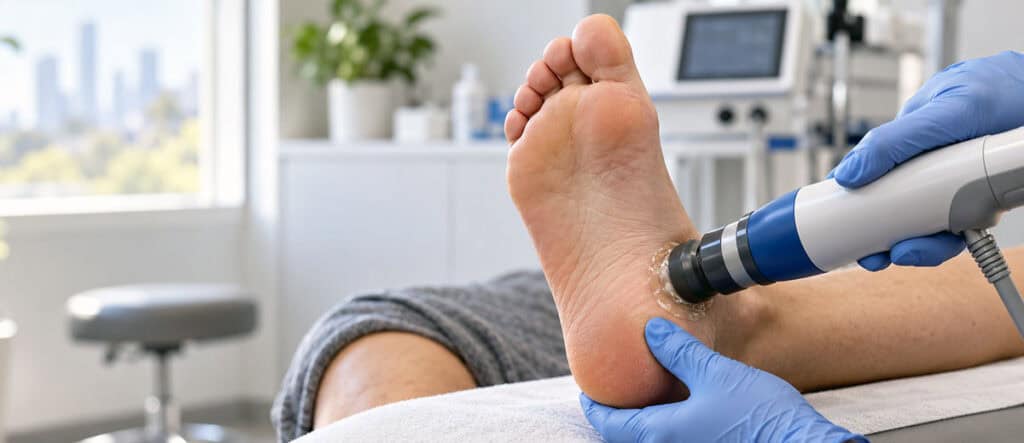
DOCS Foot and Ankle offers two distinct acoustic wave therapies, traditional shockwave therapy and SoftWave, which work through related but different mechanisms. Both are entirely non-invasive, require no injections or incisions, and stimulate the body’s natural repair cascade by delivering acoustic energy to damaged tissue.
Shockwave Therapy uses focused or radial pressure waves to break down calcific deposits, stimulate collagen production, and increase local blood flow. Shockwave therapy has been studied extensively, with randomized trials supporting its use for chronic plantar fasciitis and Achilles tendinopathy.
SoftWave Therapy uses electrohydraulic technology to generate a broader, unfocused acoustic wave that covers a larger treatment area than traditional focused shockwave. Laboratory and animal studies suggest acoustic wave energy may increase blood flow and support the body’s healing response. Because it works through a different pathway than injections, it can be a good option for patients who have had multiple cortisone injections with diminishing returns.
TenJet and Tenex
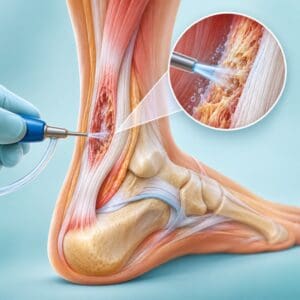
TenJet and Tenex are close cousins. Both are performed under local anesthesia, through an incision small enough to close without stitches, with minimal downtime. Once that damaged, non-healing material is cleared, the healthy tendon can finally begin to repair itself. The key difference is the cutting tool: Tenex uses ultrasonic energy to break up and aspirate degenerated tissue, while TenJet uses a high-pressure saline jet. From a patient’s perspective, the experience is nearly identical.
Dr. Baravarian chooses between the two based on the specific tendon and the degeneration seen on imaging. Patients can expect the same fundamental approach and recovery profile from either. Both are most commonly used for chronic Achilles tendinopathy and peroneal or posterior tibial tendon degeneration that has failed conservative care, and both are frequently followed by PRP or amniotic allograft to support healing in the treated tendon.
Topaz Procedure
The Topaz procedure uses radiofrequency coblation energy to treat chronic tendinopathy and plantar fasciitis. A small probe is inserted through a series of micro-incisions in the skin and delivers controlled radiofrequency energy directly into the degenerated tissue. This creates a controlled micro-injury response intended to restart the body’s natural healing process, increasing blood flow and promoting new collagen formation in tissue that has otherwise stopped healing.
Unlike Tenex and TenJet, which physically remove degenerative tissue, Topaz stimulates the tissue in place. This makes it a useful option when the goal is to reactivate a stalled healing response rather than debride a discrete zone of degeneration. It is most commonly used for chronic plantar fasciitis and insertional Achilles tendinopathy that has failed conservative care, and it can be performed as a standalone procedure or in combination with other regenerative therapies.
Leneva for Ball of Foot Pain
Leneva is an injectable adipose matrix, essentially a biologic fat pad replacement, used specifically for fat pad atrophy at the ball of the foot. As the natural fat pad thins with age or overuse, the metatarsal heads bear direct impact with every step, causing significant pain. Leneva restores that cushioning layer with a bio-integrated material that the body accepts and incorporates over time.
Biologic Cartilage Repair: DeNovo and BioCartilage
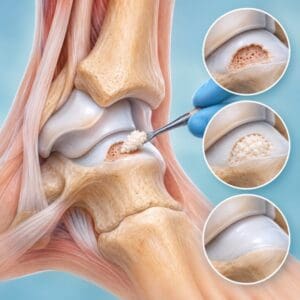
For osteochondral lesions, areas of cartilage and underlying bone damage in the ankle joint, DeNovo cartilage repair and BioCartilage transplant procedures offer a path to structural repair. DeNovo uses juvenile cartilage tissue with high chondrogenic potential. BioCartilage uses micronized cartilage allograft to fill defects and stimulate new cartilage growth. Both are used when cartilage damage is too severe for PRP or stem cells alone.
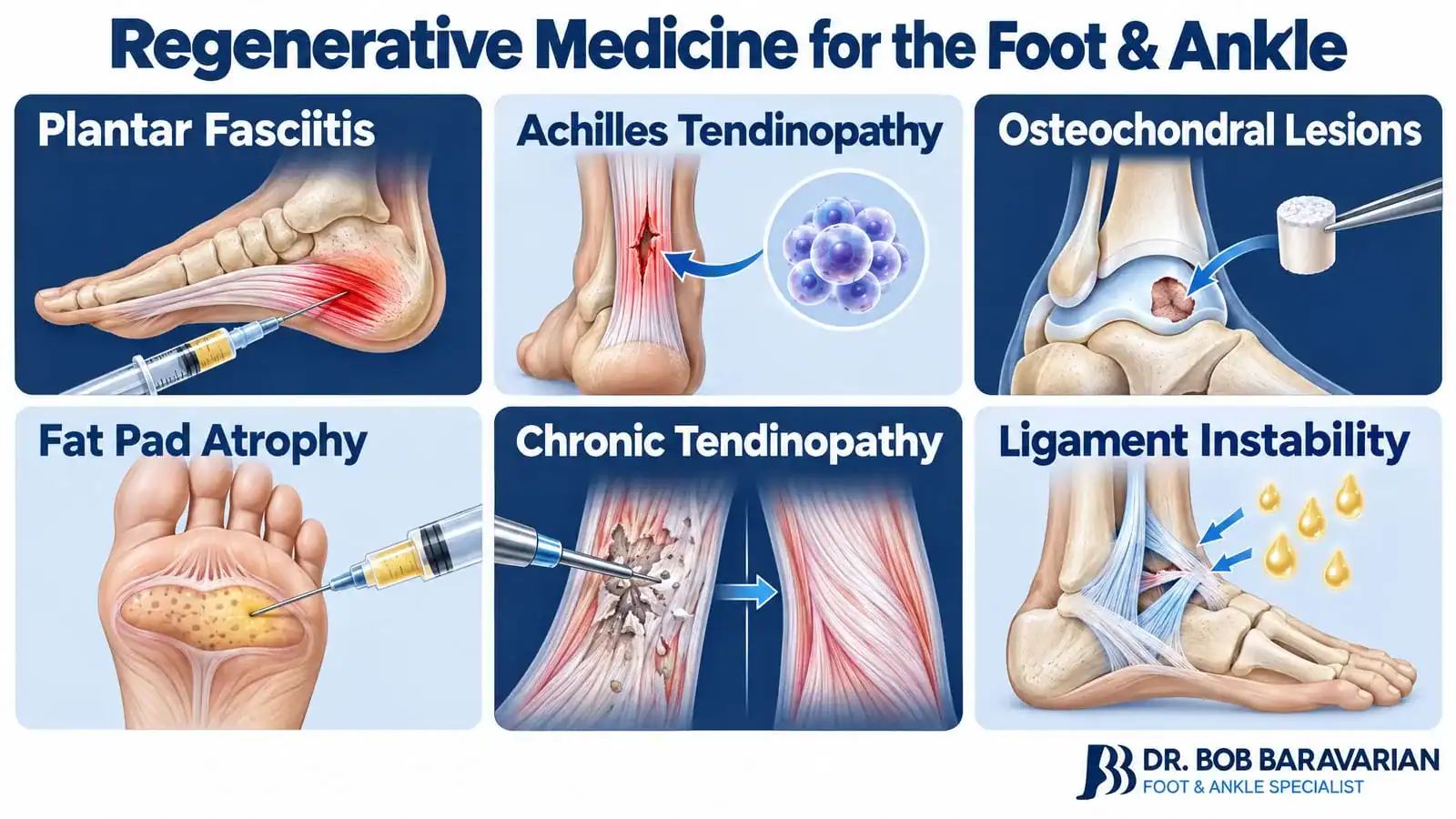
Condition-by-Condition Guide: Which Regenerative Therapy Is Right for You
The right regenerative treatment isn’t determined by what’s most popular. It’s determined by your specific diagnosis, the severity of tissue damage, and whether you’ve had prior treatment. Here’s how we match you with the right treatment at DOCS Foot and Ankle.
What conditions can regenerative medicine treat in the foot and ankle?
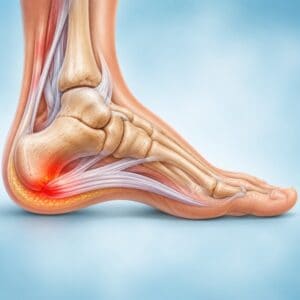
Plantar fasciitis: PRP is one of the most evidence-supported regenerative options for plantar fasciitis, particularly when cortisone injections or physical therapy have failed. Shockwave and SoftWave are non-injection alternatives, especially for patients who want to avoid needles or who have had multiple prior injections. For chronic cases that have not responded to other treatments, the Topaz procedure may be used to restart the healing response. Severe cases may combine more than one approach.
Achilles tendinopathy: Chronic Achilles tendinopathy may respond to PRP, which delivers growth factors directly to the degenerative tendon tissue, though research results for this condition are mixed. When the tendon has significant intratendinous degeneration, visible on ultrasound as a dark, disorganized zone, TenJet or Tenex is used first to remove the damaged tissue, followed by PRP to support healing. Shockwave or SoftWave can also be used as a standalone or adjunct therapy, and Topaz may be an option for insertional Achilles tendinopathy.
Osteochondral lesions of the ankle: Cartilage damage in the ankle joint requires a more targeted approach. Mild to moderate lesions may respond to PRP or stem cell therapy, which may help reduce inflammation and support healing. More significant defects, particularly those larger than 1.5 cm², typically require DeNovo cartilage repair or BioCartilage transplant. Stem cell therapy may be used in combination with these procedures to support integration.
Foot and ankle arthritis: For early to moderate arthritis, BMAC or PRP injected into the joint may help reduce pain and improve function. These treatments don’t reverse cartilage loss, but for the right patient they may help delay the need for surgery.
Fat pad atrophy (ball of foot pain): This is one of the most underdiagnosed causes of forefoot pain, and it has a specific solution: Leneva. No other regenerative therapy replaces the mechanical cushioning function of the fat pad. PRP and stem cells address inflammation and tissue repair, but they don’t restore volume. Leneva does.
Chronic tendinopathy (peroneal, posterior tibial, flexor hallucis): TenJet and Tenex are the most targeted options for tendons with confirmed intratendinous degeneration on imaging. They remove non-healing tissue that blocks recovery, and PRP or an amniotic allograft may then support healing in the cleared tendon.
Ligament sprains and instability: Recurrent ankle sprains and chronic lateral ankle instability can benefit from PRP injections into the damaged ligament tissue, particularly when MRI shows partial tearing. Amniotic fluid allograft is also used here for its concentrated growth factor and anti-inflammatory profile.
Who is a good candidate for regenerative foot and ankle treatment?
Most adults with chronic foot or ankle pain are candidates for at least one regenerative therapy. Key variables include the specific diagnosis, the severity and duration of the condition, prior treatment history, and overall health. Patients with active infection, certain autoimmune conditions, or blood disorders may not be candidates for injection-based therapies, but non-invasive options like SoftWave may still be appropriate.
Beyond Basic Injections: How SoftWave, TenJet, and Leneva Are Expanding What’s Possible
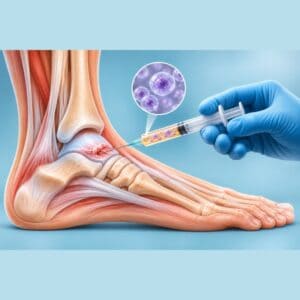
The regenerative orthopedics and sports medicine landscape has moved well beyond PRP and stem cells. Three newer modalities are particularly significant because they address conditions and mechanisms that injections alone cannot reach.
Acoustic wave therapies, Shockwave and SoftWave, are the only fully non-invasive options in the regenerative toolkit. They require no needles, anesthesia, or recovery time. Patients typically complete a series of sessions and return to normal activity immediately.
For patients with needle phobia, bleeding disorders, or conditions that make injection-based therapies impractical, acoustic wave therapy opens a door that was previously closed. We’ve found it especially helpful for patients with chronic plantar fasciitis who have already had multiple cortisone injections and are experiencing diminishing returns, since it works through a completely different pathway.
TenJet and Tenex address a specific biological problem injections cannot solve: degenerative, non-vascularized tendon tissue. When a tendon is chronically overloaded, sections of it undergo a process called tendinosis: the collagen architecture breaks down and is replaced by disorganized, poorly vascularized, scar-like tissue. PRP injected into that tissue may have limited effect. Clearing that tissue first creates a healthier environment where regenerative therapies have a better chance to work.
Leneva fills a gap that no other regenerative therapy addresses: volume loss. Fat pad atrophy is as much a mechanical problem as a biological one. The metatarsal heads need cushioning to distribute load. When that cushioning is gone, no amount of growth factors will restore it. Leneva’s adipose matrix integrates with the remaining tissue and provides bio-integrated cushioning that most patients notice within a few weeks.
Regenerative Medicine After Failed Surgery: What Revision Patients Need to Know
One of the most underserved patient groups in foot and ankle care is people who have already had surgery and are still in pain. Whether the original procedure was a bunion correction, an Achilles repair, or a cartilage procedure, failed or incomplete healing is more common than most patients are told. Regenerative medicine plays a specific and important role in these cases.
Consider a patient who underwent a standard Achilles tendon repair with metal hardware, only to develop persistent pain at the repair site two years later. Imaging shows scar tissue formation and incomplete tendon remodeling: the tendon healed, but not well. In this scenario, PRP injections into the repair zone may help stimulate a secondary healing response. SoftWave can be used alongside PRP without additional surgery.
For patients with failed cartilage procedures or persistent osteochondral lesions after prior ankle surgery, DeNovo cartilage repair or BioCartilage transplant may offer a revision pathway. These procedures may be combined with stem cell therapy to support integration. Other surgeons frequently refer Dr. Baravarian for complex revision and reconstructive cases.
When revision surgery is necessary, combining regenerative biologics with metal-free, minimally invasive techniques helps patients avoid the added burden of metal hardware in already compromised tissue. No metal to remove later, and less disruption to the surrounding structures.
How Regenerative Therapies Work Alongside Metal-Free Surgery for Faster Healing
The best outcomes we see at DOCS Foot and Ankle come not from regenerative therapy alone, but from integrating it with surgical care. When surgery is necessary, for example for a bunion, a flatfoot deformity, or a midfoot fusion, the biological environment around the repair site determines how quickly and completely the patient heals. Regenerative therapies support that environment.
OssioFiber, the bio-integrative metal-free surgical hardware used in Dr. Baravarian’s procedures, is designed to be gradually replaced by the patient’s own bone over time, so no permanent metal is left behind. PRP, bone marrow aspirate concentrate (BMAC), or amniotic allograft may also be applied at the surgical site during or after an OssioFiber-based procedure to support healing.
Many practices offer PRP, and many hospitals offer stem cell therapy. Combining OssioFiber metal-free hardware with regenerative biologics, applied by a surgeon with more than 25 years of experience and over 25,000 procedures, is a more specialized approach.
Georgia P., a patient who underwent two PRP procedures on her ankle with Dr. Baravarian, described the experience this way: “I had 2 PRP procedures done on my ankle and didn’t feel much pain! It’s wonderful to find a doctor that is trustworthy!” That combination of minimal discomfort and genuine trust reflects what personalized regenerative care actually looks like in practice.
What to Look for in a Regenerative Foot and Ankle Specialist in Los Angeles
When evaluating a regenerative specialist, the most important questions are about specificity and volume. Does the practice offer the full spectrum of regenerative modalities, or just PRP? Does the surgeon offer imaging-guided injection? How many regenerative procedures has the physician performed, and for which specific diagnoses? A specialist who offers only one or two options will inevitably fit every patient to the tools they have, rather than the tools the patient actually needs.
Dr. Baravarian has been named Top Doctor by LA Magazine and Top Surgeon in California, and has been featured in ABC News, the LA Times, and The Guardian, recognition that reflects both clinical outcomes and the trust of referring physicians. With 4.8 stars across more than 5,220 patient reviews, the outcomes speak for themselves. Read more on our patient reviews page.
Chris H., a patient who described the experience as “a first-class experience with a world-leading research surgeon,” put it simply: “If ‘good enough’ isn’t good enough for you, this is where you want to go.” That standard applies directly to regenerative care, where the difference between a basic injection and a precisely matched, imaging-guided biologic protocol can determine whether you heal or stay stuck.
Real Patient Outcomes: What to Expect from Regenerative Foot and Ankle Treatment
Every regenerative treatment has a different recovery path. Here is what patients can typically expect.
What is the recovery time for regenerative foot and ankle treatments?
Recovery timelines vary significantly by modality. SoftWave Therapy requires no recovery time: patients walk out and resume normal activity the same day. PRP injections typically cause mild soreness at the injection site for 24 to 48 hours, and most patients return to light activity within a few days. TenJet and Tenex procedures involve a short period of protected weight-bearing, usually 1 to 2 weeks, followed by a gradual return to activity. Leneva injections are similarly low-downtime, with most patients noticing cushioning improvement within a few weeks as the material integrates.
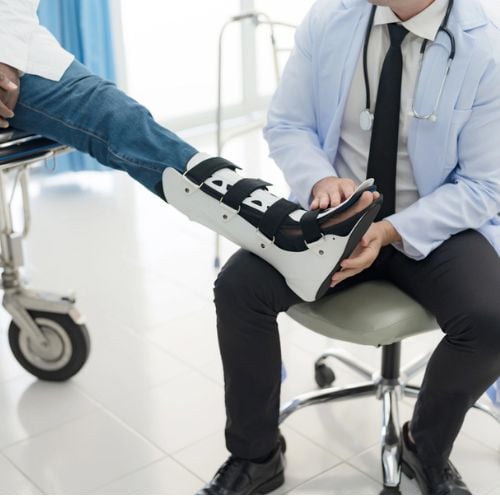
Cartilage repair procedures, DeNovo and BioCartilage, involve longer recovery because the transplanted tissue must integrate with the existing joint surface. Patients typically use a boot or crutches for four to six weeks, with a full return to activity at three to six months, depending on lesion size and the patient’s overall healing response.
What consistently surprises patients is how much less disruptive regenerative treatment is than they expected. SJ, a surgical patient at the practice, noted: “I had zero pain after my surgery. Everything is healing so well.” Individual results vary.
Is PRP therapy effective for foot and ankle pain?
Yes, with important nuance. PRP is most effective when it’s matched to the right diagnosis and delivered with imaging guidance to the precise location of tissue damage. The strongest evidence is for plantar fasciitis, where several randomized trials have found better long-term outcomes with PRP than with cortisone injection.
Evidence for Achilles tendinopathy is more mixed, which is why precise diagnosis and imaging-guided placement matter. For osteochondral lesions, PRP shows benefit in mild to moderate cases. It is less effective as a standalone treatment for severe cartilage defects or complete tendon ruptures, where surgical intervention remains necessary.
For patients exploring the full range of foot and ankle conditions we treat, regenerative options are available for most diagnoses, and the right starting point is always a thorough evaluation to determine which therapy, or combination of therapies, matches your specific situation.
Frequently Asked Questions
What is regenerative medicine for foot and ankle conditions?

Regenerative medicine refers to treatments that stimulate the body’s own healing mechanisms rather than simply managing symptoms. In foot and ankle care, this includes biologic injections like PRP and stem cell therapy, allograft therapies like amniotic fluid allograft, non-invasive technologies like Shockwave and SoftWave, and minimally invasive procedures like TenJet, Tenex, and Topaz. The goal is to support the body’s natural repair of tendons, cartilage, and ligaments, rather than just temporarily reducing pain.
What is the difference between PRP and stem cell therapy for foot injuries?
PRP delivers concentrated growth factors from your own blood to stimulate the repair of existing cells at the injury site. It works best when there are viable cells present that can respond to those signals, making it ideal for tendon and ligament injuries. Stem cell therapy introduces cells that may help support repair, making it more appropriate for cartilage damage or conditions where the native cell population is severely depleted. In practice, the two are often used together to support healing.
Can stem cell therapy replace foot and ankle surgery?
In some cases, it may help patients delay or avoid surgery, particularly for early to moderate cartilage damage, chronic tendinopathy, and certain ligament injuries where the tissue is still partially intact. However, stem cell therapy cannot correct mechanical deformities like bunions, flatfoot, or hammertoes, where the bone alignment itself needs to be changed. It works best as part of a tailored treatment plan that honestly assesses what the tissue damage requires.
How does SoftWave therapy work for foot pain?
SoftWave uses electrohydraulic technology to generate broad, unfocused acoustic waves that reach into the treated tissue. Laboratory and animal studies suggest this energy may increase blood flow and support the body’s healing response, all without any injection or incision. Each session takes about 10 to 15 minutes, and most patients complete a short series of sessions. It is commonly used for plantar fasciitis, Achilles tendinopathy, and chronic soft tissue injuries that have not responded to physical therapy or cortisone injections.
What is amniotic fluid allograft therapy for foot and ankle?
Amniotic fluid allograft is derived from donated placental tissue processed under strict regulatory standards. It contains a high concentration of growth factors, anti-inflammatory cytokines, hyaluronic acid, and extracellular matrix proteins that support tissue repair. Unlike PRP or stem cell therapy, it doesn’t require any harvest from the patient’s own body, making it a lower-intervention option. It’s used for tendon injuries, ligament damage, and as an adjunct to surgical procedures to enhance healing at the repair site.
How many PRP injections are needed for Achilles tendinopathy?
Most patients with Achilles tendinopathy receive a series of one to three PRP injections, spaced four to six weeks apart, depending on the severity of the tendon degeneration and the patient’s response to the initial treatment. Imaging guidance, typically ultrasound, is used to place the injection precisely within the degenerative zone of the tendon. Patients with significant intratendinous degeneration visible on ultrasound may benefit from TenJet or Tenex debridement before PRP, which may improve the healing environment.
Sources
-
Peerbooms JC, Lodder P, den Oudsten BL, Doorgeest K, Schuller HM, Gosens T. Positive effect of platelet-rich plasma on pain in plantar fasciitis: a double-blind multicenter randomized controlled trial. American Journal of Sports Medicine. 2019;47(13):3238-3246. https://doi.org/10.1177/0363546519877181
-
Kearney RS, Ji C, Warwick J, et al. Effect of platelet-rich plasma injection vs sham injection on tendon dysfunction in patients with chronic midportion Achilles tendinopathy: a randomized clinical trial. JAMA. 2021;326(2):137-144. https://pmc.ncbi.nlm.nih.gov/articles/PMC8278266/
-
Gollwitzer H, Saxena A, DiDomenico LA, et al. Clinically relevant effectiveness of focused extracorporeal shock wave therapy in the treatment of chronic plantar fasciitis: a randomized, controlled multicenter study. Journal of Bone and Joint Surgery (American). 2015;97(9):701-708. https://pubmed.ncbi.nlm.nih.gov/25948515/
-
Efficacy of radiofrequency by the Topaz technique for chronic plantar fasciopathy: systematic review and meta-analysis. Journal of Clinical Medicine. 2025;14(8):2843. https://www.mdpi.com/2077-0383/14/8/2843