 What is avascular necrosis of the foot?
Avascular Necrosis (AVN), also called Freiberg’s disease, osteonecrosis, or Freiberg infraction disease, is the death of bone tissue in the forefoot due to interruption of the blood supply.
It’s an osteochondral condition, meaning it affects the cartilage and underlying bone in a joint.
It usually occurs in the second toe (the toe next to the big toe), but it can occur in the third or even fourth toes. It is a relatively rare musculoskeletal condition, though its complications can be quite serious. Freiberg disease in adults is possible, but it is more common in adolescents.
What causes avascular necrosis?
Freiberg’s disease is a painful condition that can affect young athletes, especially teenage girls.
The causes of avascular necrosis are often difficult to pinpoint. However, it is believed to be caused by a combination of factors, including
- repetitive stress
- a change in biomechanics
- vascular compromise
- genetic predisposition.
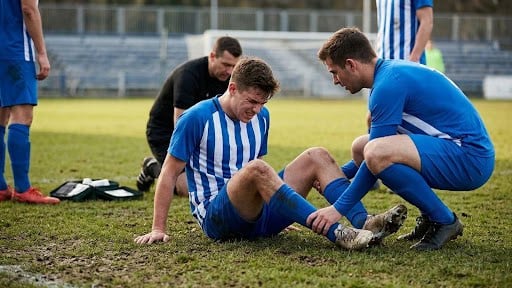
In athletes, overuse, or what specialists refer to as “chronic microtrauma,” can trigger Freiberg’s disease. Certain weight-bearing activities can also increase an individual’s susceptibility to avascular necrosis. Runners, soccer players, and dancers tend to be especially vulnerable as they repeatedly stress the growth plates in the ball of the foot.
A stress fracture, or multiple fractures in the second metatarsal head or third metatarsal head, can block blood flow from reaching the ends of the metatarsal bones. When blood cannot reach the bone, its health begins to deteriorate. Abnormal bone growth, sclerosis (hardening of the bone), and necrosis (death of the bone) can all occur.
Risk factors that impair circulation, such as chemotherapy, lupus, diabetes, and sickle cell disease, are also associated with avascular necrosis.
What are the symptoms of avascular necrosis?
Because the injury develops over a long period, detecting avascular necrosis in its early stages can be challenging. If your child is complaining of these Freiberg’s disease symptoms, you may want to have them evaluated by Dr. Bob:
- Dull aching in the front of the foot
- Redness and swelling at the metatarsal head
- Stiffness and loss of range of motion in the affected toe
- Joint pain and tenderness in the metatarsal head (at the base of the toe) when pushing off with the toes or wearing heels
- Pain in the plantar (sole) as well as dorsal areas of the foot
- Limping
- The feeling of a hard lump or object in the ball of the foot during weight-bearing activities
Generally, symptoms of Freiberg’s disease will start as mild but worsen over time. They can progress from irritating to chronic debilitation as they move through the Freiberg disease stages.
How is Freiberg’s disease diagnosed?
In order to properly diagnose and treat Freiberg’s disease, the podiatric expert, Dr. Bob Baravarian, will need to rule out foot and ankle conditions with similar symptoms. Hammertoe, rheumatoid arthritis, metatarsalgia, or Morton’s neuroma can all cause ball of foot pain or difficulty walking.
Dr. Bob will start by physically examining the foot and reviewing symptoms. To narrow down the diagnosis, he has access to radiographic imaging.
In its early stages, avascular necrosis may look normal on an X-ray. Although Dr. Bob may be able to diagnose a fracture or fragmentation using this type of imaging, in most cases, we’ll do additional imaging tests. Magnetic resonance imaging (MRI) scans, computerized tomography (CT scans), or bone scans let Dr. Bob take a closer look at the metatarsophalangeal joint and surrounding soft tissue.
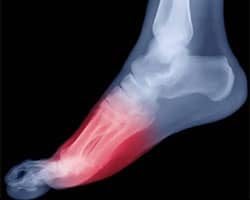
A clear indicator of AVN is the flattening and widening of the epiphysis, or end, of the bone. In the case of AVN, the joint surface of the metatarsal head becomes less rounded and increasingly flatter, making it difficult and painful to use the toe. Sclerosis is also present in the early to middle stages and can appear on imaging tests. If joint destruction and collapse have occurred, it can signal that you are in the advanced stages of the disease.
What is Freiberg’s disease treatment?
Avascular necrosis is most easily treated when it is detected early. However, due to the progressive nature of the condition, many patients may not come in for evaluation until symptoms have already become debilitating.
Treatment of Freiberg disease depends not only on the severity of the condition but also on the patient’s age. In adults, severe cases of avascular necrosis may require surgery. Treatment is more challenging for children and teens because their feet are still growing, and the common surgical techniques used on adults can damage a young patient’s growth plate and impede the growth of the bone.
Conservative treatment options
For this reason, Dr. Bob recommends nonsurgical treatments to limit joint motion and relieve symptoms until the growth plate closes, at which time surgery may be considered.
In the meantime, he may recommend:
- Physical therapy to build the strength and flexibility of the surrounding ligaments and tendons
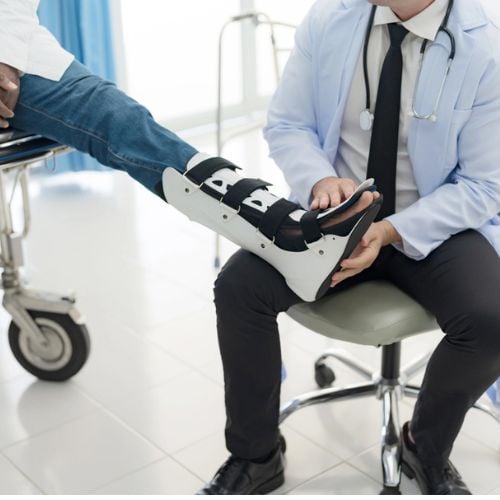
- Orthoses, such as rigid-soled shoes and custom-fitted orthotics with the metatarsal head cut-out
- Anti-inflammatory medications, often in the form of corticosteroid injections
- Limiting activities that worsen symptoms
If conservative treatment fails to manage the pain and stop the progression of the disease, surgical treatment may be discussed.
Surgical Options
Dr. Bob will closely monitor your child’s injury and bone development while the area heals. After a few months or years, when the growth plate has closed, one or more surgical procedures may be performed. The correct procedures will be prescribed based on your child’s specific case.
Joint debridement (clean-up)
An osteotomy procedure involves the removal of loose bodies and spurs in the joint. Reshaping of the joint, known as arthroplasty, may also occur during this procedure.
Cartilage and/or joint replacement
Grafting can be used to transfer healthy tissue from another part of the foot and place it onto the collapsed metatarsal head, thereby helping to reinforce and strengthen the area.
Implant
A surgical implant, typically made of either titanium or silicone rubber, is secured to the metatarsal bone to help reduce pressure on the joint and improve function.
Metatarsal head resection
This technique is not typically performed on younger patients due to their bones’ continued growth and development. Additionally, this procedure is typically treated as a last resort for severe cases of Freiberg’s disease. It involves removing the bone and replacing it with a surgical filler to maintain the length of the toe.
Reach out to Dr. Baravarian for your pediatric foot and ankle conditions
Dr. Bob has decades of experience treating all forms of pediatric foot and ankle concerns. He uses the latest technologies available, many of which he helped develop, to accurately diagnose and treat your child’s painful symptoms with the least invasive treatment possible.
Dr. Bob Baravarian is conveniently located in Los Angeles, near Cedars-Sinai Medical Center, providing expert foot and ankle care for patients throughout Southern California.
Freiberg's disease FAQs
How rare is Freiberg's disease?

Freiberg’s disease is considered rare and uncommon. Out of those with the condition, the most common age group affected is young adults between the ages of 12 and 20.
Can Freiberg's disease go away?
Most cases of Freiberg’s do not go away spontaneously on their own. However, mild to moderate cases may resolve with conservative treatment.
Are there Freiberg infraction taping techniques?
Your podiatrist may recommend taping techniques to provide strength and support to the area, such as buddy taping. Taping with the use of orthotics, like a toe pad, can also be beneficial.
Sources
-
Danger F, Wasyliw C, Varich L. Osteochondroses. Semin Musculoskelet Radiol 2018;22(1):118–24.