Dr. Bob on The Doctors TV show discussing plantar fasciitis treatments.
Dr. Baravarian: nationally recognized plantar fasciitis specialist in Los Angeles
Dr. Bob Baravarian is a board-certified foot and ankle surgeon who treats plantar fasciitis at DOCS Foot and Ankle in Los Angeles. He uses a staged approach, starting with conservative care like stretching, orthotics, and footwear changes, and moving to in-office treatments such as shockwave therapy or PRP only if heel pain persists. Surgery is reserved for the small number of patients who don’t improve after months of nonsurgical care.
Patients from across Southern California, and from out of state through his fly-in program, see Dr. Baravarian for both new heel pain and cases that haven’t responded to earlier treatment.
Named one of the Best Foot and Ankle Surgeons in California and a Top Doctor in Los Angeles by Los Angeles Magazine, he is trusted by patients nationwide.
What is plantar fasciitis?
The plantar fascia is a thick ligament that connects your heel to the front part of your foot and supports your arch. When this ligament becomes inflamed, it causes heel pain and stiffness. That is plantar fasciitis.
Plantar fasciitis is quite common and has numerous causes, often requiring an experienced doctor to identify the real underlying issue. Unfortunately, many patients do not achieve satisfactory relief because prior doctors failed to investigate the root cause of their plantar fasciitis
What are the causes and risk factors of plantar fasciitis?
Plantar fasciitis is generally a chronic condition and rarely caused by a single trauma to the foot.
The most common causes of heel pain include:
- Tight calf muscles and tight Achilles tendons
- If you are a long-distance runner or spend extended periods of time on your feet
- Wearing shoes with soft soles or poor arch support
- High arches
- Flat feet
What are the symptoms of plantar fasciitis?
- Morning heel pain.
- Sharp or stabbing pain on the bottom of the foot with the first few steps after getting out of bed or after sitting for an extended period of time. The pain may decrease as the tendon loosens up but almost always returns.
- Heel pain when climbing stairs, participating in high-impact activities, or standing for long periods.
How do doctors diagnose plantar fasciitis?
There are many sources of heel pain, and not all cases are plantar fasciitis. It’s essential to identify the source of your heel pain so your doctor can treat the actual cause of your pain, not just the symptoms. To that end, Dr. Bob provides the most advanced technologies for accurately diagnosing plantar fasciitis, including:
- Advanced Digital X-Ray
- Diagnostic Ultrasound
- Advanced Extremity MRI
- Neurosensory testing
Is it plantar fasciitis or something else?
Several conditions cause heel pain that feels like plantar fasciitis, and treating the wrong one is a common reason heel pain doesn’t get better. During your exam, Dr. Baravarian checks for:
- Heel spurs: Bony growths on the heel bone that often show up on X-rays. Many are painless and found by chance, so a spur alone doesn’t explain heel pain.
- Achilles tendon problems: Pain at the back of the heel rather than underneath it.
- Heel stress fractures: Pain that worsens with activity and when the sides of the heel are squeezed, more common in runners.
- Nerve entrapment: Burning, tingling, or numbness can point to Baxter’s neuritis or tarsal tunnel syndrome instead.
- Fat pad thinning: Loss of the natural cushioning under the heel, which causes pain in the center of the heel.
X-rays rule out fractures and show any spurs. Diagnostic ultrasound shows whether the plantar fascia is thickened. An MRI may be ordered if the diagnosis is unclear or the pain isn’t improving with treatment.
What are conservative treatments for plantar fasciitis?
Conservative care, typically our first line of treatment, when appropriately matched to the patient, demonstrates a very high success rate. More than 70% of our heel pain patients experience relief with physical therapy, orthotics, and changes in footwear. Fewer than 5% require advanced treatments, and less than 2% need surgery.
The goal of conservative treatments is to increase the flexibility of the fascia and Achilles tendon, reducing stress on the arch and alleviating pressure on the plantar fascia. These treatments are recommended when symptoms have been present for less than six months. They include:
Orthotics
Providing support to the arch of the foot with a custom orthotic insole device (which offers more accurate support than over-the-counter insoles) will significantly help stabilize the foot and reduce stress on the arch.
Physical Therapy and Stretching Exercises
Stretching plays a vital role in the treatment of plantar fasciitis, primarily because it helps alleviate tension and tightness in the plantar fascia, the thick band of tissue that runs along the bottom of the foot. By engaging in specific stretching routines, individuals can experience significant improvements in reducing inflammation and relieving pain.
Stretching your lower leg muscles and addressing plantar fasciitis can help relax tight muscles and reduce heel pain, particularly when done before getting out of bed in the morning. Additionally, a physical therapist can recommend appropriate stretches to strengthen your muscles, enhance foot mechanics, and alleviate stress on your feet. Dr. Bob collaborates with his on-site physical therapists to provide an advanced protocol for effective physical therapy treatment.
Steroid Injections for Heel Pain
One or two cortisone steroid injections may be used to relieve the severe swelling and pain. However, Dr. Bob usually tries to avoid these injections, as cortisone is known not only to reduce inflammation (a good thing) but also to damage and weaken the tissue (a bad thing), making it more prone to tearing. In some cases, we have found this to be effective and contribute to total recovery, but its effectiveness is generally temporary.
Icing for Heel Pain
Icing plays a crucial role in treating plantar fasciitis, particularly after physical activity. It helps to reduce swelling and pain, enabling the tissue to heal more quickly. Combining ice with massage—such as rolling the bottom of your foot on a frozen water bottle—proves to be very effective. This method not only provides pain relief and decreases inflammation but also aids in stretching the plantar fascia. It is advisable to perform this several times each day.
Proper Foot Gear
Dr. Bob recommends shoes with firmer soles. The upper can be soft, but the sole needs to be sturdy, and a slight lift is acceptable. Women tend to prefer wedges, while men generally choose stiff running shoes, cowboy boots, or work boots. Active footwear should have flexible soles and provide adequate arch support. This helps distribute your weight evenly across the bottom of the shoe, reducing the shock impact on your inflamed fascia.
Massage
Massaging the heel area will break up scar tissue and increase blood flow to the region to aid in healing.
Plantar Fasciitis Night Splints
A night splint may be used in cases that do not respond to physical therapy, stretching, and insole modifications. The purpose of the night splint is to maintain the calf and Achilles tendon in a stretched position during sleep and rest, reducing tension and stretching of the fascia for the first steps in the morning or after a period of rest.
Anti-inflammatory Medications
Nonsteroidal anti-inflammatory drugs, such as Advil, can help reduce inflammation in the heel and arch of your foot, making it easier to relieve foot pain.
Get some rest
Unlike a sprained ankle or a broken bone, plantar fasciitis is not an acute injury. However, that doesn’t mean you shouldn’t treat it as if it were. Your fascia needs rest to heal. Take a break from your normal exercise routine for just a few days. Even minor injuries can become major if you irritate the area repeatedly.
What advanced treatment options exist for plantar fasciitis?
While approximately 80% of our patients respond to simple conservative care, heel pain may continue to be a problem for some. This often results from a lack of blood flow to the damaged tissue, leading to chronic plantar fascia pain and scar formation. To address such issues, the body must be made aware of the injury site to treat the damaged tissue and help resolve the problem.
These treatment options are usually utilized in chronic cases where plantar fasciitis symptoms have persisted for over six months. They include:
Cryotherapy (cryoablation with ultrasound)
Using extreme cold temperatures, cryotherapy destroys targeted nerves, preventing them from sending pain signals to the brain. Through rapid, limited deep-freezing of the affected area, the chronic pain caused by fascia pain is alleviated with a simple and comfortable office procedure. Cryosurgery is minimally invasive and relatively painless.
Platelet-rich plasma therapy (PRP) for plantar fasciitis
Platelet-rich plasma (PRP) injections enable growth factors in the blood to induce inflammation in the injured tissue. This enhances the body’s healing response.
Using PRP, blood is drawn and processed in a centrifuge. Following ultrasound guidance and local anesthesia, an injection of PRP is administered into the damaged tissue. This triggers an increased release of growth factors in the area, enhancing blood flow to the injured heel region to promote healing.
Amniotic stem cell therapy for plantar fasciitis
During stem cell therapy, a patient’s stem cells are extracted from a simple blood sample. Using a specialized procedure, ineffective cells are eliminated, leaving only the potent healing stem cells. These cells are then injected into the injured area, where they begin to replicate, facilitating the healing process.
Topaz technology
Topaz technology, a minimally invasive procedure, utilizes high-frequency energy to accelerate healing.
Topaz coblation technology combines bipolar high-frequency energy with a saline-based medium to effectively remove damaged tissue while minimizing harm to the surrounding healthy tissue. The removal process irritates the fascia sufficiently to convert a chronic issue into an acute one by boosting circulation to the affected area. Consequently, the patient’s body enhances its natural healing properties, initiating the repair of the newly injured ligament.
The TenJet and Tenex procedures
Doctors use diagnostic ultrasound to identify the precise location(s) of scar tissue. Using the TenJet probe, the scar tissue is fragmented with high-pressure streams of water, while Tenex employs radio waves. The procedures typically take only 15 minutes, and there is usually only minor swelling afterward.
Shockwave therapy
Extracorporeal shockwave therapy is a non-invasive, in-office procedure that allows new blood flow to the area of fascia damage. It is a long-term solution that provides gradual improvement. Maximum pain relief is typically experienced at three months; however, patients often notice improvement by the beginning of the third week of treatment.
Endoscopic plantar fasciotomy surgery
Surgery is typically reserved for chronic cases of plantar fasciitis that do not respond to conservative or advanced therapies. In these instances, fascia release surgery is performed to, as the name suggests, release the tight fascia.
The fascia is cut to relieve tension or pressure, and Dr. Bob has perfected the approach to fascia release. Our endoscopic and minimally invasive fascia release procedure promotes rapid healing and the fastest surgical recovery.
Dr. Bob Baravarian is the best choice for your plantar fasciitis treatment in Los Angeles
Dr. Bob is nationally recognized as an expert in treating plantar fasciitis. His results are revolutionary and unmatched in the community; fewer than 5% of all his patients with plantar fasciitis require surgery, and less than 2% need a fascia release.
Recognized worldwide as experts in plantar fasciitis and heel pain, the specialists at our podiatry group instruct globally on the latest techniques and the most innovative products available. They frequently share their expertise in various medical publications and participate in clinical trials, including a new technology that utilizes high-frequency ultrasound to treat heel muscle injuries.
For more information or to schedule a consultation, please call (855) 557-5400 or contact Dr. Bob now.
Dr. Bob is conveniently located throughout Southern California and the Los Angeles area, with plantar fasciitis foot doctors available in or near Santa Monica (on Wilshire Blvd.), Beverly Hills, West Los Angeles, Manhattan Beach, Santa Barbara, Westlake Village, and Valencia, California, to name a few.
Plantar Fasciitis FAQs
Is plantar fasciitis the same thing as a heel spur?

Not technically. However, since heel spurs can potentially cause plantar fasciitis, these conditions are related.
A heel spur is a calcium deposit that leads to a build-up of bony tissue on the bottom of the heel bone. Sometimes, a heel spur is completely painless; however, at other times, it can intertwine with and pull on the plantar fascia, which can be painful. If that is the case, you need to address the bone spur before you can achieve relief from your plantar fasciitis.
A heel spur can develop over time when a tight plantar fascia pulls on the bone, prompting the bone to react by forming a calcium deposit. In this case, we also need to address the heel spur first.
Can running cause plantar fasciitis?
Yes. Repetitive impact from running is one of the most common causes, especially with a sudden jump in mileage, worn shoes, or tight calves. For runners and other athletes, treatment often focuses on getting you back to training safely, which our guide to sports injury care in Los Angeles covers in more detail.
Is plantar fasciitis a tear in the plantar tendon?
No, it is not a true tear. Any injury can cause some mild, microscopic tearing, which leads to inflammation. However, in the case of plantar fasciitis, it’s not a complete tear.
How long does plantar fasciitis take to heal?
Healing typically takes two to six months. More than 95% of patients improve simply by performing their exercises and managing pain with over-the-counter medications. Orthotic inserts are highly recommended, not only to support the plantar fascia and facilitate its healing but also to prevent the recurrence of pain once the fascia has healed. Very few patients need surgery to address the problem.
Are there medications I can take for plantar fasciitis?
Over-the-counter anti-inflammatory medications (NSAIDs), such as ibuprofen (Advil) and naproxen (Aleve), are generally effective. Icing for 10 to 15 minutes throughout the day can also help relieve pain.
When should anti-inflammatory medications be used for plantar fasciitis?
These medications should be taken according to the instructions on the package. Typically, it’s advisable to take them consistently for two weeks, ensuring you eat beforehand to minimize stomach upset. After two weeks, stop taking the medication for a week. If symptoms of plantar fasciitis persist or worsen, you can resume taking the medication for another two-week period followed by another break.
What is a night splint, and should I use one?
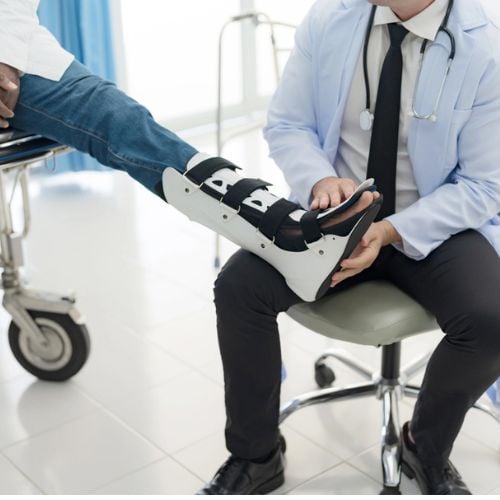
A night splint can alleviate plantar fasciitis discomfort. It’s a partial boot that straps onto your foot and lower calf to maintain the foot in a flexed position, ensuring the plantar fascia and Achilles tendon remain stretched throughout the night.
What are some additional stretches recommended for plantar fasciitis relief?
Position the affected foot behind the other, with your toes angled toward the heel of the front foot. Face a wall and gently lean forward. Enhance the stretch by bending the knee of the front leg while keeping the rear leg straight and the heel down. Hold this stretch for approximately 10 seconds and repeat it 10 times per session. Strive to perform this routine at least three times daily for optimal relief and improved flexibility.
Can plantar fasciitis come back?
Yes. Our podiatrists will always conduct a thorough physical exam and review your medical history to ensure we’re addressing the exact cause of your plantar fasciitis. Correcting the root cause of a problem is always preferable to treating its symptoms. If your plantar fascia is inflamed due to another foot condition, we’ll customize your treatment plan to minimize the risk of recurrence.
What is the fastest way to cure plantar fasciitis?
There’s no instant cure, but most people improve fastest by combining several simple steps: stretching the calf and plantar fascia daily, wearing supportive shoes or orthotics, cutting back on high-impact activity, and icing after activity. Most patients improve within a few months. If pain continues despite consistent conservative care, in-office treatments such as shockwave therapy or PRP may help.
When should I see a specialist for heel pain?
See a foot and ankle specialist if your heel pain lasts more than a few weeks despite rest and supportive shoes, keeps you from walking or working comfortably, or comes with numbness, tingling, or swelling. You should also be seen sooner if the pain started after an injury or if you have diabetes.
Is surgery for plantar fasciitis worth it?
For most people, surgery isn’t needed because the large majority improve with nonsurgical treatment. For the small number of patients whose pain continues after six to twelve months of consistent conservative care, a minimally invasive plantar fascia release can relieve pain. Like any surgery, it carries risks, including arch pain or changes in the arch, so Dr. Baravarian recommends it only after other options have been tried.
Does insurance cover plantar fasciitis treatment?
Most insurance plans cover standard treatments such as office visits, imaging, physical therapy, and surgery when medically necessary. Some in-office therapies, including shockwave therapy and PRP, are often not covered. Our team can review your benefits and give you a good-faith estimate before treatment. Call us at (855) 557-5400 to discuss your options.
Can I still wear heels if I have plantar fasciitis?
Technically, yes, you can. Many patients with plantar fasciitis actually feel better when they wear heels because it reduces the tension of the Achilles on the plantar fascia. However, wearing heels will shorten and tighten the Achilles over time, leading to increased heel pain. If you regularly wear heels, Dr. Bob recommends gradually transitioning from high heels to flats. Stopping wearing heels “cold turkey” might actually cause more harm.
When you return to wearing flats, ensure they provide adequate support, and if possible, consider getting custom orthotics.
If I need surgery for plantar fasciitis, what kind of recovery should I expect?
Plantar fascia release surgery involves cutting part of the plantar fascia ligament to relieve tension and reduce inflammation of the ligament. Dr. Bob Baravarian performs plantar fascia release endoscopically through a minimally invasive half-centimeter incision. This approach allows for a significantly shorter recovery period compared to traditional open surgery. Our patients can bear weight after one week and return to shoes in 3 weeks.
I just had the Tenex procedure for my plantar fasciitis, and I still have pain. When can I expect the pain to subside?
Heel pain should subside approximately six weeks after the Tenex procedure.
What is a typical recovery for plantar fasciitis restorative procedures?
For restorative procedures such as PRP, amniotic cell therapy, and Topaz, patients wear a boot for 2 weeks while being weight-bearing immediately. Total recovery time is about 6 weeks because, as with all restorative procedures, we need to allow the body time to heal itself.