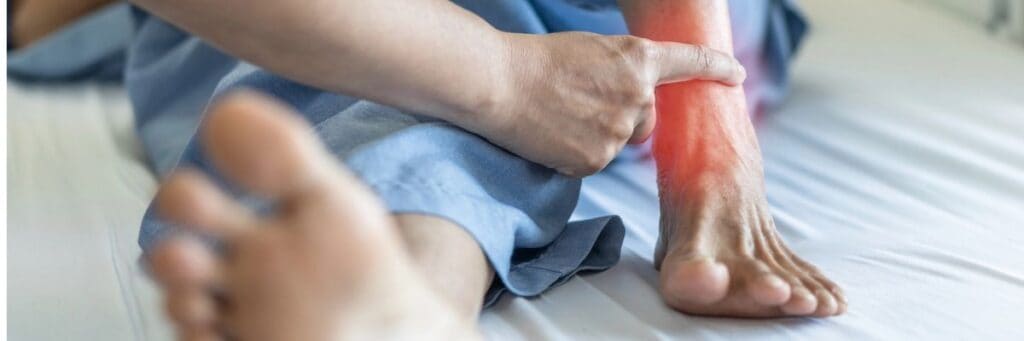
 Freiberg’s infraction refers to pain at the second metatarsal head with arthritic changes visible on radiographic images.1 Despite the condition being discovered in 1914, the etiology of bone and cartilage degeneration with arthritic changes remains unproven. Possible etiologies include overt trauma, microtrauma, vascular disruption, biomechanical abnormalities, medications and genetic influences. Degenerative changes often occur in the second and/or third metatarsal head with a female to male ratio of 5:1.2
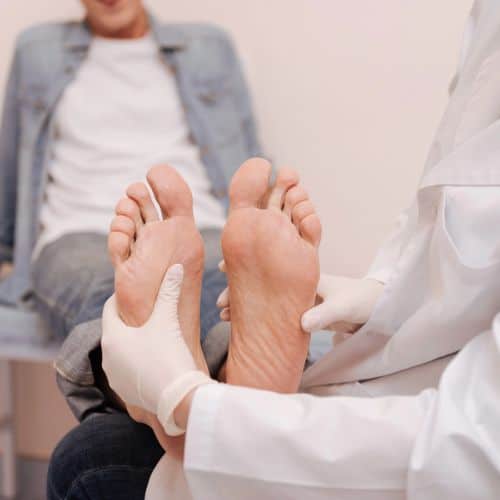
Clinical findings include pain in and around the second metatarsophalangeal joint (MPJ) with or without associated edema. Usually, joint range of motion is painful but smooth in the early stages of the disease. Later, there may be decreased joint range of motion with crepitus and/or palpable spurring. Radiographic findings of the area can depend on the progression of the pathology. Initial findings may show slight flattening of the metatarsal head or a possible radiolucent osteochondral lesion. Later stages will often progress to severe arthritic spurring, loose osseous joint bodies and complete flattening of the metatarsal head.
In both early and late stages, advanced imaging may be helpful to determine the course of treatment. Magnetic resonance imaging can help elaborate upon what is visible on X-ray imaging or provide better evaluation of the joint when there is no pathology apparent on X-ray. Early findings of edema within the metatarsal head could aid in conservative treatment and prevent further destructive changes to the joint. Computed tomography (CT) imaging is helpful to determine the exact location and extent of arthritic changes, subchondral cysts and joint alignment.
A Guide To Conservative Treatment
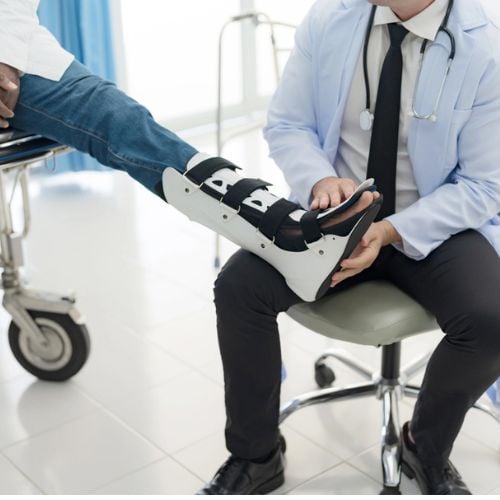
Conservative treatment is beneficial for both early and late stages of infraction to the metatarsophalangeal joint. In the early stages, immobilization in a boot or cast may allow for reduction of microtraumatic forces, and improve revascularization of the bone. In chronic or later stages of joint pain, arch support providing offloading of the specific joint with a cutout can be beneficial. Preventing motion through the forefoot will reduce motion at the MPJ and help improve pain. One can achieve this by using a shoe that is inflexible at the forefoot or by placing a carbon fiber plate inside a shoe. If the patient has not seen any improvement in pain over a period of three to six months, surgical intervention may be indicated.
Finding An Effective Surgical Treatment
There are a range of surgical options depending on the patient’s age and the progression of deformity. For a young patient with mild disease progression, joint salvage procedures are most desirable. In contrast, an elderly patient with limited propulsion, previous failed surgeries and extensive arthritis may benefit from a joint destructive procedure. There are many classifications for Freiberg’s infraction with most of these classifications discussing the extent of arthritic changes.2
However, when it comes to surgical procedures, we focus more on joint sparing and joint destructive techniques. In the patient consent form, we will often give several options depending on the clinical findings and previous imaging.
A Closer Look At Joint Sparing Procedures
Bone spur excision. Patients who benefit from a joint cleanup procedure are most often patients with chronic Freiberg’s infraction who have increasing pain and stiffness. We will start with a curvilinear incision over the fourth metatarsal and dissect down to the MPJ with care to preserve the collateral ligaments with their vascular supply to the bone. After removing excess spurs, test the joint range of motion. If the motion is smooth and without crepitus, close the capsule and incision.
Decompression osteotomy. One would perform a decompression osteotomy for joints that are not severely arthritic in order to reduce loading through the second metatarsal, especially if the second metatarsal is long within the parabola. Perform a Weil osteotomy approximately 2 mm distal to the start of the dorsal joint cartilage parallel with the weightbearing surface. Position the joint to align the bone better within the parabola of the remaining metatarsophalangeal joints and then fixate the bone with a single 2.0 screw.
Rotational head osteotomy. Osteochondral lesions may be evident in early and later stages of a Freiberg’s infraction. Most often, these lesions arise in the central to dorsal area of the metatarsal head. Perform a wedge osteotomy, starting with an unfinished Weil osteotomy cut and a wedge to encompass the area of cartilage degeneration. Then rotate the healthy plantar metatarsal head dorsally and fixate it with a 2.0 screw.
Microfracture. Similar to how one may treat an osteochondral lesion in the ankle, the surgeon can stimulate an area of cartilage loss in the metatarsophalangeal joint to repair itself with microfracture using a 0.035-inch K-wire. If the cartilage appears normal but there are cystic changes beneath the chondral surface, perform retrograde drilling and bone grafting.
What You Should Know About Joint Destructive Procedures
Joint implant. Fusion of the second MPJ has rarely been an ideal procedure with extensive arthritis, failed previous surgeries or persistent pain for patients with Freiberg’s infraction. There are several types of implants on the market but we have been using the Cartiva implant (Cartiva, Inc.) recently to allow decompression of the joint, pain relief and retain normal joint mechanics.
First remove osseous spurring to prevent impingement and then test the range of motion. If the joint is not gliding smoothly, we will use the 8 mm Cartiva implant. Center the guide wire in the joint, proceed to use the reamer and place the Cartiva implant.
Joint arthroplasty with tendon spacer. A final option in severely damaged joints or failed prior surgeries is to perform a partial metatarsal head resection with a tendon spacer. We remove about 50 percent of the metatarsal head to allow for joint movement but prevent significant shortening and transfer lesions. Then roll an autograft tendon into a spacer to place into the joint. Place a 0.062-inch K-wire through the toe and tendon, and into the metatarsal to allow the joint with the autograft tendon to fibrose. Carefully close the capsule around the tendon to keep the graft in place.
In Conclusion
Freiberg’s infraction to the second or third metatarsophalangeal joint can present itself in many different ways from a healthy appearing joint to a severely arthritic joint. It is important to have many options to employ after failed conservative treatment to treat intraoperative findings that are not always identifiable on X-ray, MRI or CT. As an update to previous treatments for this pathology, we have found that use of the Cartiva implant is a viable solution during surgery or revision surgery as it is a technically easy procedure with a good outcome in our experience.
Dr. Baravarian is an Assistant Clinical Professor at the UCLA School of Medicine and the Director and Fellowship Director of University Foot and Ankle Institute in Los Angeles.
Dr. Bohman is a Fellow at University Foot and Ankle Institute in Los Angeles.
References
- Freiberg A. Infraction of the second metatarsal bone: a typical injury. Surg Gynecol Obstet. 1914;19:191-193.
- Talusan PG, Diaz-Collado PJ, Reach JS Jr. Freiberg’s infraction: diagnosis and treatment. Foot Ankle Spec. 2014; 7(1):52-56.