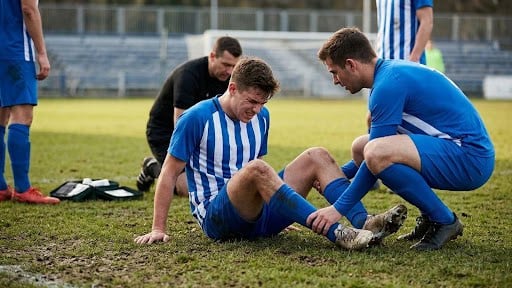
 Peroneal tendon pathology occurs due to a wide range of etiologies including, most commonly, overuse and ankle sprains. An estimated 628,000 ankle sprains occur in the United States every year with 10 to 20 percent of those injuries developing into chronic ankle symptoms. Injury from forced inversion during an ankle injury with no prior peroneal pain or dysfunction can lead to overt peroneal tears, micro tears and scar tissue. Peroneal tendon pathology can also exist prior to an injury due to the role of peroneal tendons as active stabilizers for the ankle joint.
A study by Ziai and colleagues reviewed 58 runners who sustained an ankle sprain. All of these runners had documented posterior lateral malleolus pain prior to the injury. Magnetic resonance image (MRI) scans of these patients showed that 55 out of 58 had evidence of peroneal tendinosis. The authors discussed that certain forms of forefoot or midfoot running have led to the need for increased activity of the peroneals to provide increased stability on a naturally more unstable plantarflexed ankle. Therefore, overuse of the peroneals due to certain running styles can cause pathology within the tendon, which could lead to ankle injuries.
In our institution, we see a large population of people with overuse or overt injuries who develop peroneal pathology. We have found that left untreated, these patients can go on to experience chronic pain and deformity. We have started treating these patients in a similar manner to those with posterior tibial tendon dysfunction (PTTD). Peroneal tendon dysfunction in its chronic stages can cause deforming forces resulting in an adult-acquired cavus foot, just like PTTD does for the adult-acquired flatfoot. Clearly, not everyone who develops peroneal tendon pain will go on to develop a rigid cavus foot type. Therefore, to better guide acute treatment and prevent progression of deformity, we divide peroneal pain in acute, subacute and chronic categories.
A Guide To The Patient History And Exam
Obtain a complete history of the injury along with evaluation of the patient’s medical and developmental history. Patients in the acute stage are those who have never experienced peroneal tendon pain before and the pain has only been present for less than four to six weeks. Often, the patient may have started a new exercise program, began hiking or running uphill, suffered an acute ankle sprain, or had a history of ankle sprains.
The subacute stage lasts from six weeks to three to six months. These patients have often started some form of conservative treatment without significant improvement. During this stage, intratendinous pathology begins to occur. Over six months to many years of pain and dysfunction, chronic scarring of the tendon occurs along with varying stages of a cavus foot deformity. In the most severe forms, little muscle strength is apparent, antagonistic muscles overpower the peroneals and a cavus foot deformity results.
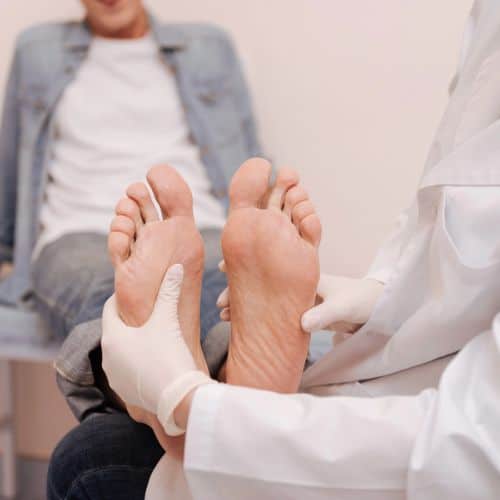
The physical exam should include complete assessment of vascular status, the skin envelope and neuromuscular systems. We recommend a neurological workup if suspicion of progressive neuromuscular disease is present. For the musculoskeletal exam, we begin with palpating the peroneal tendons to appreciate the location/severity of pain, inflammation/edema and/or palpable thickening of the tendon itself.
Evaluate active eversion and plantarflexion of the first ray to test peroneal brevis and longus strength and pain respectively. During active eversion, evaluate for tendon subluxation or dislocation, which could be audible as a palpable click. Test ankle joint stability for any signs of increased anterior drawer or calcaneal inversion. Then assess ankle joint range of motion to check for equinus, crepitus, pain, clicking or locking. We will then have the patient stand to evaluate the foot structure in a closed chain. If a varus deformity is present, use a Coleman block test to determine the flexibility and reducibility of the deformity. Lastly, we will test proprioception by having the patient stand on a single foot with eyes open and then with his or her eyes closed.
How To Treat Acute Peroneal Tendon Injuries
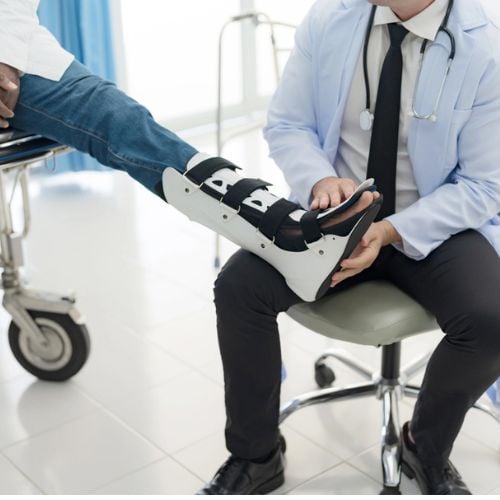
Initial treatment for the acute stage should correlate to the severity of pain and/or injury. Immobilization in a boot or lace-up ankle brace to allow the tendon to rest along with ice and non-steroidal anti-inflammatory drugs (NSAIDs) is appropriate in the initial one to six weeks. We often only immobilize for six weeks if an acute peroneal tear or subluxation is present to allow the healing of soft tissues.
Physical therapy is important to help decrease inflammation and increase strength. It is also beneficial in patients with signs of ankle instability to aid in proprioception training. Most patients who have timely treatment will show signs of improvement in the course of two to four weeks.
If little to no improvement occurs with conservative treatment after one to two months, we will obtain an MRI to better evaluate the tendon and surrounding ligament structure. If thickening or longitudinal tearing of one or both tendons is evident, we perform a platelet rich plasma (PRP) or amniotic therapy injection into the tendon followed by two weeks of immobilization in a boot. If the pain has not resolved in one month, we will follow up with a second PRP or amniotic cell injection at that time.
It is also very important at this time to address possible causes. A subtle to severely rigid cavus foot should have the support of an orthotic. In the case of a mild, flexible cavus foot, obtain an orthotic with a lateral post and first ray cutout. For a rigid deformity, an ankle foot orthosis (AFO) is better to prevent painful motion and protect from inversion injuries. For a pes planus foot type, orthotic support can help prevent spasm of the peroneal tendons and overuse pathology. One can control ankle instability with ankle bracing and improve instability with physical therapy. Consider surgical repair if conservative therapy fails.
When Peroneal Tendinopathy Is Chronic
Treat the chronic stages of peroneal tendinopathy like chronic stages of PTTD. Just like with PTTD, patients with chronic peroneal tendinopathy often do not improve just with repair of the tendon itself without the correction of other deforming forces. If there is evidence of peroneal subluxation/dislocation, we will perform a groove deepening to the posterior lateral malleolus using a burr to ream out the posterior surface.
With ankle instability, we perform a modified Brostrom ankle ligament repair. We use an open anatomic approach to repair the anterior talofibular ligament and calcaneofibular ligament, using two suture anchors in the fibula and non-absorbable sutures. For patients with gross instability, we use a tendon allograft to reconstruct the ankle ligaments.
When it comes to a mild to moderate flexible cavus foot type, one may consider protecting the surgical repair with an orthotic. For a moderate to severe flexible cavus deformity, we often correct this through a lateral-based wedge calcaneal osteotomy and first metatarsal dorsiflexion wedge osteotomy. We treat rigid deformities with necessary fusions to establish a stable foot structure.
Depending on the level of pathology to the tendons, we perform different techniques. If less than 50 percent of the tendon is diseased, we will resect that portion, roughen the inside of the repair with a Bovie and then retuberlize the tendon with a prolene suture in a running stitch. If greater than 50 percent of the tendon is diseased, we will tenodese the diseased tendon to the remaining healthy tendon. If both tendons show greater than 50 percent of disease, but have 1 to 2 cm of muscle excursion, we use a tendon allograft to replace the affected tendons. If there is no muscle excursion visible, a tendon transfer is necessary.
In Summary
Most patients will do well with conservative treatment, footwear modification and activity changes. However, peroneal tendon pain is usually not solely a result of pure ligamentous injury. Just like with the adult-acquired flatfoot, it is vital to address concurrent pathologies that led to peroneal tendon dysfunction to achieve a good clinical outcome and prevent further deformities.
Dr. Baravarian is an Assistant Clinical Professor at the UCLA School of Medicine. He is the Chief of Podiatric Foot and Ankle Surgery at the Santa Monica UCLA Medical Center and Orthopedic Hospital, and is the Director of the University Foot and Ankle Institute in Los Angeles.
Dr. Bohman is a Fellow at University Foot and Ankle Institute in Los Angeles.
References
- Waterman BR, Owens BD, Davey S, et al. The epidemiology of ankle sprains in the United States. J Bone Joint Surg Am. 2010; 92(13):2279-2284.
- Karlsson J, Lansinger O. Chronic lateral instability of the ankle in athletes. Sports Medicine. 1993; 16(5):355-365.
- Hatch GF, Labib SA, Rolf RH, Hutton WC. Role of the peroneal tendons and superior peroneal retinaculum as static stabilizers of the ankle. J Surg Orthop Adv. 2007; 16(4):187–191.
- Ziai P, Benca A, Wenzel F, et al. Peroneal tendinosis as a predisposing factor for the acute lateral ankle sprain in runners. Knee Surg Sports Traumatol Arthrosc. 2016; 24(4):1175-1179.
- MeasureMeasure