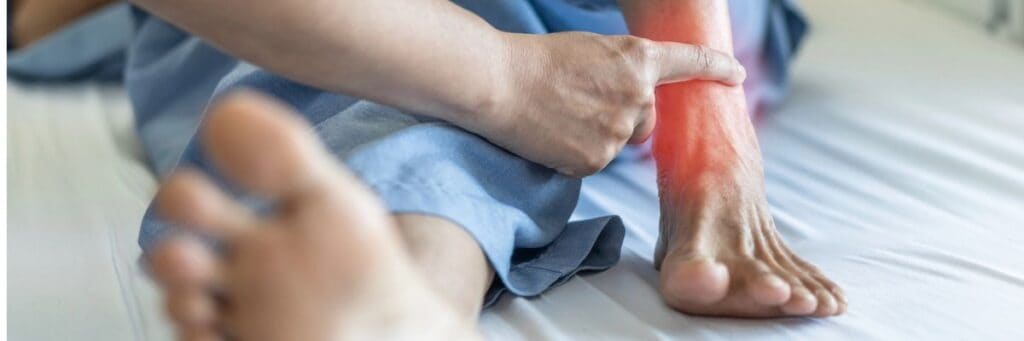
If you have been experiencing plantar fasciitis or Achilles tendon pain, you may be a good candidate for the TenJet procedure.
The TenJet System is a breakthrough technology that effectively treats chronic tendon pain by removing damaged tissue while preserving healthy tissue, eliminating the need for surgery.
Dr. Baravarian is continuously at the forefront of new technologies. He is among the nation’s first foot and ankle specialists to utilize the TenJet System to relieve chronic plantar fasciitis and Achilles tendon pain.
Chronic tendon pain explained
Tendon pain is most often caused by repetitive stress. Many tendon injuries improve on their own with rest, ice, and sometimes physical therapy.
However, if your tendon pain has lasted more than three months and isn’t improving, it’s considered chronic. At this stage, the problem is usually tendinosis, a degenerative condition, rather than inflammation. The tendon’s healing process stalls, leaving behind disorganized, damaged tissue that continues to cause pain. When conservative treatments haven’t worked, removing that damaged tissue can help relieve pain and allow the tendon to heal.
The areas most commonly affected include the Achilles tendon at the back of the heel, the plantar fascia along the bottom of the foot, and the peroneal tendons along the outer ankle. Posterior tibial tendon pain, felt along the inner ankle and arch, is another frequent cause and is often associated with flat feet. If you’ve had persistent pain in any of these areas and conservative care hasn’t provided lasting relief, you may be a candidate for TenJet.
TenJet system for plantar fasciitis and Achilles tendon pain
If you’ve dealt with chronic plantar fasciitis or Achilles tendon pain for months, and rest, physical therapy, and cortisone injections haven’t provided lasting relief, the TenJet system may be an option. Dr. Bob Baravarian offers this minimally invasive procedure as part of a treatment plan tailored to your condition and goals.
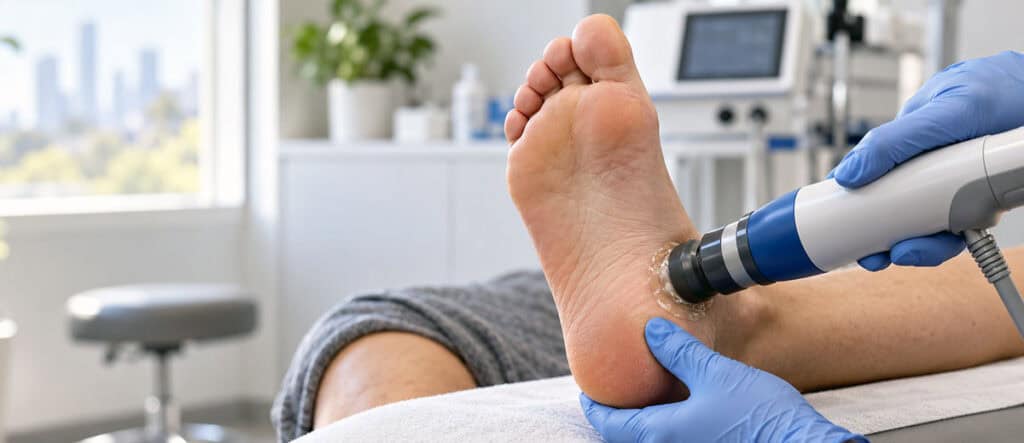
TenJet uses a high-velocity stream of saline to remove damaged tendon tissue. The procedure is performed under local anesthesia with real-time ultrasound guidance, so Dr. Baravarian can see the tendon throughout treatment. The device is designed to target diseased tissue while sparing healthy tendon, and it removes the debrided tissue as it works.

Combining TenJet with regenerative medicine
Depending on your condition, Dr. Baravarian may inject platelet-rich plasma (PRP) or amniotic fluid allograft into the treated tendon at the end of the procedure, with the goal of supporting the body’s healing response. Research on combining these therapies with TenJet is still limited, and Dr. Baravarian will discuss whether this approach makes sense for you.
What to expect: before, during, and after TenJet
- Before the procedure: You’ll have a consultation with Dr. Baravarian to review your imaging and confirm whether TenJet is the right fit. Because the procedure uses local anesthesia, general anesthesia isn’t needed, and our team will let you know if any preparation is required.
- During the procedure: Treatment typically takes about 15 minutes. The device enters through a small opening in the skin under ultrasound guidance, and stitches are rarely needed. Once the area is numb, most patients feel pressure rather than pain.
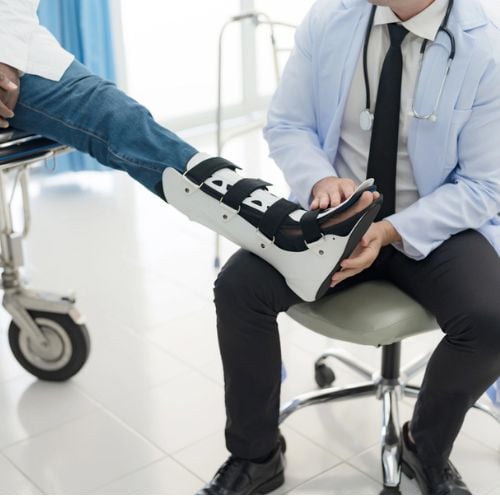
- After the procedure: Most patients walk the same day, and some wear a walking boot for a short period. See the week-by-week recovery timeline below for what to expect as you heal.
TenJet is also used for chronic tendon conditions elsewhere in the body, such as tennis elbow, golfer’s elbow, jumper’s knee, and rotator cuff tendinopathy.
TenJet system vs. Tenex procedure: Which is better?
Both TenJet and Tenex are minimally invasive options for chronic tendon pain, but they work very differently, and that difference matters for your recovery.
The Tenex system uses a blade that passes back and forth through the tendon to break up scar tissue. The problem is that this mechanical action can’t distinguish between diseased tissue and healthy tissue, so both end up damaged in the process. That means more trauma, a longer healing window, and a higher risk of setbacks.
The TenJet Hydrocision system takes a smarter approach. Its precision water jet targets only the scarred, diseased tendon tissue, leaving the surrounding healthy fibers intact. Negative pressure then removes the debris cleanly, with no blade contact and no collateral damage.
The result is a genuinely tissue-selective procedure – and that selectivity is exactly why Dr. Baravarian favors TenJet for his patients. Less trauma to healthy tissue means a faster, smoother recovery and a stronger tendon once healing is complete. For patients who have already spent months on rest, physical therapy, and injections, that distinction isn’t a minor technical detail – it’s the reason TenJet so often succeeds where other treatments have fallen short.
What to expect during the TenJet procedure
The minimally invasive procedure is performed in an outpatient setting under a local anesthetic. TenJet takes approximately 15 minutes, and the small incision eliminates the need for stitches.
Patients may feel some discomfort at the beginning of the procedure when the local anesthetic is administered. Post-procedure, some report some soreness in the treated area. This can be managed with over-the-counter medications.
Recovery timeline: what to expect week by week
One of the most common questions patients ask after researching TenJet is: how soon can I get back to normal life? If you’ve already tried rest, physical therapy, and cortisone injections without lasting relief, you’ll be glad to know that TenJet’s recovery is significantly shorter than open tendon surgery, and most patients are pleasantly surprised by how manageable it is.
- Days 1-3: Expect mild to moderate soreness around the treated area as it recovers from the procedure. Keep the foot elevated when possible, apply ice in short intervals, and take over-the-counter pain relievers as needed. Most patients can put weight on the foot within the first day or two, and some may wear a walking boot for a short period. Dr. Baravarian will tailor your weight-bearing instructions based on which tendon was treated and the severity of your condition.
- Week 1-2: Soreness typically begins to ease. Light walking for daily activities is generally well tolerated. Avoid high-impact movement, prolonged standing, or anything that loads the tendon aggressively. The small puncture site heals quickly; no stitches means no suture removal appointment, which is one less thing to worry about.
- Weeks 3-6: Most patients transition into a gentle rehabilitation phase. Low-impact activity such as swimming or cycling may be introduced, depending on your progress. Dr. Baravarian’s team will guide you through targeted stretching and strengthening exercises designed to support the tendon as healthy tissue regenerates in place of the damaged fibers.
- Weeks 6-12: Gradual return to more demanding activity is typically possible during this window. Running, sport-specific training, and higher-impact movement are reintroduced progressively. While individual results may vary, patients typically experience meaningful pain relief within three months of the procedure, on average – many reporting improvement well before that milestone.
- Beyond 3 months: Full return to sport and unrestricted activity is the goal, and for the majority of patients it is achievable. At DOCS Foot and Ankle, Dr. Baravarian may also recommend pairing TenJet with a regenerative therapy such as Platelet Rich Plasma (PRP) or Amniotic Fluid Allograft to further accelerate healing and tissue quality – an integrative approach that sets this practice apart from clinics offering TenJet alone.
Most insurance providers cover the TenJet procedure.
Am I a candidate for TenJet?
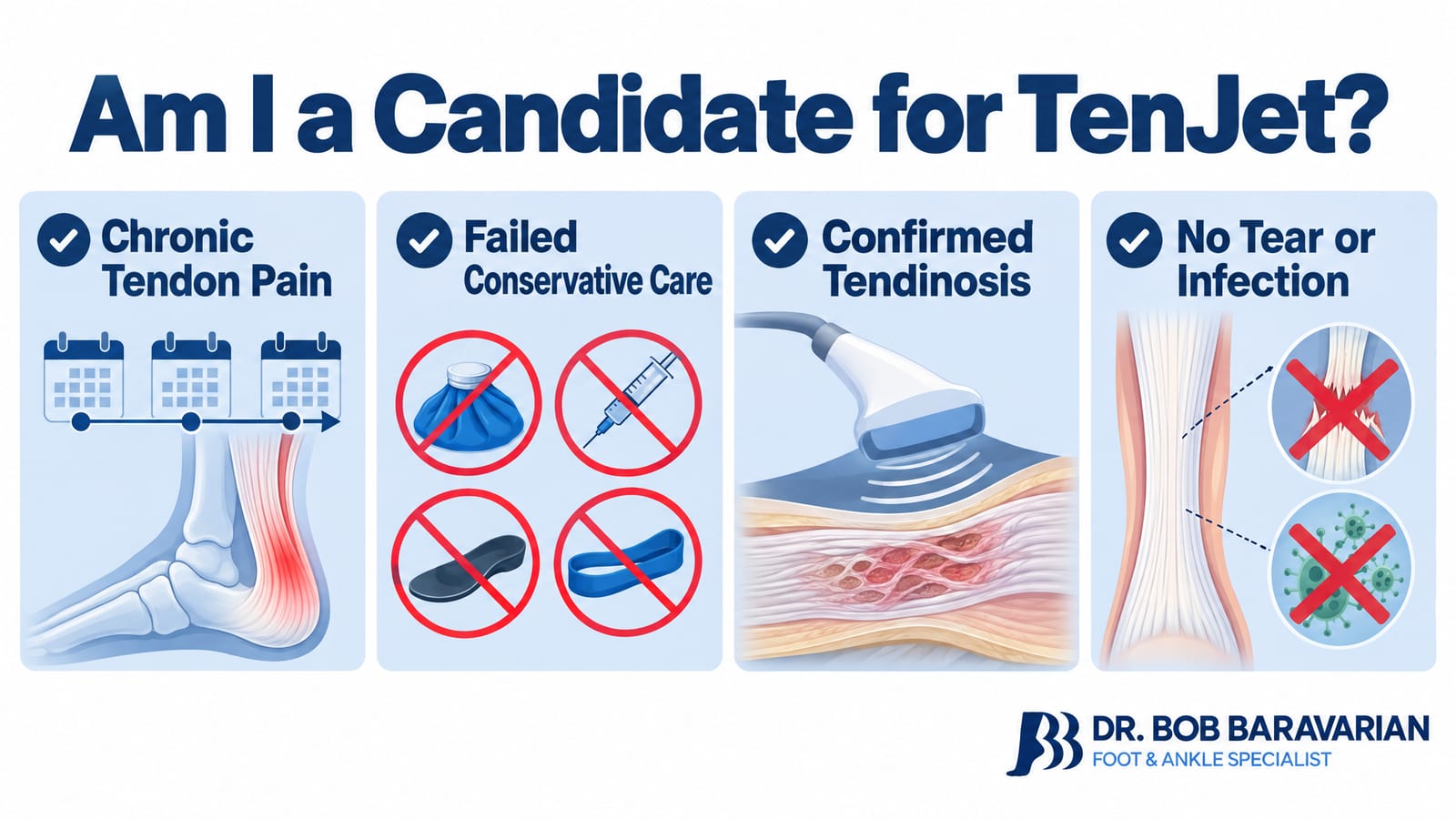
Now that you know what happens during the procedure, you’re probably wondering whether TenJet is actually right for you. The good news is that candidacy criteria are pretty straightforward, and if you’ve already tried the usual conservative treatments without lasting relief, there’s a strong chance you qualify.
Most patients who are good candidates for TenJet share a few things in common:
Chronic tendon pain lasting three months or longer – TenJet is designed for tendinosis, the degenerative form of tendon damage, rather than acute injuries. If your pain has been hanging around despite your best efforts, that’s a key indicator.
Failed conservative care – You’ve already put in the work: rest, physical therapy, anti-inflammatory medications, orthotics, or corticosteroid injections. TenJet becomes a compelling next step when those approaches haven’t delivered lasting results.
A confirmed diagnosis of tendinosis – Conditions like chronic plantar fasciitis, Achilles tendinosis, or peroneal tendinopathy are among the most common foot and ankle conditions treated with TenJet. Ultrasound imaging helps confirm the presence of damaged tissue that the system can precisely target.
No active infection or significant tendon tear – TenJet works best on degenerative tissue, not complete ruptures or active infections, which require a different treatment approach.
If you’re unsure whether your tendon pain qualifies, a consultation with Dr. Baravarian is the best place to start. He’ll review your history, examine your foot or ankle, and use diagnostic imaging to build a tailored treatment plan that makes sense for your specific situation – no guesswork, just personalized care designed around you.
Why trust Dr. Baravarian
Dr. Bob’s patients rely on his decades of experience developing, researching, and applying the latest technologies to bring pain-free activity back to their lives. Whether you want to compete in sports again, keep up with your kids, or simply walk without wincing, you can trust Dr. Bob to build a tailored treatment plan around your specific condition – not a one-size-fits-all protocol.
His pioneering integration of regenerative therapies like PRP and amniotic fluid allograft alongside minimally invasive procedures such as TenJet sets this practice apart. Patients don’t just get a procedure – they get a comprehensive recovery strategy designed for faster healing and less pain from day one.
Patients like Georgia P. know this firsthand. After months of chronic tendon pain that didn’t respond to rest or physical therapy, she came to Dr. Bob’s team and received a personalized care plan that included regenerative injection therapy. “I finally felt like someone actually listened and had a real plan,” she shared. “The recovery was so much smoother than I expected.” Her experience reflects what so many patients discover: compassionate care and unmatched skill make all the difference when conservative treatments have fallen short.
If you’re experiencing foot or ankle pain and haven’t received adequate relief, or if you need an independent second opinion, don’t hesitate to contact Dr. Bob today to schedule a consultation. To schedule, please call (855) 557-5400 or make an appointment now.
Dr. Bob Baravarian is conveniently located in Los Angeles, near Cedars-Sinai Medical Center, providing state-of-the-art foot and ankle care for patients throughout Southern California.