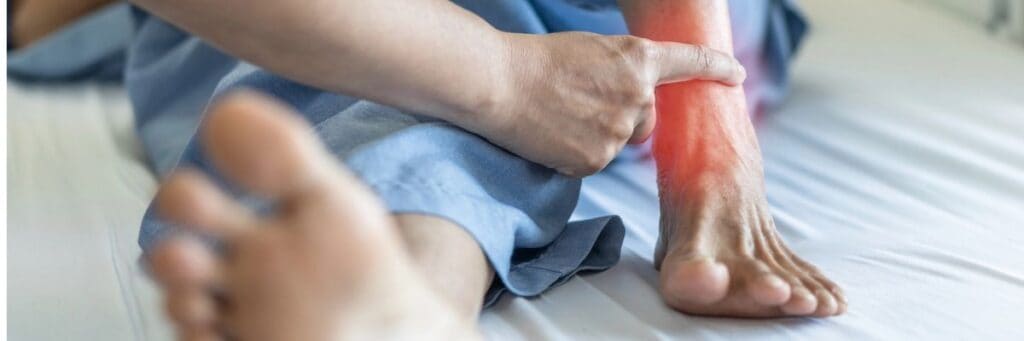
Cartilage damage inside the ankle joint is one of the most challenging problems in podiatric surgery, and for good reason. Hyaline cartilage, the smooth, rubbery tissue that lines joint surfaces and allows pain-free movement, has virtually no ability to heal itself. It contains no blood vessels and no meaningful blood supply, so once it is damaged, the body cannot simply grow it back. Left untreated, even a small osteochondral lesion (OCD) of the talus can progress to post-traumatic ankle arthritis, robbing patients of mobility and quality of life.
That is why the arrival of the DeNovo NT natural tissue graft has been such a significant development. Dr. Bob Baravarian was among the first foot and ankle specialists in the country to adopt this technique, and it has since become one of the most powerful tools in his practice for restoring talar cartilage and getting patients back to the lives they love.
What is DeNovo cartilage repair?
DeNovo NT (Natural Tissue) is a particulate juvenile cartilage allograft developed by Zimmer Biomet and regulated by the FDA as a 361 HCT/P (human cells, tissues, and cellular and tissue-based product). It is used to repair osteochondral defects and chondral defects, most commonly on the talus (the primary weight-bearing bone of the ankle joint), though it can also be applied to other joint surfaces where articular cartilage has been damaged.
To understand why DeNovo matters, it helps to know what an osteochondral defect actually is. Articular cartilage is the smooth, slippery tissue that lines the ends of your bones and allows joints to move without friction. When that cartilage is damaged – whether from a traumatic ankle sprain, repetitive stress, or a condition like osteochondritis dissecans – the result is an osteochondral lesion: a crater-like defect in the joint surface that the body struggles to heal on its own. Left untreated, these lesions cause deep, persistent ankle pain, swelling, and a grinding or locking sensation that worsens over time and can accelerate joint degeneration.
The procedure is a true single-stage surgery. Unlike older cartilage restoration techniques that require two separate operations, DeNovo NT allows Dr. Bob to remove the damaged tissue and implant the graft in one arthroscopic session. This means less time in hospital, less overall surgical risk, and a faster start to recovery.
The graft comes from juvenile donors, a detail that is scientifically critical, as explained below. It arrives ready to use, eliminating the need to harvest tissue from the patient’s own body and sparing them a second surgical wound.
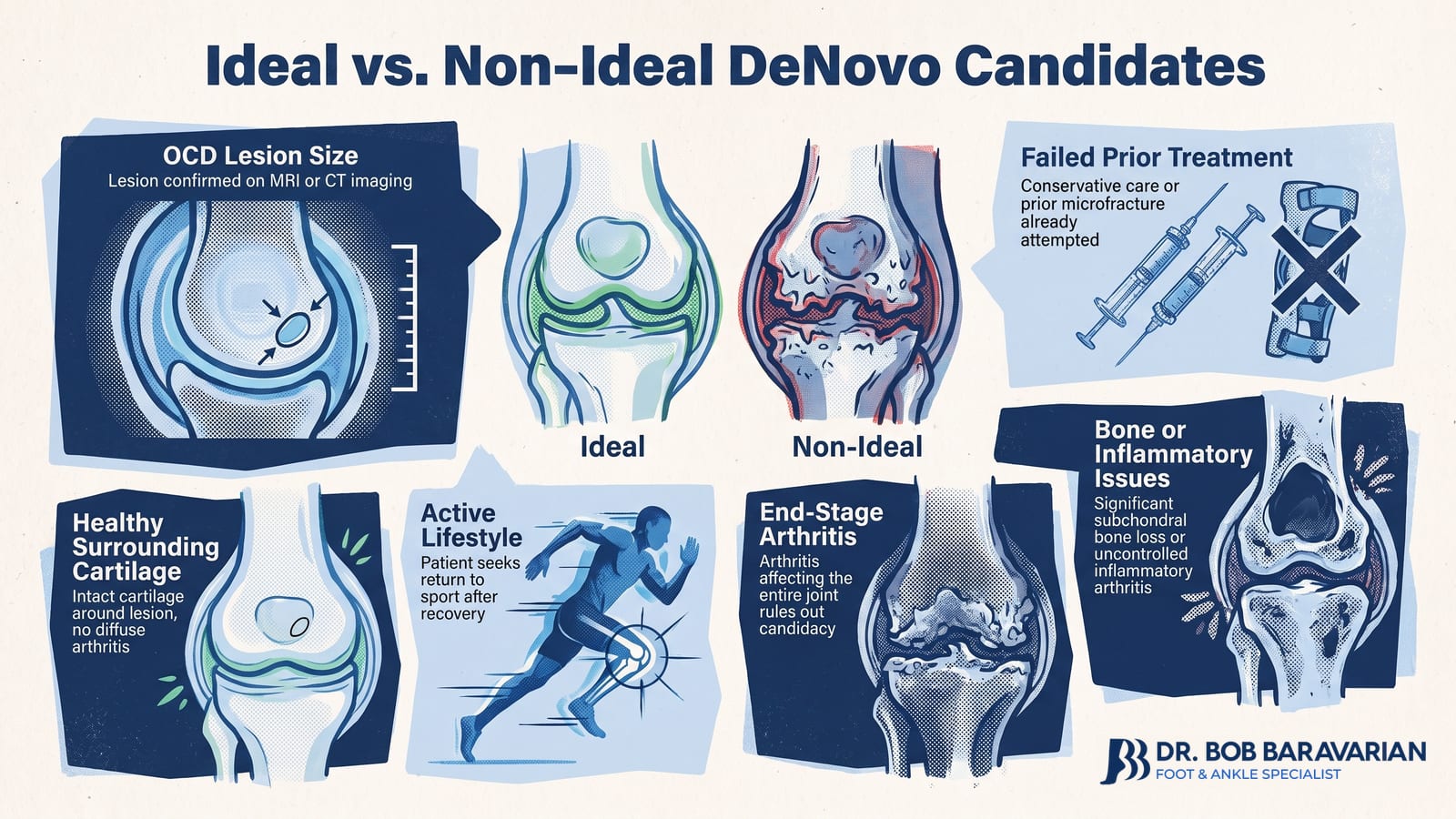
So who is an ideal candidate for DeNovo cartilage repair? Dr. Bob typically recommends this procedure for patients who have a confirmed osteochondral lesion of the talus or ankle joint – usually measuring 1.5 cm² or larger – and who have not found lasting relief through conservative care such as rest, bracing, or regenerative therapies like PRP or stem cell therapy. It is also an important option for patients whose symptoms have returned after a previous procedure like microfracture, making DeNovo one of the few truly effective revision surgery solutions for failed cartilage repair. Patients should be in otherwise good joint health, without advanced, diffuse arthritis throughout the ankle, to achieve the best outcomes.
“The DeNovo NT graft requires only one surgery, which surgeons can perform arthroscopically. The juvenile cartilage cells have a much larger capacity for self-repair than adult tissue, and that biological advantage translates directly into better outcomes for our patients.” – Dr. Bob Baravarian
Who is a candidate for DeNovo cartilage repair?
One of the first questions patients ask is whether this procedure is right for them. While we assess every case individually, the following profile describes the patients who tend to benefit most from DeNovo NT.
Ideal candidates typically have:
An osteochondral lesion of the talus (OCD) or a focal chondral defect confirmed on MRI or CT scan, generally ranging from approximately 1 cm² to 3 cm² in size
Persistent ankle pain, swelling, or mechanical symptoms (catching, locking) that have not resolved with conservative care such as rest, physiotherapy, or injections
A prior failed microfracture procedure, making DeNovo NT an excellent next step when the first-line surgical option has not delivered lasting relief
Relatively intact surrounding cartilage and bone stock, without advanced, diffuse ankle arthritis
Active patients, including athletes and younger adults, who want to return to sport and high-demand activity rather than simply managing symptoms
Patients who wish to avoid a two-stage procedure or the donor-site morbidity associated with autograft harvesting
Patients who may not be ideal candidates include:
Those with severe, end-stage ankle arthritis affecting the entire joint surface
Patients with significant bone loss beneath the cartilage defect (subchondral cysts), who may require bone grafting before or alongside cartilage repair
Individuals with uncontrolled inflammatory arthritis or conditions that impair healing
Dr. Bob takes the time to get to know every patient personally, reviewing imaging, activity goals, and prior treatment history before recommending a path forward. If DeNovo NT is not the right fit, he will explain exactly why and outline the alternatives.
What are the traditional methods of ankle cartilage repair?
To appreciate why DeNovo NT represents such a meaningful advance, it helps to understand what came before it.
Microfracture
The traditional first-line surgical treatment for talar cartilage defects involves drilling tiny holes through the damaged area and into the underlying bone marrow. The goal is to stimulate the marrow to release stem cells that migrate into the defect and form new tissue. This technique is known as microfracture, and while it is minimally invasive and arthroscopic, it has a fundamental biological limitation: it produces fibrocartilage, not hyaline cartilage. Fibrocartilage is mechanically inferior, less durable, and more prone to breaking down under the repetitive loads of daily activity and sport. Symptoms frequently return, particularly when the original lesion is large or deep, and many patients find themselves back in the surgeon’s office within a few years.
Autograft (OAT / Mosaicplasty)
A more aggressive option involves harvesting a plug or multiple plugs of healthy cartilage and bone from another part of the patient’s body, typically the patellofemoral joint of the knee, and transplanting them into the ankle defect. This osteochondral autograft transfer (OAT), sometimes called mosaicplasty, does deliver hyaline cartilage to the repair site. However, it requires two open surgeries: one to harvest the graft and another, typically six weeks later, to implant it. The patient is left with two surgical wounds, two recovery periods, and the risk of long-term donor-site pain in the knee. For many patients, trading one joint problem for another is not an acceptable compromise.
MACI (Matrix-Induced Autologous Chondrocyte Implantation)
MACI is a two-stage biological technique in which cartilage cells are harvested from the patient, cultured in a laboratory over several weeks, and then re-implanted on a collagen membrane. It produces good-quality hyaline-like cartilage and suits larger defects, but the two-stage process, laboratory culture period, and associated costs make it more complex than DeNovo NT for appropriately selected patients.
Allograft plugs
Osteochondral allograft plugs sourced from adult cadaver donors are another option, particularly for large or deep defects with significant bone loss. They deliver both cartilage and bone in a single construct, but the cartilage cells in adult allografts have lower viability and regenerative capacity than juvenile tissue, where DeNovo NT has a distinct biological advantage.
How does DeNovo compare to MACI and other cartilage restoration options?
If you’ve been researching cartilage repair, you’ve probably come across several options and wondered how they stack up. It’s a fair question, and understanding the differences can make a real difference in choosing the right path for your ankle.
MACI (matrix-induced autologous chondrocyte implantation) is a two-stage procedure. First, cartilage cells are harvested from your own knee, sent to a lab to multiply over several weeks, then implanted in a second surgery. That means two rounds of anesthesia, a longer overall timeline, and donor site risk at the harvest location. For some patients, it works well, but it’s still complex.
Osteochondral autograft transfer (OAT) takes a plug of bone and cartilage from a non-weight-bearing area of your knee and transplants it into the ankle defect. Again, you create a second wound site, and the cartilage type doesn’t always match the ankle’s unique mechanical demands.
Allograft plugs use donor tissue, avoiding a harvest site but raising concerns about tissue matching and long-term integration.
DeNovo NT stands apart because it’s a single-stage procedure using juvenile donor cartilage – which contains a significantly higher density of chondrocytes than adult tissue – giving it a powerful regenerative advantage right from the start. There’s no second surgery, no donor site on your own body, and no lengthy lab wait. Dr. Baravarian’s pioneering two-layer fibrin glue technique ensures the graft bonds securely, even when microfracture has previously failed. For many patients, that combination of simplicity, biology, and proven outcomes makes DeNovo the most compelling option.
The DeNovo cartilage repair technique – from Dr. Bob Baravarian
Dr. Bob Baravarian is one of the world’s leading experts in minimally invasive podiatric surgical techniques, and the arthroscopic DeNovo NT procedure exemplifies the philosophy he has built his practice around: achieve the best possible biological outcome through the smallest possible intervention.
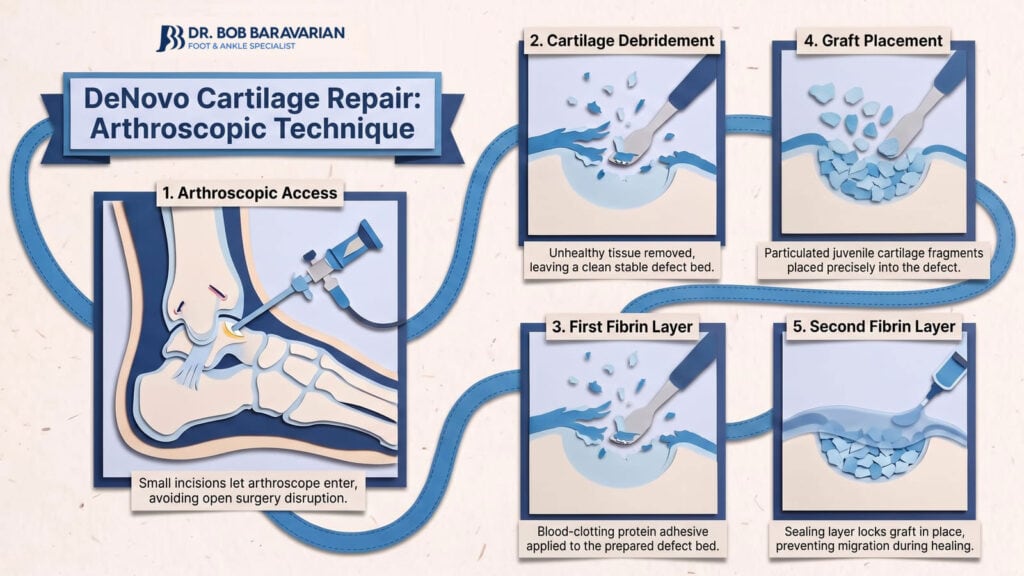
The procedure begins with the patient under general anesthesia. Using an arthroscope, Dr. Bob accesses the ankle joint through small incisions, avoiding the extensive soft-tissue disruption of open surgery. The damaged cartilage is carefully debrided, removing all unhealthy tissue and preparing a clean, stable bed within the osteochondral defect.
The two-layer fibrin glue technique is then applied. A first layer of fibrin glue, a biomedical adhesive derived from blood-clotting proteins, is applied to the prepared defect bed. The particulated juvenile cartilage graft is then placed precisely into this space. A second layer of fibrin glue is applied over the top, sealing the graft in position and preventing any migration of the tissue fragments during the critical early healing phase. This two-layer approach is a technical refinement that reflects Dr. Bob’s meticulous attention to surgical detail, ensuring the graft remains exactly where it needs to be as integration begins.
The incisions are then closed, and the transplanted cartilage is left to integrate with the surrounding tissue, gradually producing new, healthy articular cartilage that is structurally and functionally superior to the fibrocartilage scar tissue generated by microfracture.
What is the regenerative advantage of DeNovo cartilage repair?
The juvenile chondrocyte density advantage
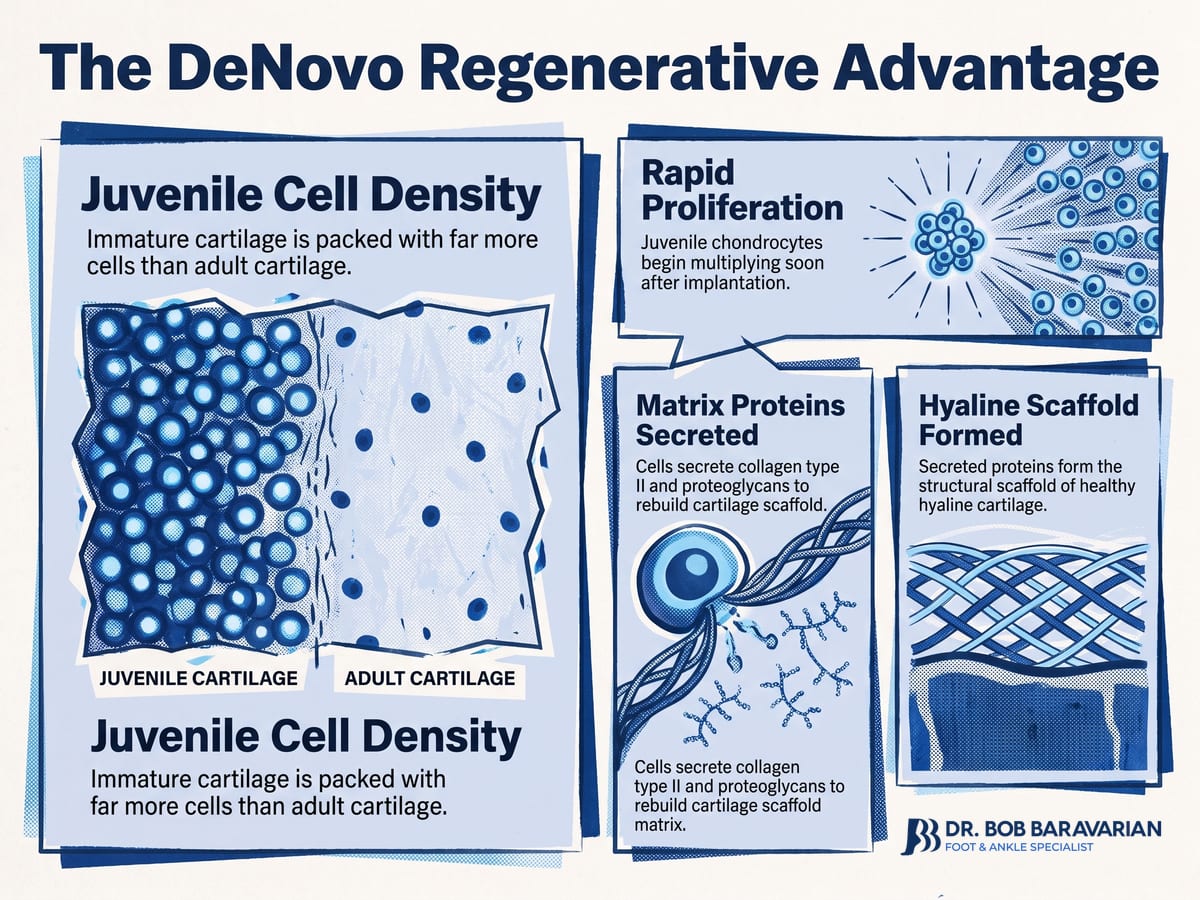
The biological case for DeNovo NT rests on a well-established principle in cartilage science: juvenile chondrocytes are dramatically more active and more numerous than their adult counterparts. Immature cartilage is packed with cells at a density far exceeding that of fully mature cartilage. These juvenile chondrocytes begin to proliferate soon after implantation, secreting the extracellular matrix proteins, including collagen type II and proteoglycans, that form the structural scaffold of healthy hyaline cartilage.
Hyaline cartilage vs. fibrocartilage: why the tissue type matters
This distinction is central to why DeNovo NT produces superior long-term outcomes compared to microfracture. Microfracture works by puncturing the subchondral bone to release marrow cells into the defect, but those cells predominantly form fibrocartilage – a scar-like, disorganized tissue that lacks the structured collagen architecture and load-bearing resilience of true hyaline cartilage. Fibrocartilage can provide short-term pain relief, but it tends to break down under the repetitive mechanical stress of an active lifestyle, which is why many patients see their symptoms return within a few years.
DeNovo NT, by contrast, delivers living juvenile chondrocytes that are biologically primed to regenerate hyaline-like cartilage – the same high-quality tissue that lines healthy joint surfaces. On MRI, DeNovo NT repairs have shown fill characteristics and signal intensity much closer to native hyaline cartilage than microfracture repairs. For patients who want a durable, structurally sound repair rather than a temporary patch, this difference matters clinically.
Effective even when microfracture has failed
One of the most important clinical applications of DeNovo NT is in patients who have already undergone microfracture and experienced symptom recurrence. Because DeNovo NT works through a fundamentally different biological mechanism, it is not limited by the failure of the previous procedure. Clinical studies have reported significant improvements in patient-reported outcomes, including AOFAS (American Orthopedic Foot and Ankle Society) scores, following DeNovo NT in patients with lesions of varying sizes, including those that did not respond to microfracture. Graft survival and integration rates have been encouraging across published case series, with patients reporting meaningful pain reductions and functional improvements at medium-term follow-up.
The role of the extracellular matrix
The extracellular matrix within the DeNovo NT graft is not merely a passive scaffold. It is a biologically active environment rich in collagen type II, aggrecan, and a range of growth factors and signaling proteins that actively support chondrocyte survival, proliferation, and matrix production after implantation. When the graft is secured in place – typically using a two-layer fibrin glue technique that holds the particulated cartilage firmly within the defect without the need for additional fixation hardware – these signals begin coordinating the repair process almost immediately. This biological richness helps distinguish particulated juvenile cartilage from acellular or minimally cellular repair options.
Complementary regenerative options
For appropriate patients, Dr. Bob may recommend combining DeNovo NT with additional regenerative therapies to create the most favorable healing environment possible. Platelet-rich plasma (PRP) therapy concentrates the patient’s own growth factors and can be applied at the time of surgery or during the recovery period to optimize the biological conditions for graft integration and cartilage regeneration. In select cases, amniotic fluid allograft therapy may also be considered to further support an anti-inflammatory, regenerative environment around the repair site. Dr. Bob tailors each treatment plan individually – as he would for a family member – drawing on the full range of regenerative options available to give every patient the best possible chance of a lasting recovery.
What can I expect during and after DeNovo cartilage repair?
Diagnosis and pre-operative assessment
Dr. Bob will begin with a thorough physical examination to assess the nature and extent of your symptoms. MRI is the preferred imaging modality for evaluating talar cartilage defects, providing detailed information about the lesion’s size, depth, and location, as well as the condition of the surrounding bone. A CT scan may be added to assess subchondral bone involvement. In some cases, a diagnostic arthroscopy is recommended to directly visualize the defect and confirm DeNovo NT suitability before proceeding.
Phased recovery roadmap
Recovery from DeNovo NT is structured and progressive. The following timeline reflects typical milestones, though individual recovery will vary based on lesion size, overall health, and activity goals.
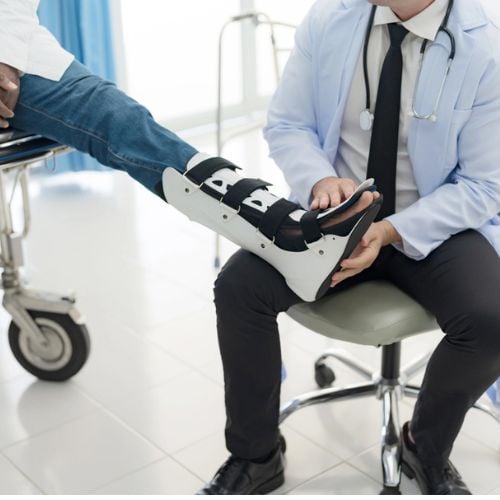
Weeks 1-6: Non-weight-bearing phase. Immediately following surgery, the ankle is protected in a cast or boot, and you will be non-weight-bearing, using crutches to keep all load off the repaired joint. This phase is critical: the juvenile chondrocytes need a stable, unloaded environment to begin integrating with the surrounding tissue. During this period, focus on managing swelling, elevating the leg, and doing gentle range-of-motion exercises (as directed).
Weeks 6-12: Gradual weight-bearing and early rehabilitation. As the graft begins to integrate, Dr. Bob will progressively introduce weight-bearing, typically transitioning from a boot to a supportive shoe. Formal physiotherapy begins during this phase, focusing on restoring ankle range of motion, reducing stiffness, and beginning gentle strengthening of the surrounding musculature.
Months 3-6: Active rehabilitation. Physical therapy progresses to more functional exercises, including balance and proprioception training, progressive resistance work, and low-impact cardiovascular conditioning. Many patients return to desk-based work and light daily activities during this phase, with most returning to work in approximately four to six weeks depending on the physical demands of their role.
Months 6-12: Return to sport and high-demand activity. Return to sport is a gradual process guided by objective functional milestones rather than a fixed date. Most patients engaged in recreational sport can expect to return to full activity between six and twelve months post-surgery, depending on the demands of their sport and the size of the original defect. Dr. Bob works closely with each patient and their physiotherapist to ensure a safe, sustainable transition.
Realistic outcome expectations
One of the most common questions Dr. Bob hears from patients before DeNovo cartilage repair is simply: will this actually work for me? It is a fair question, and one he takes seriously. Clinical data on DeNovo NT shows durable pain relief and functional improvement in the majority of patients, with outcomes that hold up well over time – particularly when the procedure is performed by an experienced specialist who selects the right candidates carefully. Patients with smaller, well-contained lesions and healthy surrounding bone tend to achieve the strongest results. That said, even patients with larger defects or those who have previously undergone microfracture without success have seen meaningful improvement with DeNovo NT, because the juvenile chondrocyte tissue has a far greater capacity to regenerate true hyaline-like cartilage than scar tissue alone can provide.
It is also worth setting honest expectations around the timeline: cartilage healing is inherently slower than soft tissue healing. You may feel significant improvement well before the graft has fully matured, which typically takes twelve to eighteen months. Dr. Bob will monitor your progress with follow-up imaging and functional assessments throughout, adjusting your tailored treatment plan as your recovery evolves. The goal is not just to get you back on your feet – it is to get you back to the life you want to live, with less pain and greater confidence in every step.
Throughout recovery, Dr. Bob remains personally involved in monitoring your progress, adjusting the rehabilitation protocol as needed, and ensuring you are on track to achieve the outcome you are aiming for.
DeNovo cartilage repair outcomes and clinical evidence
Once you understand what recovery looks like, the next natural question is: does DeNovo cartilage repair actually work? The short answer is yes – and the clinical evidence backs that up in a meaningful way.
Published studies on DeNovo NT have consistently shown strong outcomes for patients with focal cartilage defects in the ankle and foot. In peer-reviewed research, roughly 85-90% of patients reported significant pain relief and functional improvement at two-year follow-up. American Orthopedic Foot and Ankle Society (AOFAS) scores – a standard benchmark for ankle function – have shown average improvements of 25 to 35 points post-procedure, which translates to real, everyday gains in mobility and quality of life.
Graft survival rates are equally encouraging. Long-term follow-up data suggest that DeNovo grafts maintain structural integrity in most patients at five years, with MRI confirming durable cartilage fill in the treated defect. Importantly, these results hold even in patients where microfracture had previously failed – a group that historically had very limited options. That makes DeNovo cartilage repair a genuinely viable second-chance solution, not just a first-line treatment.
What sets these outcomes apart is the regenerative quality of the repair tissue itself. Because juvenile chondrocytes are metabolically active and produce a rich extracellular matrix, the resulting cartilage more closely resembles native hyaline cartilage than the fibrocartilage scar tissue that microfracture typically generates. That biological difference is what drives better long-term durability.
Dr. Baravarian reviews all of this evidence with you personally, so you can feel genuinely confident in your tailored treatment plan before you ever step into the operating room.
Why choose Dr. Baravarian for your DeNovo ankle cartilage repair?
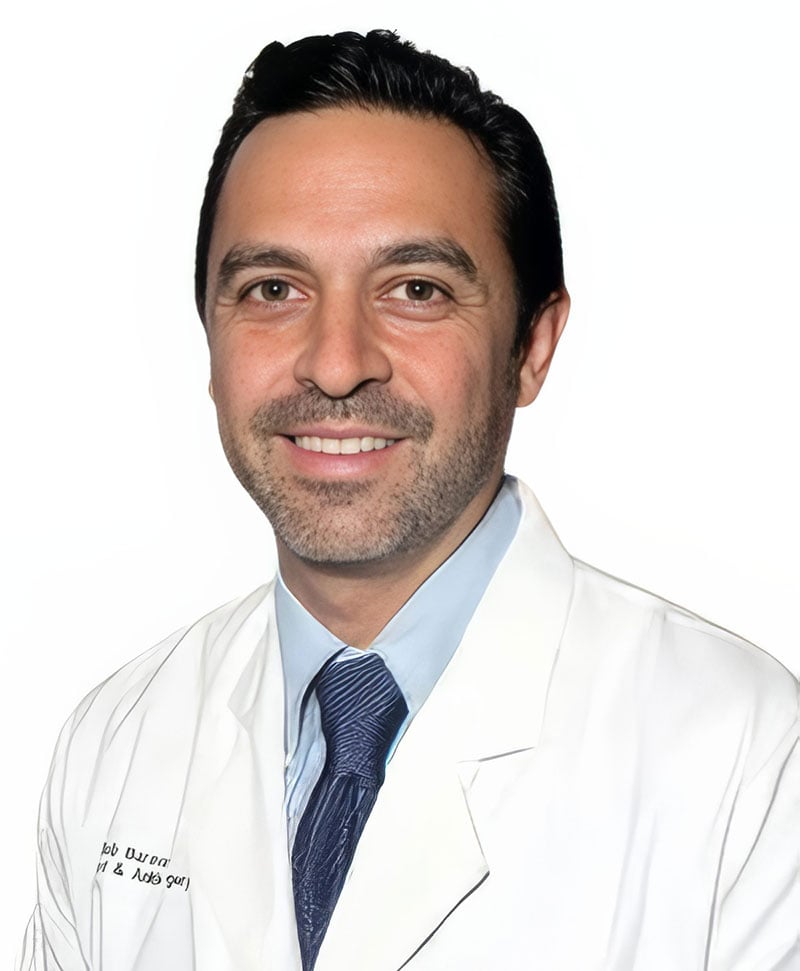
Dr. Bob Baravarian is the surgeon other doctors trust for their toughest cases. He is nationally recognized as a pioneer in minimally invasive, non-metal, and regenerative foot and ankle surgery, and he has performed DeNovo NT procedures across a wide range of patients, from competitive athletes recovering from sports injuries to active adults seeking to avoid the progression to ankle arthritis.
His philosophy is simple: every patient deserves the same level of care he would give a family member. That means taking the time to understand your goals, explaining every option honestly, and tailoring a treatment plan that is built around your life, not a generic protocol. It also means staying at the forefront of surgical technique and biological innovation, so that when a procedure like DeNovo NT offers a genuine advantage, his patients have access to it.
Dr. Baravarian has been featured in leading medical publications and media as an authority on advanced ankle cartilage repair, and his practice at University Foot and Ankle Institute, conveniently located in Los Angeles near Cedars-Sinai Medical Center, draws patients from across Southern California and beyond who are seeking expert care for complex foot and ankle conditions.
That reputation is built on more than recognition. Dr. Baravarian has performed DeNovo NT grafting procedures on a broad spectrum of patients – including high-level athletes, weekend warriors, and individuals who had already undergone microfracture without lasting relief – making him one of the most experienced DeNovo cartilage repair specialists in the Los Angeles region. His minimally invasive approach means smaller incisions, less disruption to surrounding tissue, and a recovery pathway designed to get you back to the activities you love as quickly and safely as possible.
Patients consistently describe their experience with Dr. Bob as unlike any other specialist visit. One patient shared: “I had been told by two other surgeons that my only option was to wait for a full ankle replacement. Dr. Baravarian took the time to review everything, explained DeNovo NT in a way I actually understood, and gave me real hope. A year later, I’m hiking again.” That kind of outcome – and that kind of conversation – is what personalized care looks like in practice.
His work has been cited in peer-reviewed literature on osteochondral lesion management, and he is regularly invited to speak at national orthopedic and podiatric surgery conferences on minimally invasive and regenerative techniques. When you choose Dr. Baravarian, you are choosing a physician who is not only performing these procedures daily but actively shaping how the field approaches cartilage repair.
If you are living with ankle pain, have been told you have an osteochondral lesion of the talus, or have already tried microfracture without lasting relief, a consultation with Dr. Bob is the most important step you can take. He will review your imaging, answer every question, and give you an honest assessment of whether DeNovo NT is the right path forward for you.
To schedule your consultation with Dr. Bob Baravarian, please call (855) 557-5400 or make an appointment online now.
DeNovo Ankle Cartilage Repair FAQs
Can cartilage damage be reversed?

While you can take steps to limit further trauma to your cartilage, cartilage damage, such as lesions, often requires ankle surgery because mature, adult cartilage is usually incapable of regenerating and repairing itself. Without surgical intervention, you could risk osteoarthritis and the gradual breakdown of the joint.
Can cartilage tissue be rebuilt naturally?
Adult cartilage tissue that is damaged cannot be regenerated naturally due to low chondrocyte count and poor blood supply. Juvenile cartilage has 10 times the number of chondrocytes as more mature tissues, making it an excellent choice for the DeNovo cartilage repair allograft technique.
How long does recovery from cartilage regeneration and repair take?
Generally, you will wear a rigid splint and use crutches to avoid putting pressure on the joint for at least the first two weeks. After this, you may be outfitted with a removable boot and advised to start physical therapy or sports medicine rehabilitation, which typically lasts for another four to six weeks. Most patients can return to work in four to six weeks, but full cartilage integration and recovery usually require 6-12 months.
Sources
-
Clinical, Radiographic, and Histological Outcomes After Cartilage Repair With Particulated Juvenile Articular Cartilage: A 2-Year Prospective Study, Cole B, Farr J, Tabet S, Gold G, Carlson C, Margerrison E.
https://pubmed.ncbi.nlm.nih.gov/24718790/ -
In vivo evaluation of autologous cartilage fragment-loaded scaffolds implanted into equine articular defects and compared with autologous chondrocyte implantation, Frisbie DD, Lu Y, Kawcak CE, et al.
https://pubmed.ncbi.nlm.nih.gov/19934439/