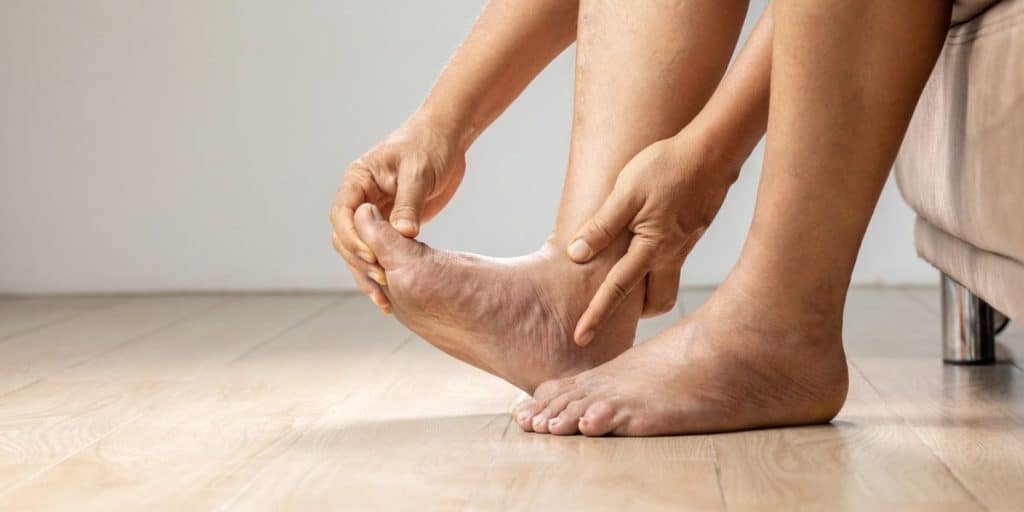
Every surgeon encounters differing levels of hallux varus in their career. Whether a mild, easily reducible deformity which doesn’t bother the patient or a severe varus with arthritic changes in the great toe, hallux varus is a complicated and often difficult problem to treat. Over the past 20 years, I have had a few cases of hallux varus that developed in my patients and have treated many varus cases referred to me after surgery elsewhere. In this column I will share my thoughts and ideas I’ve developed over the years regarding the best treatment options for this condition.
Examining The Primary Etiologies
Hallux varus is, on the surface, a very simple problem, yet a far more complicated one to understand. As noted in the name, hallux varus is a medial shift of the great toe past the neutral alignment of the great toe and the first metatarsal head. Basically, if you bisect the base of the proximal phalanx and the head of the first metatarsal, if the toe bisection is medial to that of the first metatarsal head, there is some level of hallux varus.1,2 Simple, no? Well, not so simple. In my experience, many cases of slight medial shift are perfectly acceptable, not painful and actually make the hallux correction look just a bit more straight after surgery. However, in my observation, as the shift and deformity moves more medial, the great toe may rub against the shoe and begin to hammer for additional grip, causing a medial and dorsomedial pain in the great toe.
There are several reasons why hallux varus occurs, but a few are more common than others.2 The most common causes I typically see are over-lengthening of the first metatarsal during intermetatarsal angle correction, staking of the first metatarsal head, overcorrection of the intermetatarsal angle, too aggressive a lateral release, and lastly overplication of the medial capsule. It sounds like a lot to consider, but it all ties in fairly well together.
The great toe is like a horse’s head with reigns on both the medial and lateral aspects of the joint. If there is an imbalance of the reigns or the horse’s head is turned too far one way or another, in my experience, the toe will continue to follow the path of least resistance. For instance, during an opening wedge osteotomy of the first metatarsal to correct the intermetatarsal angle, one may overtighten the flexor tendon, which may be a bit medially deviated and begin to pull the toe into varus.3 If there is hyper-staking of the metatarsal head or an overly aggressive lateral shift of the metatarsal head, and the tibial sesamoid is medial to the metatarsal head, the medial flexor tendon gets a bit of an advantage to the lateral sesamoid, possibly causing a varus. This at times can occur with a very extensive lateral release not done stepwise, resulting in destabilization of the lateral soft tissues. Similarly, overplication of the medial capsule can lead to a varus deformity.3
In my practice, I divide hallux varus into four categories. Stage 1 is a painless, mild, reducible hallux varus with good dorsal and plantar motion that looks good visually, but is slightly medial in bisection on radiographs. Stage 2 is a significant medial shift of the great toe visually and on radiographs which is painful, but range of motion dorsally and plantarly are normal and smooth. Stage 3 is similar to stage 2, but range of motion is restricted dorsally due to the abnormal metatarsal position and/or some spurring. Stage 3 is a bit fluid for me, as some mild arthritis and some mild stiffness may present, but it is relatively free of osteoarthritis in the great toe joint. Finally, stage 4 is a rigid deformity with or without arthritic changes to the great toe.
A Stage-Dependent Approach To Surgical Planning
Treating differing levels of hallux varus is somewhat stage-dependent to me. I usually leave stage one deformities alone, or, in rare cases that show continued medial shift over time, I may do a medial capsulorraphy. I rarely find stage 1 cases painful or problematic, and I watch them for progression.
Stage 2 deformities are my “favorite” to treat. The deformity is easy to reduce and soft tissue rebalancing works well for me. I tried almost every style of soft tissue procedure for stage 2 deformities, from extensor brevis transfer, to lateral capsulorraphy, to augmented repairs with external structures. I found augmented repairs to work best and began to try differing types of materials and techniques for repair including FiberTape® (Arthrex), tendon graft, suture materials and TightRope® (Arthrex). All of these techniques can work, but none has worked as well and as consistently for me as a newer technique, which I will review. I found suture materials to have very little give and to be a bit tough and tight. At times they can be irritating because the material is so rough. I also have found some patients do not want a tendon allograft and I prefer not to borrow a tendon to correct their deformity.
Therefore, my favorite current material is the Flexband™ strip (Artelon) that comes pre-stitched on both ends and is about three mm in width. The material has a touch of give to it and it is less irritating to the soft tissue. I also think it has better in-growth than some suture materials. I begin with a dorsal incision on the great toe joint, and then perform a medial capsular release, releasing the medial collateral ligament and a dorsal-to-plantar medial capsule release at the joint line. Under fluoroscopic guidance, I drill a hole the size of a small interference Bio-Tenodesis™ (Arthrex) screw into the proximal phalanx from medial to lateral. I then make a second drill hole is made from the medial first metatarsal into the lateral metatarsal. The Flexband is pulled from medial to lateral on the great toe and then from the lateral toe medially into the first metatarsal drill hole. I position the great toe and hold the Flexband in position at both holes with the Bio-Tenodesis interference screw system. If additional stability is needed, I sew the material into the soft tissue or even onto itself, making a complete loop. Another highlight I find is its adjustability at the time of surgery. Once placing the interference screw, if the toe is not ideal, one can remove the screw and adjust the toe position before retightening the screw. I find the Flexband ideal, as it has a slight stretch that gives the toe a more natural feel and give.
Stage 3 treatment is similar for me to stage 2, but may require the addition of a cheilectomy for spurring and clean-up of the first MTPJ. Furthermore, in rare cases of a toe that is somewhat reducible, but more rigid and not completely reducible, a reverse Akin may enhance correction and toe position.
Finally, in my experience, late stage 3 and stage 4 cases do best with first MTPJ fusion. I find this more reliable than metatarsal osteotomy due to the arthritic changes and rigid position of the toe. I have found osteotomy not to be as reliable as either the Flexband reconstruction or fusion, and always find I am not quite happy with the position, movement and long-term osteotomy result. However, a reverse Akin with Flexband reconstruction has been very helpful and works well for me. The only exception I find is when an opening base wedge bunion correction included a heavy medial capsule plication, an osteotomy is often a good option if the toe reduction is difficult. In this case, the metatarsal length increased via the opening wedge, putting the tendon pull on tension. In such cases, a reverse shortening osteotomy of the metatarsal with the Flexband ligament repair could be a good option to increase motion and also reduce the tendon pull of the medial flexor.
In Conclusion
I find hallux varus a complicated problem to correct. After years of trying reconstructions, I have found the Flexband with BioTendodesis screw ligament reconstruction of the lateral collateral to be a great option. The procedure is fairly easy and reproducible in my hands. It also can combine with a cheilectomy and reverse Akin. In more complicated or advanced cases, a fusion of the first MTPJ may apply, especially if there is pain and/or rigidity of the great toe joint already present.
Dr. Baravarian is an Assistant Clinical Professor at the UCLA School of Medicine. He is the Director and Fellowship Director at the University Foot and Ankle Institute in Los Angeles.
- Watts E. Hallux varus. Orthobullets. Available at: https://www.orthobullets.com/foot-andankle/7012/hallux-varus . Accessed December 6, 2021.
- Munir U, Mabrouk A, Morgan S. Hallux varus. StatPearls [Internet]. Available at: https://www.ncbi.nlm.nih.gov/books/NBK470261/ . Updated August 14, 2021. Accessed December 6, 2021.
- Hensl HE, Sands AK. Hallux valgus. In: DiGiovanni C, Greisberg J. Core Knowledge in Orthopaedics: Foot and Ankle. Elsevier; 2007; 104-118. Available at: https://doi.org/10.1016/B978-0-323-03735-8.50015-7. Published online March 21, 2012. Accessed December 6, 2021.