Plantar plate surgery with OSSIOfiber®: non-metal implants that become your bone.
Expert plantar plate tear treatment in Los Angeles by Dr. Bob Baravarian
A plantar plate tear is a common source of pain in the ball of the foot, but repair requires specialized expertise. With more than 20 years of experience, Los Angeles foot and ankle surgeon Dr. Bob Baravarian is nationally recognized for treating even the most complex plantar plate injuries.
Using the latest orthopedic products and his advanced metal-free surgical techniques, he consistently achieves excellent outcomes by repairing the tear and restoring proper toe alignment, giving patients lasting relief.
What’s the plantar plate?
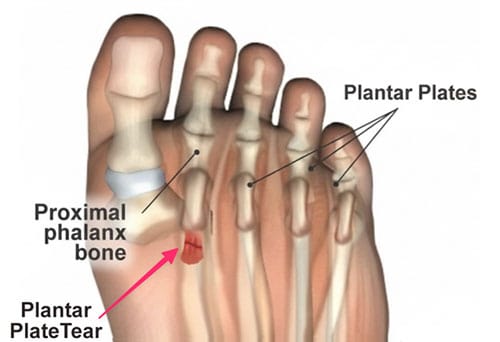
The plantar plate is a strong, fibrous ligament located on the bottom of the foot. It connects the base of each toe (the proximal phalanx) to the corresponding forefoot bone (the metatarsal head). Every toe, from the big toe to the pinky, has its own plantar plate running through the joint capsule.
These ligaments act like anchors, keeping your toes properly aligned and preventing them from bending upward or drifting out of position. As stabilizers for the toe joints (metatarsophalangeal joints), the plantar plates also serve as key attachment points for the plantar fascia, tendons, and other supporting ligaments that help your foot move and bear weight.
A plantar plate tear or injury, sometimes called pre-dislocation syndrome, might be more common than you think. Since a common sign of a plantar plate injury is the second or third toe crossing over its neighbor, these injuries are also known as “crossover toe deformities.”
What causes plantar plate tears?
The most common cause of plantar plate tears is excessive pressure on the associated metatarsophalangeal joint. This puts strain on the plantar plate and can eventually lead to a tear, causing joint instability and pain.
Plantar plate tears usually develop slowly over time from ongoing strain. Repetitive overuse or foot abnormalities can cause progressive degeneration of the ligament.
The most common causes of plantar plate injuries include:
- Biomechanical abnormalities: A short or elevated first metatarsal and a long second metatarsal can put constant pressure on the plantar plate and contribute to its degeneration.
- Bunions (hallux valgus): Pressure from a bunion on the toes can also increase pressure on the plantar plate, leading to thinning and tearing.
- Cortisone injections: Overuse of cortisone can occasionally cause weakening and thinning of the plantar plate ligament.
What are the symptoms of a plantar plate injury?
Plantar plate injury symptoms can range from mild to severe. They may flare up during physical activity or cause ongoing discomfort even at rest. Symptoms can include:
Pain and Swelling
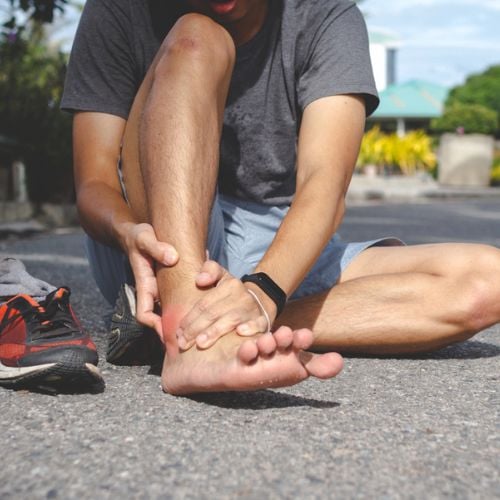
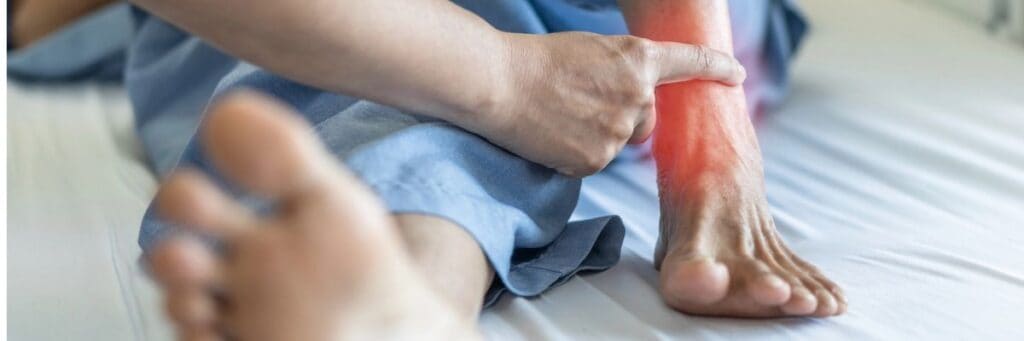
Plantar plate injuries are a common cause of metatarsalgia (forefoot pain). You may feel a dull ache or sharp pain in the ball of the foot, and it may feel as though there is not enough cushion between the bone and the ground.
Discomfort may increase during dorsiflexion of the foot, as occurs during walking or running. Weakening of the plantar plate in the lesser toes may cause a gradual increase in pain, while that in the big toe can cause severe ball of foot pain and swelling.
Shifting of the toe
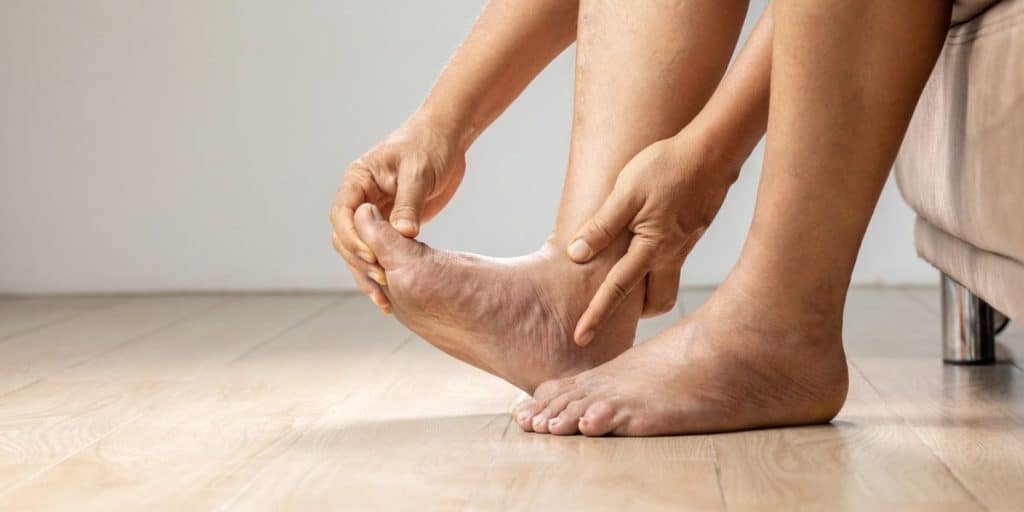
As the tear increases, the affected toe (most commonly the second or third) shifts upward or to one side. The second toe moving towards the big toe is particularly common in cases of plantar plate tears. When the foot is placed on the ground, the toe may lift or appear bent.
How is a plantar plate tear diagnosed?
Plantar plate injuries are often mistaken for other conditions, such as hammertoes, neuromas, or capsulitis. When misdiagnosed, the underlying ligament injury goes untreated, allowing pain, swelling, and toe deformity to progressively worsen. That’s why it’s so important to see a specialist who has extensive experience accurately diagnosing and treating complex forefoot injuries.
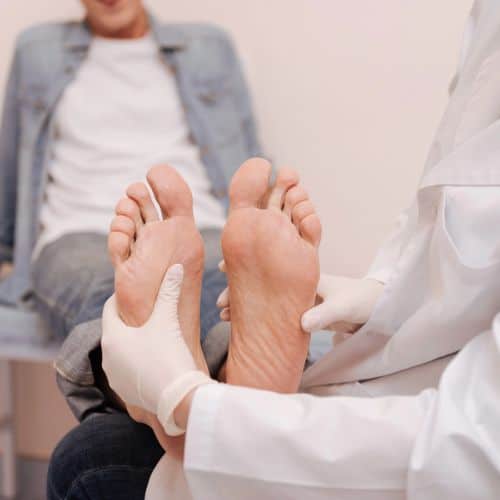
Dr Baravarian begins the exam by reviewing your medical history and symptoms, followed by a detailed physical exam of the affected foot, where he evaluates toe movement, alignment, and any pain during flexion.
To confirm a plantar plate injury and rule out other possible causes, Dr. Baravarian typically uses weight-bearing X-rays, which are especially helpful for assessing joint stability and the extent of the injury. If needed, an MRI can provide a more detailed view of the plantar plate and surrounding ligaments.
If not treated correctly, plantar plate tears become chronic, increasing the likelihood of long-term deformity. As the deformity progresses, the cartilage in the joint capsule can become eroded, leading to arthritis and more severe pain.
What are conservative treatments for plantar plate injuries?
Dr. Baravarian opts for conservative treatment whenever possible. When caught in the early stages, conservative treatment of the plantar plate can be highly successful.
Conservative options may include:
- Pain management: Over-the-counter anti-inflammatory pain medication can keep you comfortable while your plantar plate heals. Icing the area for short periods throughout the day can also help reduce swelling and alleviate pain.
- Support the joint: Taping or strapping the affected joint helps hold it in place, reduces stretching, and allows the ligament to heal. Dr. Baravarian sometimes uses stiff-soled shoes or splints to limit mobility further and support the affected area.
- Orthotics: Supportive shoe inserts can also provide support to the ball of the foot, relieve pressure, and prevent re-injury.
If your toe has drifted significantly, it indicates that the ligaments around it have stretched. Conservative treatments might relieve the pain, but surgical correction is needed to restore the toe to its proper position.
Dr. Baravarian’s advanced non-metal plantar plate repair surgery
When the plantar plate tears, the toe often buckles upward or crosses over adjacent toes, leading to pain, swelling, and loss of alignment. Traditionally, repairing this injury involved cutting and shifting bones using metal screws or pins, which could lead to swelling, stiffness, or discomfort from the hardware.
At our practice, Dr. Bob Baravarian has advanced the procedure using non-metal OssioFiber® fixation, which integrates into your bone as it heals. This approach reduces swelling, eliminates metal sensitivity, and allows for a stronger, more natural recovery.
Complete plantar plate repair system (Arthrex CPR)
The Arthrex CPR system is another highly effective technique that directly repairs the plantar plate and realigns the metatarsophalangeal joint, reducing the chance of recurrence.
Dr. Bob's patient Kathy discusses her plantar plate repair surgery and how it significantly improved her quality of life.
The HAT-TRICK procedure
Dr. Baravarian worked directly with scientists and manufacturers to help develop the HAT-TRICK Joint Repair System, a groundbreaking solution for plantar plate and toe correction. Because plantar plate surgery rarely addresses only the ligament, the HAT-TRICK integrates three systems that work together to restore stability and alignment:
-
MTP Joint Repair System – Minimally invasive repair of the metatarsophalangeal joint to restore lost stability.
-
Proximal Interphalangeal Fusion System – Straightens hammertoes or claw toes that develop from plantar plate tears.
-
Osteotomy Guide System – Shortens the metatarsal bone to restore motion and improve biomechanics, offering a refined alternative to the Weil osteotomy.
Which is better, the Arthrex CPR or the HAT-TRICK procedure?
Both systems are effective, but Dr. Baravarian has further refined them by combining them with OssioFiber® non-metal fixation, yielding much better results.
While the traditional HAT-TRICK system uses PEEK (polyether ether ketone), a durable plastic that provides strength but does not integrate with bone and can sometimes cause irritation, the OssioFiber® modification replaces PEEK with a bio-integrative material that becomes part of the patient’s own bone over time.
Arthrex CPR remains ideal for complete plantar plate tears, while HAT-TRICK is better suited for partial tears. Both systems can now be anchored with OssioFiber® pins or screws, which are gradually absorbed and replaced by bone — eliminating the long-term presence of metal or plastic hardware.
This innovation removes the risks of metal reactions, cold sensitivity, and soft-tissue irritation sometimes associated with titanium or PEEK implants. The Ossio anchor also reinforces the bone at the healing site, making it even stronger after recovery.
“We use both the Hat Trick and CPR systems but have modified them to work with OssioFiber fixation,” explains Dr. Baravarian. “After repairing the ligament, we pull sutures through the base of the toe and secure them with an Ossio anchor. This allows anatomic healing without metal, faster recovery, and less swelling.”
What is the recovery time for plantar plate surgery?
The recovery period after direct repair of the plantar plate can last four to eight weeks. The plantar plate is a very strong ligament, and it requires time with decreased activity to heal. However, once healed, you will be pain-free!
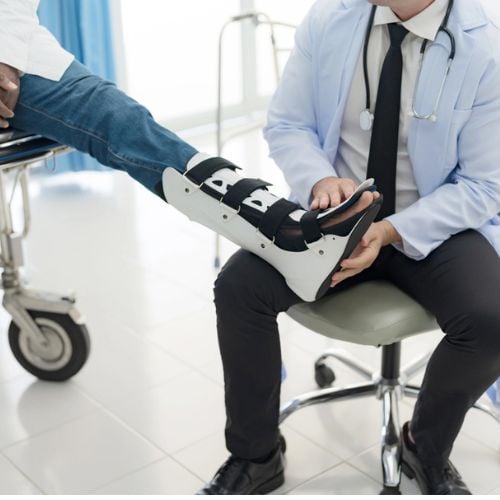
During recovery from a plantar plate tear surgery, you need to avoid putting weight on your foot, and crutches are often recommended. Depending on the extent of the surgical repair, you may be fitted with a removable boot or a cast.
How to prevent plantar plate tears
Treating chronic plantar plate tears is much harder than preventing them. Patients who recognize the symptoms of a plantar plate injury and are evaluated by Dr. Bob receive the best treatment quickly, helping avoid more complex procedures.
If you start early and know your risks, you can protect your feet from plantar plate injuries by doing the following:
Custom orthotics
Patients with certain biomechanical factors that increase pressure on the forefoot—such as a long second metatarsal, an elevated first metatarsal, or a short first metatarsal—should wear an orthotic to distribute pressure away from the affected area.
Athletes and runners should also have their feet evaluated by a specialist, such as Dr. Baravarian, to determine if they are placing an additional load on the forefoot.
Proper shoes
Certain shoes can increase pressure on the forefoot. Many running shoes feature a rocker forefoot that helps offload pressure from the ball of the foot. Shoes that are overly flexible may place extra pressure on the forefoot, increasing the risk of a plantar plate tear.
Avoid steroid injections into the joint
Many patients often want a quick fix and opt for a joint injection when the tissue is irritated. Although steroid injections can help manage pain, they can weaken soft tissue structures, including the plantar plate. Therefore, steroid injections should be avoided in the lesser toe joints whenever possible.
Dr. Baravarian offers the most advanced procedures to treat your plantar plate injury.
When you choose Dr. Baravarian, you can be confident that you are selecting a compassionate specialist with decades of experience. He employs advanced equipment to provide the latest diagnostics, including on-site imaging with an open MRI for the foot and ankle, as well as a weight-bearing 3D CT scan.
While Dr. Bob always exhausts conservative treatment options for plantar plate tears first, if surgery becomes necessary, you will be in the best hands. Dr. Baravarian’s top-notch curative treatments, such as the HAT-TRICK™ and the Arthrex Complete Plantar Plate Repair System (CPR™), boast among the highest success rates in the nation.
Dr. Bob Baravarian is conveniently located in Los Angeles, near Cedars-Sinai Medical Center, providing expert foot and ankle care for patients throughout Southern California.
Frequently Asked Questions about Plantar Plate Tears and Plantar Plate Surgery
Can a plantar plate tear heal on its own?

A plantar plate tear, an injury to the ligament on the ball of the foot beneath the toe joints, can sometimes heal on its own, especially if it is a minor tear. However, the healing process usually requires specific measures and time.
What is the success rate for Plantar Plate repair surgery?
Dr. Baravarian’s success rate is currently over 95%. The level of total correction can depend on the amount of damage, but basically, it is always repairable.
Can you recommend some good shoes for plantar plate injuries?
A shoe with a stiff sole is recommended for plantar plate injuries. If you are looking for athletic footwear, Hoka is a good brand.